
Smart Links for Musicians: Build Real Fan Connections That Last
Executive Summary
Most musicians mistake exposure for connection.
Streams go up. Views accumulate. Followers trickle in. And yet, nothing feels permanent. Fans don’t return. Recognition doesn’t compound. Growth resets with every release.
The problem isn’t effort or quality. It’s fragmentation.
Smart links create real fan connections not by pushing listeners to act, but by giving attention a place to stay. When discovery resolves into a consistent environment, familiarity forms. When familiarity forms, return becomes natural. And when return exists, a fan relationship finally has something to build on.
This article explains why smart links work at the relationship level — how they replace scattered touchpoints with continuity, why that continuity changes behavior, and what it means to build a fanbase that doesn’t disappear when the algorithm moves on.
Key Takeaways
Fan relationships form when attention has a stable place to return, not when discovery increases.
When every interaction happens in a new environment, recognition resets instead of building.
A consistent destination allows listeners to recognize, remember, and revisit the artist.
Fans are defined by unprompted return, not one-time engagement.
When fans return intentionally, growth becomes resilient instead of reactive.
Exposure Does Not Create Connection
Most musicians believe growth happens when more people hear their music.
Streams rise. Views accumulate. Impressions look healthy. On paper, it feels like progress. But when a new release drops, the same problem returns: attention resets. Fans don’t remember. Momentum doesn’t carry. Everything starts from zero again.
The mistake isn’t effort or quality. It’s the assumption that exposure automatically produces connection.
Exposure creates awareness. Connection requires continuity.
Why Awareness Fails to Compound
Awareness is passive. It happens to the listener.
A song appears in a playlist. A clip slides through a feed. A video auto-plays between other videos. The listener reacts emotionally, then moves on. The moment ends without leaving a trace.
Without a stable place for attention to resolve, exposure behaves like sparks instead of fuel — brief flashes that never ignite anything lasting.
Because there is no continuity, each exposure exists in isolation. Even repeated encounters feel new instead of familiar. Recognition never has the chance to form.
This is why artists can rack up thousands of streams without building a fanbase. Awareness without continuity leaves no residue.
Connection Requires a Place to Land
Connection forms when attention has somewhere to stay.
A listener doesn’t build a relationship with a sound alone. They build it with a context — a name, a visual identity, a sense of place that remains consistent across encounters. When that context repeats, recognition begins to accumulate.
Smart links exist to provide this missing structure. Their role is not to increase exposure, but to give exposure a destination — a stable environment where familiarity can take hold. This distinction is foundational to how smart links function as a system, as outlined in The Ultimate Guide to Smart Links for Bands.
Why More Exposure Often Makes the Problem Worse
Increasing exposure without fixing fragmentation often amplifies the issue.
The more platforms a listener encounters an artist on, the more scattered their impression becomes. Each encounter happens under different cues, in different interfaces, with no single experience tying them together.
Instead of building familiarity, exposure multiplies impressions without unifying them. The artist feels present everywhere and grounded nowhere.
Connection doesn’t come from being seen often. It comes from being recognizable. And recognition only forms when attention stops scattering and starts accumulating.
Until exposure resolves into continuity, growth will always feel temporary.
Why Fragmentation Prevents Familiarity
Familiarity does not fail because listeners aren’t interested.
It fails because their experiences never connect.
Fragmentation is what happens when attention is scattered across platforms, interfaces, and moments without a single place tying them together. Each encounter stands alone, disconnected from the last, no matter how similar the content may be.
When experiences don’t link, familiarity cannot accumulate.
Familiarity Requires Continuity, Not Frequency
Most artists assume that repetition creates familiarity. In reality, repetition only works when it happens inside a consistent frame.
If a listener hears the same artist in multiple places — a playlist here, a short clip there, a recommendation somewhere else — but never in the same environment, the brain treats each encounter as new. Frequency increases, but recognition does not.
Familiarity isn’t built by how often something appears. It’s built by how consistently it appears in the same context.
Without continuity, exposure multiplies impressions instead of consolidating them.
Fragmented Experiences Reset Recognition
Recognition depends on memory, and memory depends on pattern.
When the surrounding context changes every time — layout, visuals, controls, even how the artist is presented — the brain has nothing stable to latch onto. The music may feel vaguely familiar, but the artist does not.
This is why listeners often recognize songs but not names. The sound travels. The identity doesn’t.
Each fragmented encounter forces recognition to start over. Nothing compounds. Nothing settles.
Why Fragmentation Feels Invisible
Fragmentation is difficult to notice because activity still looks healthy.
Plays increase. Views register. Engagement metrics move. From the outside, growth appears to be happening. But beneath the surface, no single experience lasts long enough to become familiar.
The listener never forms a mental shortcut back to the artist. There is no “place” to return to — only a series of disconnected moments.
Until fragmentation is resolved, familiarity remains shallow. And without familiarity, connection never has a chance to form.
The Difference Between Listeners and Fans
A listener is someone who consumes what appears.
A fan is someone who returns intentionally.
The difference isn’t enthusiasm or loyalty. It’s behavior.
Listeners encounter music in passing. Fans seek it out. That distinction matters because only one of those behaviors compounds over time.
Listeners React. Fans Remember.
Listeners exist inside the flow of platforms.
They hear what the algorithm serves. They watch what autoplay delivers. Their engagement is real, but it is reactive. When the stimulus disappears, so does the interaction.
Fans behave differently.
They recognize the artist. They remember where they’ve been before. When the name appears again, it triggers familiarity instead of curiosity. That familiarity lowers resistance to return.
This is the critical shift:
listeners respond to what’s shown; fans return to what’s known.
Why Most Engagement Never Becomes a Relationship
Engagement is often mistaken for connection.
A like, a stream, or a view signals momentary interest, not attachment. These actions happen easily because they require nothing to persist afterward. Once the moment passes, there is no obligation to remember.
Relationships require continuity.
Without a stable place for attention to revisit, engagement dissolves into isolated interactions. The listener never experiences the artist as something whole — only as fragments appearing in different contexts.
This is why artists can feel busy but unsupported. Activity is high, but nothing binds those interactions together.
Fans Are Defined by Return, Not Reaction
Return is the behavioral line between listening and fandom.
A fan comes back without being prompted. They revisit because the experience is familiar, comfortable, and easy to locate. They don’t need to be convinced — they already know what they’re returning to.
This is why fan-building cannot start with calls to action. It must start with recognition.
Until listeners have a reason to remember where an experience happened, they remain listeners — no matter how often they engage.
The transition from listener to fan begins when interaction stops being reactive and starts being intentional.
Smart Links as a Single Point of Recognition
Recognition does not form in motion.
It forms in repetition — specifically, repetition that happens in the same place.
This is the role smart links play in fan formation. They act as a single point of recognition, a consistent destination where scattered encounters can finally resolve into something stable.
Why Recognition Needs a Fixed Destination
When listeners encounter an artist across platforms, each experience is framed differently. The music may be the same, but the surroundings are not. Over time, the brain struggles to connect those moments into a single identity.
A single point of recognition solves this by giving attention somewhere to land.
When discovery repeatedly resolves into the same environment — with the same name, visuals, and structure — recognition accelerates. The artist stops feeling like a series of encounters and starts feeling like a known presence.
This is why smart links are not just aggregation tools. Their value lies in consistency. They provide one place that listeners can recognize instantly, regardless of where discovery began.
How Consistency Changes Memory Formation
Memory is pattern-based.
When the brain sees the same elements together repeatedly, it compresses them into a shortcut. The artist becomes easy to recall, easy to recognize, and easy to return to. That shortcut does not form when encounters remain fragmented.
A smart link creates a repeating pattern:
- The same destination
- The same visual context
- The same sense of orientation
Each visit reinforces the last. Recognition compounds instead of resetting.
This is the structural difference between artists who feel familiar and artists who feel perpetually new.
Why This Role Can’t Be Replaced by Platforms
Platforms optimize for circulation, not recognition.
Their goal is to keep listeners moving — from track to track, video to video, creator to creator. Even when an artist is surfaced repeatedly, the environment discourages anchoring. Attention flows forward instead of settling.
Smart links exist to counterbalance that dynamic.
As outlined in The Ultimate Guide to Smart Links for Bands, the purpose of a smart link is to serve as a central hub — not to replace platforms, but to give discovery a stable endpoint.
Without a single point of recognition, familiarity remains fragile. With one, every encounter strengthens the relationship instead of starting over.
Recognition is not built by being everywhere.
It’s built by being the same place every time.
How Continuity Changes Listener Behavior
Continuity doesn’t persuade listeners to behave differently.
It removes the conditions that keep their behavior fragmented.
When attention resolves into the same environment repeatedly, the listener doesn’t feel like they’re making a choice. They feel like they’re returning to something already known. That subtle shift changes everything that follows.
From Evaluation to Familiarity
Fragmented experiences keep listeners in evaluation mode.
Every new platform, interface, or context forces a quiet question: Is this worth my attention again? Even when the answer is yes, the question itself interrupts momentum. The listener never settles.
Continuity eliminates that question.
When the environment is familiar, attention no longer needs to evaluate. It can simply continue. The artist stops being assessed and starts being recognized. This is the moment behavior changes from reactive to comfortable.
Listeners linger longer not because they are more interested, but because nothing signals them to leave.
Why Continuity Lowers Resistance
Resistance isn’t created by lack of interest. It’s created by friction.
Every time a listener has to re-orient, re-learn, or re-decide, resistance increases. Continuity lowers resistance by keeping everything predictable: where the content lives, how it appears, what it feels like to be there.
Predictability is not boring. It’s reassuring.
The brain prefers familiar environments because they require less energy to navigate. When listening feels effortless, time expands. When time expands, familiarity deepens.
Continuity Turns Curiosity Into Comfort
Curiosity brings listeners in once. Comfort brings them back.
Continuity is what allows curiosity to evolve into something more stable. The listener doesn’t just remember the music — they remember the experience of being there. That memory becomes a reference point the next time the artist appears.
This is why continuity changes behavior without asking for anything.
The listener doesn’t need reminders. They don’t need prompts. They don’t need urgency. They already know what it feels like to return — and that feeling is enough to guide them back.
Behavior doesn’t shift because the artist asks for commitment.
It shifts because continuity makes commitment feel natural.
How Continuity Changes Listener Behavior
Continuity doesn’t persuade listeners to behave differently.
It removes the conditions that keep their behavior fragmented.
When attention resolves into the same environment repeatedly, the listener doesn’t feel like they’re making a choice. They feel like they’re returning to something already known. That subtle shift changes everything that follows.
From Evaluation to Familiarity
Fragmented experiences keep listeners in evaluation mode.
Every new platform, interface, or context forces a quiet question: Is this worth my attention again? Even when the answer is yes, the question itself interrupts momentum. The listener never settles.
Continuity eliminates that question.
When the environment is familiar, attention no longer needs to evaluate. It can simply continue. The artist stops being assessed and starts being recognized. This is the moment behavior changes from reactive to comfortable.
Listeners linger longer not because they are more interested, but because nothing signals them to leave.
Why Continuity Lowers Resistance
Resistance isn’t created by lack of interest. It’s created by friction.
Every time a listener has to re-orient, re-learn, or re-decide, resistance increases. Continuity lowers resistance by keeping everything predictable: where the content lives, how it appears, what it feels like to be there.
Predictability is not boring. It’s reassuring.
The brain prefers familiar environments because they require less energy to navigate. When listening feels effortless, time expands. When time expands, familiarity deepens.
Continuity Turns Curiosity Into Comfort
Curiosity brings listeners in once. Comfort brings them back.
Continuity is what allows curiosity to evolve into something more stable. The listener doesn’t just remember the music — they remember the experience of being there. That memory becomes a reference point the next time the artist appears.
This is why continuity changes behavior without asking for anything.
The listener doesn’t need reminders. They don’t need prompts. They don’t need urgency. They already know what it feels like to return — and that feeling is enough to guide them back.
Behavior doesn’t shift because the artist asks for commitment.
It shifts because continuity makes commitment feel natural.
Why Real Fan Connections Reduce Algorithm Dependence
Algorithms reward motion.
Fan relationships reward stability.
When growth depends entirely on platforms, momentum is borrowed. Visibility rises and falls based on forces outside the artist’s control. One change in distribution, one shift in format, and attention disappears as quickly as it arrived.
Real fan connections change that equation.
Algorithms Control Discovery, Not Return
Algorithms are excellent at introducing artists to new listeners. They are not designed to help listeners come back on their own.
Discovery happens upstream — in feeds, playlists, recommendations, and autoplay. But return behavior lives downstream, where algorithms have far less influence. Once a listener knows where to go, they no longer need to be shown.
This is the strategic advantage of connection over exposure.
When fans return intentionally, growth no longer resets with every release. Attention doesn’t have to be re-earned from zero. The artist carries momentum forward instead of chasing it repeatedly.
Why Dependence Feels Like Instability
Artists who rely on algorithms experience growth as volatility.
One month brings spikes. The next brings silence. Metrics swing wildly without explanation. Effort feels disconnected from outcome because the system is opaque by design.
Fan relationships introduce predictability.
When listeners return on their own, engagement becomes steadier. Releases land with a baseline audience already paying attention. Each new moment builds on the last instead of replacing it.
This doesn’t eliminate platforms. It changes their role. Algorithms become acquisition channels, not lifelines.
Connection Turns Attention Into an Asset
Attention that only exists inside platforms is rented.
Attention that returns intentionally is owned.
Owned attention compounds. It grows stronger with each interaction because it is tied to memory rather than placement. Over time, this reduces the cost of growth — emotionally, creatively, and strategically.
This is why artists with real fan connections can move slower without losing relevance. They are no longer sprinting to stay visible. They are building something that persists even when the feed moves on.
Connection doesn’t reject algorithms.
It makes them optional.
And when growth is optional instead of fragile, everything about the artist’s career becomes more durable.
Why Real Fan Connections Reduce Algorithm Dependence
Algorithms reward motion.
Fan relationships reward stability.
When growth depends entirely on platforms, momentum is borrowed. Visibility rises and falls based on forces outside the artist’s control. One change in distribution, one shift in format, and attention disappears as quickly as it arrived.
Real fan connections change that equation.
Algorithms Control Discovery, Not Return
Algorithms are excellent at introducing artists to new listeners. They are not designed to help listeners come back on their own.
Discovery happens upstream — in feeds, playlists, recommendations, and autoplay. But return behavior lives downstream, where algorithms have far less influence. Once a listener knows where to go, they no longer need to be shown.
This is the strategic advantage of connection over exposure.
When fans return intentionally, growth no longer resets with every release. Attention doesn’t have to be re-earned from zero. The artist carries momentum forward instead of chasing it repeatedly.
Why Dependence Feels Like Instability
Artists who rely on algorithms experience growth as volatility.
One month brings spikes. The next brings silence. Metrics swing wildly without explanation. Effort feels disconnected from outcome because the system is opaque by design.
Fan relationships introduce predictability.
When listeners return on their own, engagement becomes steadier. Releases land with a baseline audience already paying attention. Each new moment builds on the last instead of replacing it.
This doesn’t eliminate platforms. It changes their role. Algorithms become acquisition channels, not lifelines.
Connection Turns Attention Into an Asset
Attention that only exists inside platforms is rented.
Attention that returns intentionally is owned.
Owned attention compounds. It grows stronger with each interaction because it is tied to memory rather than placement. Over time, this reduces the cost of growth — emotionally, creatively, and strategically.
This is why artists with real fan connections can move slower without losing relevance. They are no longer sprinting to stay visible. They are building something that persists even when the feed moves on.
Connection doesn’t reject algorithms.
It makes them optional.
And when growth is optional instead of fragile, everything about the artist’s career becomes more durable.
Where This Fits in the Smart Links System
Smart links don’t replace platforms.
They stabilize what platforms can’t.
Discovery will always be fragmented. Music will always surface in feeds, playlists, recommendations, and shares that artists don’t control. The smart links system exists to resolve that fragmentation — to give attention a consistent place to land once discovery has already happened.
This article explains why that resolution matters at the relationship level.
How the Pieces Work Together
At the top of the system, discovery creates awareness. Platforms excel at this, but awareness alone never compounds.
Smart links sit one layer downstream. Their job is to convert awareness into recognition by providing a single, stable destination. This is the role defined at the system level in The Ultimate Guide to Smart Links for Bands.
Within that destination, continuity does the real work.
As explored mechanically in How Embedded Content Turns Smart Links Into Fan-Converting Machines, embedded experiences reduce friction, increase duration, and allow familiarity to form without interruption.
This article connects those mechanics to outcomes:
- Why familiarity leads to return
- Why return defines fandom
- Why fandom reduces algorithm dependence
Each layer supports the next. None of them work in isolation.
Why This Layer Matters
Without the relationship layer, smart links risk being misunderstood as tools.
They become pages to optimize instead of systems to trust. Artists chase layouts, features, and tactics while missing the deeper function: creating a place where listeners can recognize, remember, and revisit without being prompted.
This is why fan connections don’t come from “better links.”
They come from better continuity.
When smart links are treated as environments rather than routers, the system aligns. Discovery feeds into recognition. Recognition produces return. Return forms fans.
At that point, growth stops feeling fragile — because it’s no longer dependent on being shown. It’s supported by being remembered.
This is where smart links do their most important work:
not at the moment of the click, but in everything that happens afterward.
Frequently Asked Questions
What actually turns a listener into a fan?
A fan is defined by return. When someone comes back intentionally — without being prompted by an algorithm or reminder — it signals that recognition and familiarity have formed. Everything else is just exposure.
Why doesn’t more exposure automatically build a fanbase?
Exposure creates awareness, not continuity. When discovery happens across fragmented platforms with no stable destination, each encounter resets instead of compounding. Familiarity never has a chance to form.
How do smart links help build real fan connections?
Smart links provide a single, consistent place for attention to land. When listeners repeatedly encounter the same destination, recognition accelerates, friction drops, and return behavior becomes natural.
Is engagement the same thing as connection?
No. Engagement measures reaction in the moment. Connection shows up later, as memory and return. Likes and streams can happen without any lasting relationship forming.
Why is return more important than clicks or followers?
Clicks and follows happen inside platform flows. Return requires intention. It proves that the listener remembers the artist and knows where to go back to without being guided.
Can new or small artists benefit from this approach?
Yes — often more than established artists. When recognition is low, consistency matters more than scale. A small number of uninterrupted, repeat experiences builds familiarity faster than widespread but fragmented exposure.
Does this mean artists should ignore algorithms?
No. Algorithms are excellent at discovery. Smart links handle what algorithms don’t: continuity, recognition, and relationship-building. The two work best together.
What’s the biggest mistake artists make when trying to build fans?
Chasing tactics instead of continuity. Optimizing for visibility without giving attention a stable place to resolve keeps growth fragile and dependent on constant re-exposure.
Built for Musicians. Powered by Smart Links.
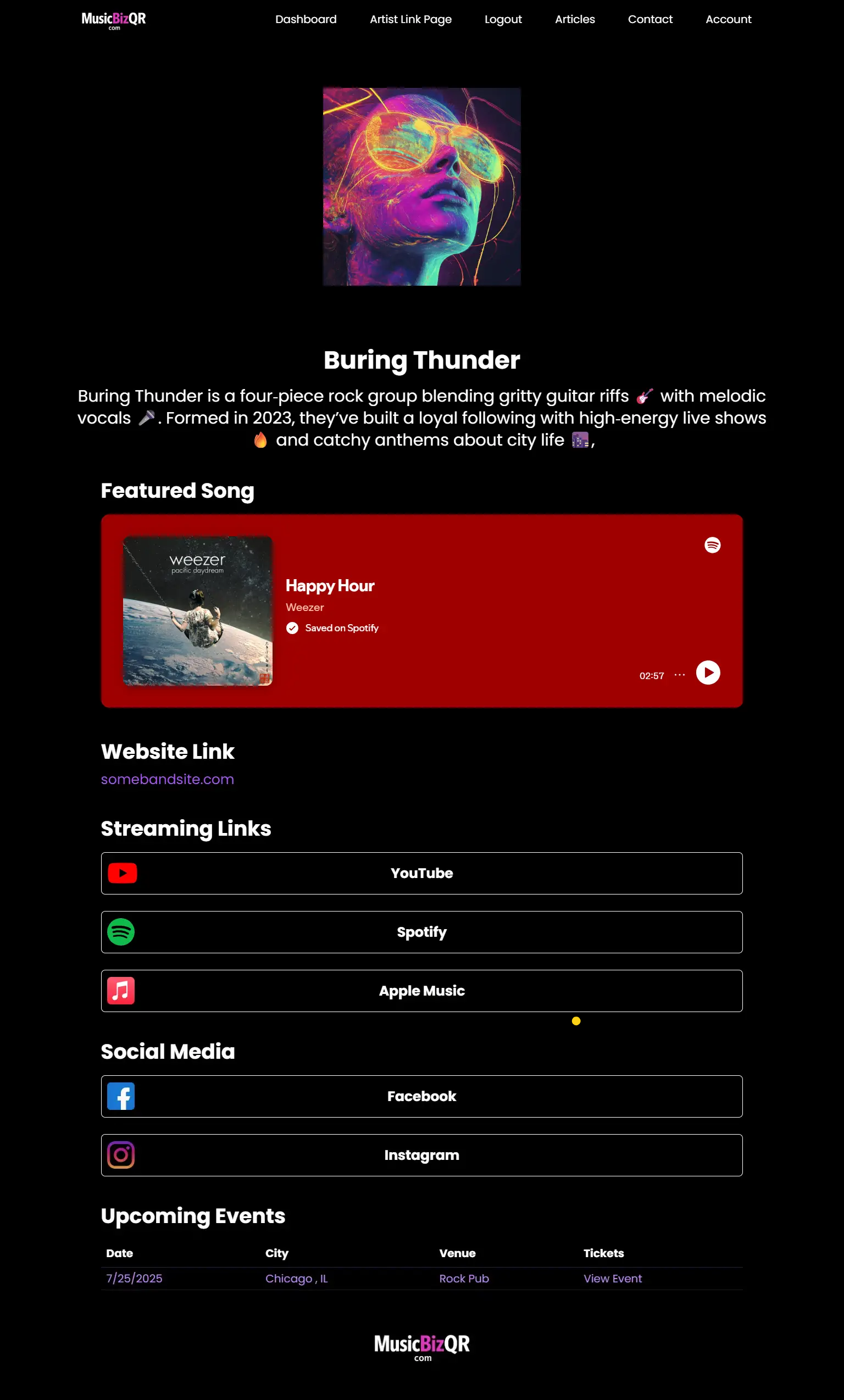
Faneqo gives you a powerful landing page with streaming links, videos, social buttons, and real-time fan analytics — all from a single QR code.
- 🎯 Unlimited link clicks & analytics
- 📈 Track Spotify streams, YouTube plays, and QR scans
- 📱 Mobile-optimized artist pages
- 🚀 Create your first Smart Link in seconds
Related Posts
Most link-in-bio tools weren’t built for musicians. Discover why smart links create better fan journeys, stronger branding, and higher conversions for your music.
Smart links for musicians explained—how they work, why they matter in 2026, and how to build a fan-converting link that drives your music career.
Discover how music links can help artists guide fans across platforms effortlessly. Learn strategies to boost engagement, streams, and merch sales.
Most link-in-bio tools weren’t designed for musicians. Learn why smart links deliver better fan engagement, stronger branding, and real music-driven revenue.
Smart links aren’t just utility tools — they’re the new frontier in artist branding. Learn how visual design, consistency, and fan-centric smart links define a musician’s digital identity.
Discover how smart links can transform fleeting music streams into lasting fan connections. Learn the strategies indie artists use to grow their audience in the streaming era.
Discover how smart links empower indie artists to create deeper, lasting relationships with fans. Turn every click into meaningful engagement.
Discover 2026’s best smart link tools for artists. We compare top platforms, fan engagement features, and why MusicBizQR stands above the rest.
Learn how direct-to-fan video turns your smart link into a conversion machine. Build trust, drive streams, and make real fan connections with MusicBizQR.
Learn how to use music links to drive fan engagement, increase streams, and promote your music like a pro. Built for modern artists and bands. Shall I begin writing the Markdown content for this article now?
In 2026, discovery is chaotic — and smart links are how artists bring it all together. Explore how music smart links guide fans, boost streams, and create real momentum across every platform.
Tired of generic link tools? Discover the smart link platform built for music: video previews, analytics, and full artist control—all in one sleek page.
Every new release deserves more than a link in your bio. Learn how to use smart links to drive streams, collect fans, and turn a single drop into lasting momentum.
The layout of your smart link page can make or break your fan engagement. Learn the design psychology that turns clicks into superfans.
If you're still sending fans to scattered links, you're leaving money on the table. Here's why every indie artist needs a smart link strategy to grow, connect, and convert.",
Most smart links just sit there. This guide shows musicians how to build a smart link page that turns casual clicks into lifelong fans. Real strategies that work.
Discover the psychology behind smart link layout design and how it shapes fan engagement, conversions, and merch sales.
Master the art of launching music with smart links. This guide shows how to create hype, drive streams, and maximize impact every time you drop a new release.
Your smart link is your new homepage. Learn how to design a 2026-ready page that plays your music instantly, tells your story, and converts fans the moment they land.
Learn how musicians can use smart links to connect directly with fans, bypass algorithms, and drive engagement, streams, and merch sales.
Discover how embedded content like music, videos, and social posts can turn your smart link into a fan engagement engine. Boost streams, merch sales, and loyalty.
Discover why smart links are transforming music marketing in 2025. Learn how a centralized hub can grow your audience, boost streams, and drive real fan engagement.
From Spotify embeds to merch and tour links, MusicBizQR makes music promotion easy. Learn how to use smart links to streamline your entire fan funnel.
Learn five powerful ways smart links can revolutionize your band's music promotion, amplify fan engagement, and strengthen fan loyalty.
Discover how smart links are revolutionizing music promotion, increasing fan engagement, boosting streaming numbers, and enhancing concert attendance.