
How Embedded Content Turns Smart Links Into Fan-Converting Machines
Executive Summary
Smart links only work when fans stay long enough for familiarity to form. Embedded content is what makes that possible.
When listeners are sent away to external platforms, attention fractures and context resets. Each redirect forces a decision, reintroduces friction, and breaks the continuity that smart links are designed to create. Even interested fans drop off—not because they’re disengaged, but because the experience keeps asking them to start over.
Embedded content changes the shape of the interaction. Music, video, and media play inside a single, stable destination, allowing attention to deepen without interruption. The listener stays oriented, recognition compounds, and return behavior becomes more likely.
This article explains why embedded content is not a feature upgrade, but a behavioral necessity—one that turns smart links from simple hubs into environments where fans actually form.
Key Takeaways
Every external redirect resets context and increases drop-off.
Listening and watching inside the destination preserves orientation and attention.
Duration, not clicks, is what builds recognition.
The destination feels intentional rather than transactional.
Return becomes more likely when the experience feels continuous.
Why Redirects Break Fan Momentum
Every redirect asks a question the fan didn’t come prepared to answer.
When a listener clicks away from a smart link to an external platform, the experience pauses. A new page loads. A different interface appears. Even if the music continues, momentum does not. Attention has to be re-earned, and most systems aren’t designed to do that.
Redirects don’t fail because fans lose interest. They fail because attention is fragile.
Attention Fractures at Every Handoff
Momentum depends on continuity. The more often a listener is asked to switch environments, the more chances there are for attention to fragment.
Each handoff introduces a reset:
- Visual context changes
- Controls and expectations shift
- Competing content appears
Individually, these interruptions feel minor. Collectively, they redirect focus away from the artist and toward the interface. Once that happens, the emotional thread that brought the listener there begins to unravel.
This is why smart links cannot function as simple routers. Their job is not to send fans elsewhere efficiently — it’s to hold attention long enough for familiarity to form, a system-level distinction established in The Ultimate Guide to Smart Links for Bands.
Each Redirect Introduces a Decision
Redirects don’t just move people. They introduce choice.
Every time a listener is sent elsewhere, they are asked — implicitly — whether they want to continue. Open the app. Sign in. Watch the rest. Stay or leave. These decisions add cognitive load, and cognitive load is the enemy of continuation.
Most listeners don’t consciously decide to leave. They simply don’t decide to stay.
The more decisions an experience demands, the fewer people make it through intact.
Why “I’ll Come Back Later” Almost Never Happens
The most dangerous thing a redirect creates is delay.
Once a listener exits the original experience, intention begins to decay. The moment that made the artist compelling is replaced by whatever the next platform surfaces. “Later” feels reasonable in theory, but rarely survives contact with time.
Memory requires proximity. The further the listener moves from the original moment, the less likely return becomes at all.
Redirects Reset Context Every Time
Even when a fan does follow a redirect, the original experience doesn’t come with them.
Each platform has its own logic, visuals, and priorities. When a listener leaves a smart link, they don’t arrive as a continuation of the same moment — they arrive as a new user in a new environment. Whatever curiosity or emotional residue existed has to survive the transition on its own.
Most of the time, it doesn’t.
Loss of Orientation
Orientation is the quiet sense of knowing where you are and why you’re there.
On a smart link, orientation is immediate. The artist’s identity, visuals, and intent are clear. The listener understands the relationship between the content and the creator.
A redirect dissolves that clarity.
The moment a new platform loads, attention shifts to navigation, suggestions, ads, and unrelated content. Even if the song continues playing, the frame has changed. The artist becomes one option among many rather than the focal point of the experience.
Identity Dilution Across Platforms
Each platform presents artists differently.
Profile layouts change. Visual language shifts. Interaction patterns vary. Over time, listeners encounter multiple partial versions of the same artist, none of which feel definitive.
This fragmentation weakens recognition. Instead of building a single, stable mental model of the artist, listeners experience disconnected impressions that never fully cohere.
In the streaming ecosystem — where discovery is constant but context is fleeting — this dilution is one of the core reasons exposure fails to convert, as explored more broadly in Smart Links in the Streaming Age: Convert Casual Listeners into Lifelong Fans.
Why Context Resets Kill Recognition
Recognition forms through continuity. Seeing the same name, visuals, and environment repeatedly allows separate moments to link together in memory.
Redirects break that chain.
When every interaction happens in a different place, the listener never experiences the artist as a whole. Each encounter feels isolated, even when it isn’t. Familiarity never compounds.
Until context stops resetting, recognition will remain fragile — and fragile recognition cannot support return.
Embedded Content Reduces Friction
The most powerful thing embedded content does is remove the need to decide.
When music or video plays directly inside a smart link, the listener doesn’t have to choose whether to continue. There is no app to open, no interface to relearn, no transition to survive. The experience simply carries on.
This isn’t a convenience feature. It’s a behavioral advantage.
Fewer Decisions, Longer Presence
Every additional action a listener must take increases the likelihood of drop-off. Even simple actions — tapping a button, switching apps, waiting for a page to load — introduce friction.
Embedded content removes those micro-decisions entirely. The listener stays in the same environment, with the same visuals and orientation. Attention remains anchored instead of being redistributed across platforms.
This is why embedded experiences consistently produce longer sessions. The listener isn’t choosing to engage more — they’re never given a reason to disengage.
Why Staying Put Matters Psychologically
Continuity allows the brain to remain in a single mode of attention.
When an experience is uninterrupted, emotional response deepens. The artist becomes associated not just with a song or video, but with a stable place. That association is the foundation of familiarity.
Embedded content allows smart links to function as environments rather than intersections. Instead of acting as traffic controllers that send fans away, they become spaces where listening, watching, and recognition can coexist.
This shift — from movement to presence — is what makes everything that follows possible.
Duration Is the Hidden Conversion Metric
Most artists are taught to measure success in clicks.
Plays. Views. Tap-through rates. These numbers feel concrete, but they rarely explain why some listeners turn into fans while most disappear. What actually determines whether a relationship forms isn’t the initial action — it’s how long the experience holds together after that action occurs.
Duration is the metric that makes every other metric meaningful.
Why Time Matters More Than Interaction
A click is a moment. Duration is a state.
When a listener stays inside an experience — watching, listening, scrolling without interruption — something different happens cognitively. The brain shifts from evaluation to absorption. Instead of deciding whether something is worth attention, it simply gives attention.
This shift cannot be rushed. Familiarity requires sustained exposure, not isolated interactions. A listener who spends three uninterrupted minutes with an artist has a fundamentally different relationship than one who clicks ten times across fragmented platforms.
Duration doesn’t just reflect interest. It creates it.
Time-on-Page Precedes Commitment
Commitment doesn’t appear suddenly. It accumulates.
Before a listener follows, saves, subscribes, or returns, they linger. That lingering is the earliest measurable sign that attention has stabilized. Without it, every downstream action remains unlikely.
This is why experiences built around redirects struggle to convert. Even when engagement technically occurs, it’s distributed across disconnected environments. No single place holds attention long enough for commitment to take shape.
Embedded content concentrates time instead of dispersing it. By keeping listening and watching inside one environment, smart links create the conditions necessary for recognition and return to emerge later.
Why Duration Is Invisible in Most Analytics
Most platforms aren’t optimized to show duration meaningfully.
They report clicks, plays, and impressions because those are easy to count. But they rarely show how long attention actually remains intact across an experience. As a result, artists optimize for surface-level interaction instead of sustained presence.
This is why smart link performance can feel counterintuitive at first. The most important change isn’t always visible immediately. It shows up later, as increased return visits, deeper engagement, and fans who recognize the artist without being prompted.
Duration doesn’t announce itself. It compounds quietly — and when it’s missing, nothing else works.
Familiarity Forms Through Uninterrupted Exposure
Familiarity isn’t created by intensity. It’s created by continuity.
A single powerful moment can spark interest, but interest alone doesn’t produce recognition. Recognition forms when exposure happens without interruption — when the brain has time to connect separate impressions into a single, coherent understanding of who the artist is.
This is why uninterrupted experiences matter more than repeated bursts of attention.
Recognition Is Built Through Repetition, Not Recall
Most listeners don’t consciously remember artists. They recognize them.
Recognition happens when the brain encounters the same signals — name, visuals, sound, tone — in a consistent environment. Over time, those signals collapse into a single mental object. The artist stops feeling new and starts feeling known.
Interruptions slow this process down.
When exposure is fragmented across platforms, the brain treats each encounter as separate. Even if the music is familiar, the context is not. Familiarity never compounds because the environment keeps changing.
Embedded content stabilizes the environment. It allows repetition to happen inside a single frame, which accelerates recognition without requiring effort from the listener.
Why Interruption Prevents Compounding
Every interruption forces the brain to re-evaluate.
Is this still worth attention?
Where am I now?
What am I supposed to do next?
These questions pull the listener out of absorption and back into decision-making mode. When that happens too often, the experience never becomes familiar — it remains perpetually provisional.
Familiarity depends on the absence of friction. It forms when nothing interrupts the experience long enough for recognition to take hold.
Familiarity Is the Precondition for Return
Return behavior doesn’t come from persuasion. It comes from comfort.
Listeners return to what feels known. They revisit environments where the artist already exists in memory. Without familiarity, there is no reason to come back unprompted.
This is why uninterrupted exposure is so powerful. It doesn’t push listeners toward action. It prepares them for it. When familiarity is present, return becomes natural rather than forced.
Everything that follows — loyalty, support, advocacy — depends on this stage forming first.
Embedded Media Creates Presence, Not Just Playback
Playback delivers content. Presence creates relationship.
When music or video is embedded inside a smart link, the listener isn’t just consuming media — they’re spending time with the artist. The difference is subtle but decisive. One is transactional. The other is experiential.
Presence is what turns exposure into connection.
Being “With” the Artist vs Consuming Content
On most platforms, media floats in isolation. A song plays, a video rolls, and the surrounding interface competes for attention. The artist feels distant, almost interchangeable with whatever comes next.
Embedded media changes that dynamic.
Because the content lives inside an artist-controlled environment, the listener never loses sight of who they’re engaging with. Visual identity, context, and intent remain visible throughout the experience. The artist doesn’t disappear behind the platform — they stay present alongside the media.
This creates a sense of proximity. The listener isn’t just hearing a track. They’re inhabiting a space where the artist is the focal point.
Why Presence Changes Perception
Presence alters how attention is interpreted by the brain.
When an experience feels continuous and intentional, the brain assigns it more significance. Time spent feels meaningful rather than incidental. The artist begins to register as a deliberate choice instead of background noise.
This is why embedded environments consistently outperform link lists. They don’t ask the listener to bounce between destinations. They invite the listener to stay.
The psychological effect of this shift — from navigation to immersion — is explored more deeply in The Psychology of Fan Conversion: Why Smart Links Outperform Link-in-Bio Tools Every Time.
Presence Is What Makes the Experience Memorable
Memory doesn’t form around isolated actions. It forms around experiences that feel whole.
When media plays in a stable environment, the brain links the sound or video to the surrounding context. That context becomes part of the memory. The artist is remembered not just for a song, but for the place where the song was encountered.
This is why presence matters more than volume. A smaller number of uninterrupted, embedded experiences will always outperform a larger number of fragmented interactions.
Presence is the bridge between attention and memory — and embedded media is how smart links build that bridge.
Embedded Media Creates Presence, Not Just Playback
Playback delivers content. Presence creates relationship.
When music or video is embedded inside a smart link, the listener isn’t just consuming media — they’re spending time with the artist. The difference is subtle but decisive. One is transactional. The other is experiential.
Presence is what turns exposure into connection.
Being “With” the Artist vs Consuming Content
On most platforms, media floats in isolation. A song plays, a video rolls, and the surrounding interface competes for attention. The artist feels distant, almost interchangeable with whatever comes next.
Embedded media changes that dynamic.
Because the content lives inside an artist-controlled environment, the listener never loses sight of who they’re engaging with. Visual identity, context, and intent remain visible throughout the experience. The artist doesn’t disappear behind the platform — they stay present alongside the media.
This creates a sense of proximity. The listener isn’t just hearing a track. They’re inhabiting a space where the artist is the focal point.
Why Presence Changes Perception
Presence alters how attention is interpreted by the brain.
When an experience feels continuous and intentional, the brain assigns it more significance. Time spent feels meaningful rather than incidental. The artist begins to register as a deliberate choice instead of background noise.
This is why embedded environments consistently outperform link lists. They don’t ask the listener to bounce between destinations. They invite the listener to stay.
The psychological effect of this shift — from navigation to immersion — is explored more deeply in The Psychology of Fan Conversion: Why Smart Links Outperform Link-in-Bio Tools Every Time.
Presence Is What Makes the Experience Memorable
Memory doesn’t form around isolated actions. It forms around experiences that feel whole.
When media plays in a stable environment, the brain links the sound or video to the surrounding context. That context becomes part of the memory. The artist is remembered not just for a song, but for the place where the song was encountered.
This is why presence matters more than volume. A smaller number of uninterrupted, embedded experiences will always outperform a larger number of fragmented interactions.
Presence is the bridge between attention and memory — and embedded media is how smart links build that bridge.
From Link Lists to Environments
Link lists organize destinations. Environments organize experience.
Most link-in-bio tools are built as directories — collections of exits arranged vertically. Their purpose is navigation. Get the listener from point A to point B as quickly as possible, then hand them off.
Smart links built around embedded content operate differently. They aren’t designed to move people. They’re designed to hold them.
Navigation vs Experience
Navigation answers the question: “Where can I go next?”
Experience answers the question: “Why would I stay?”
Link lists excel at the first question and ignore the second. They assume that interest survives transit, that attention persists across redirects, and that familiarity can form in fragments. In practice, none of those assumptions hold.
An environment removes the need to navigate. The listener doesn’t have to scan options or choose paths. The experience unfolds in front of them, anchored by embedded media and a consistent frame.
This shift changes the role of the page entirely. It stops being a menu and starts functioning as a destination.
Why Environments Feel Intentional
Intentionality is perceived, not declared.
When everything a listener needs is present in one place — music, visuals, context — the experience feels designed rather than assembled. The artist appears deliberate. The work feels cohesive.
This perception matters because it signals seriousness. Listeners subconsciously treat intentional environments as more valuable than collections of links, even when the underlying content is identical.
Embedded smart links create this effect by eliminating the sense of fragmentation. Nothing feels temporary. Nothing feels like a stopgap. The artist’s presence feels settled.
Environments Change the Role of the Fan
In a link list, the fan is a user navigating options.
In an environment, the fan becomes a participant.
They aren’t being directed outward; they’re being invited inward. Time slows down. Attention stabilizes. Familiarity has room to form. The experience doesn’t demand action — it earns it.
This is the structural difference that allows smart links to outperform generic tools. They don’t optimize clicks. They optimize continuity.
Once an environment exists, everything downstream becomes easier — including the most important outcome of all: return.
Presence Leads to Return
Return is not a decision a listener makes in the moment.
It’s a behavior that emerges later, when memory recognizes something as familiar and worth revisiting.
This is why presence matters more than persuasion.
Return Is a Byproduct, Not a Call to Action
Most artists try to manufacture return with reminders: follow prompts, save buttons, notifications, and CTAs layered everywhere. These tactics assume that return must be requested.
In reality, return happens when an experience leaves a residue.
When a listener spends uninterrupted time in an environment that feels intentional, the artist becomes anchored in memory. The next time the name appears — in a feed, a recommendation, a conversation — recognition fires automatically. The listener doesn’t need convincing. They already know where to go.
Presence does this work quietly. It doesn’t ask for commitment. It prepares the ground for it.
Why Embedded Experiences Are Easier to Revisit
Return behavior depends on recall, and recall depends on clarity.
If the listener remembers where the experience happened, return feels simple. If the memory is fragmented across platforms, return feels vague and effortful. People rarely act on vague intentions.
Embedded smart links create a single mental destination. The artist isn’t remembered as “that song on Spotify” or “that video I saw once.” They’re remembered as a place the listener has already been.
This sense of place is what removes friction from return. The listener doesn’t have to search, decide, or reconstruct context. They just go back.
Early Signs That Return Is Forming
Return doesn’t announce itself immediately.
The first signals are subtle:
- A second visit without prompting
- Longer time spent on the page
- Exploration without instruction
These behaviors indicate that familiarity has crossed a threshold. The listener is no longer reacting to novelty — they’re revisiting something that feels known.
At this point, the relationship has shifted. The artist is no longer just discovered. They’re remembered.
Presence is what makes that shift possible.
How Embedded Content Fits the Smart Links System
Embedded content is not an enhancement layered on top of smart links.
It is one of the structural components that allows the system to work at all.
Without embeds, smart links behave like traffic routers. With embeds, they become environments — and environments are what allow attention, familiarity, and return to compound.
Embedded Content Completes the Discovery Loop
Discovery rarely happens where relationships form.
Streaming platforms, social feeds, and short-form video are optimized for reach, not continuity. They introduce artists efficiently but provide no stable place for interest to settle. Attention arrives in fragments, then disperses just as quickly.
Smart links exist to resolve that fragmentation.
As outlined in The Ultimate Guide to Smart Links for Bands, the role of a smart link is to act as a central destination — a place where scattered discovery can converge into a coherent experience.
Embedded content is what allows that destination to function immediately. Instead of sending listeners back into the same fragmented ecosystem that produced the discovery, smart links with embedded media give attention somewhere to land.
How This Aligns With Streaming Behavior
Streaming is not the enemy of fan-building. It is the entry point.
What streaming lacks is persistence. Listeners encounter music in passing, often without ever forming a stable association with the artist. This is why exposure alone fails to produce fans, even at scale — a dynamic explored in more detail in Smart Links in the Streaming Age: Convert Casual Listeners into Lifelong Fans.
Embedded content bridges this gap.
By allowing music and video to live inside a consistent, artist-controlled environment, smart links transform fleeting discovery into something continuous. The listener doesn’t leave the moment that made the artist interesting. They stay inside it.
The System-Level Outcome
When embedded content is present, the smart links system works as intended:
- Discovery flows inward instead of outward
- Attention stabilizes instead of fragmenting
- Familiarity compounds instead of resetting
- Return emerges naturally instead of being forced
Each component supports the next. No single feature carries the load on its own. Embedded content simply ensures that the system has a place where everything else can accumulate.
This is why embedded media isn’t optional in a conversion-focused smart link strategy. It is the mechanism that allows the entire system to move from exposure to relationship — and from momentary interest to lasting fanhood.
Frequently Asked Questions
Why do embedded smart links convert better than link lists?
Because embedded smart links keep attention in one place. Link lists send listeners away, forcing them to re-orient and decide whether to continue. Embedded media removes those decisions, allowing familiarity and memory to form before attention breaks.
Do embedded videos and music really increase fan retention?
Yes — not by persuasion, but by continuity. When fans stay inside a single environment, exposure compounds instead of resetting. This uninterrupted time is what allows recognition and return behavior to emerge naturally.
Isn’t redirecting to Spotify or YouTube unavoidable?
Discovery happens on those platforms, but relationship-building doesn’t have to. Smart links exist to resolve discovery into a stable destination. Embedded content allows artists to keep the moment of interest intact instead of handing it back to the algorithm.
Can embedded content work for new or unknown artists?
It works especially well for new artists. When recognition is low, consistency matters more than scale. A small number of uninterrupted experiences builds familiarity faster than many fragmented impressions.
How long does it take for embedded content to show results?
The earliest signals appear as longer time-on-page and unprompted return visits. Fan conversion doesn’t spike instantly — it compounds quietly as familiarity forms and recognition stabilizes.
Is embedded content about forcing fans to stay longer?
No. It’s about removing reasons to leave prematurely. Fans stay longer because nothing interrupts the experience, not because they’re being pressured or gated.
Does embedded content replace calls to action?
It changes their role. When presence and familiarity are established first, calls to action feel natural instead of intrusive. Embedded content prepares the listener so actions require less persuasion.
What’s the biggest mistake artists make with smart links?
Treating them as traffic routers instead of environments. Without embedded content, smart links inherit the same fragmentation problems as link-in-bio tools — just with better branding.
Built for Musicians. Powered by Smart Links.
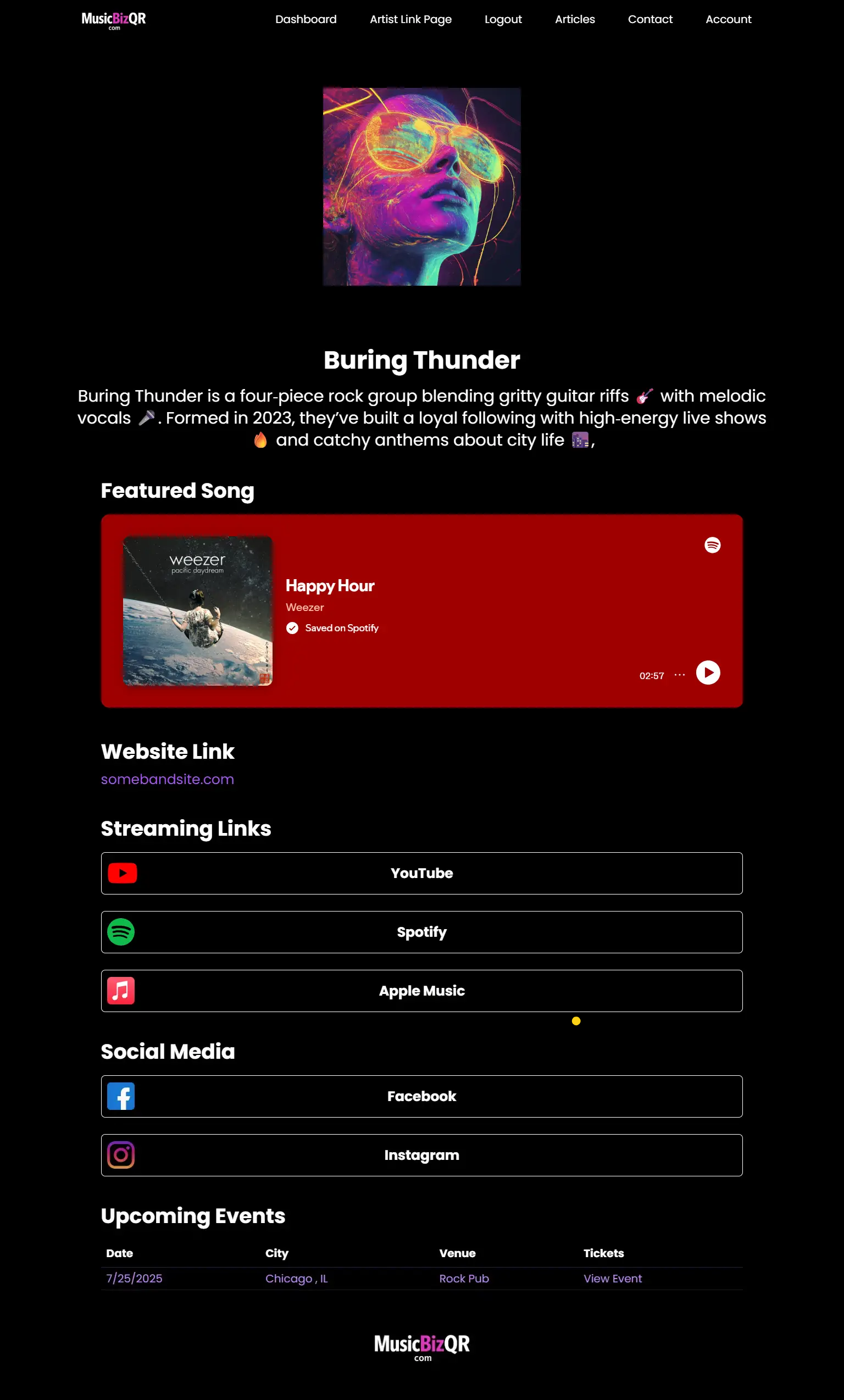
Faneqo gives you a powerful landing page with streaming links, videos, social buttons, and real-time fan analytics — all from a single QR code.
- 🎯 Unlimited link clicks & analytics
- 📈 Track Spotify streams, YouTube plays, and QR scans
- 📱 Mobile-optimized artist pages
- 🚀 Create your first Smart Link in seconds
Related Posts
Most link-in-bio tools weren’t built for musicians. Discover why smart links create better fan journeys, stronger branding, and higher conversions for your music.
Smart links for musicians explained—how they work, why they matter in 2026, and how to build a fan-converting link that drives your music career.
Discover how music links can help artists guide fans across platforms effortlessly. Learn strategies to boost engagement, streams, and merch sales.
Most link-in-bio tools weren’t designed for musicians. Learn why smart links deliver better fan engagement, stronger branding, and real music-driven revenue.
Smart links aren’t just utility tools — they’re the new frontier in artist branding. Learn how visual design, consistency, and fan-centric smart links define a musician’s digital identity.
Discover how smart links can transform fleeting music streams into lasting fan connections. Learn the strategies indie artists use to grow their audience in the streaming era.
Discover how smart links empower indie artists to create deeper, lasting relationships with fans. Turn every click into meaningful engagement.
Discover 2026’s best smart link tools for artists. We compare top platforms, fan engagement features, and why MusicBizQR stands above the rest.
Learn how direct-to-fan video turns your smart link into a conversion machine. Build trust, drive streams, and make real fan connections with MusicBizQR.
Learn how to use music links to drive fan engagement, increase streams, and promote your music like a pro. Built for modern artists and bands. Shall I begin writing the Markdown content for this article now?
In 2026, discovery is chaotic — and smart links are how artists bring it all together. Explore how music smart links guide fans, boost streams, and create real momentum across every platform.
Tired of generic link tools? Discover the smart link platform built for music: video previews, analytics, and full artist control—all in one sleek page.
Every new release deserves more than a link in your bio. Learn how to use smart links to drive streams, collect fans, and turn a single drop into lasting momentum.
The layout of your smart link page can make or break your fan engagement. Learn the design psychology that turns clicks into superfans.
If you're still sending fans to scattered links, you're leaving money on the table. Here's why every indie artist needs a smart link strategy to grow, connect, and convert.",
Most smart links just sit there. This guide shows musicians how to build a smart link page that turns casual clicks into lifelong fans. Real strategies that work.
Discover the psychology behind smart link layout design and how it shapes fan engagement, conversions, and merch sales.
Master the art of launching music with smart links. This guide shows how to create hype, drive streams, and maximize impact every time you drop a new release.
Your smart link is your new homepage. Learn how to design a 2026-ready page that plays your music instantly, tells your story, and converts fans the moment they land.
Learn how musicians can use smart links to connect directly with fans, bypass algorithms, and drive engagement, streams, and merch sales.
Discover how embedded content like music, videos, and social posts can turn your smart link into a fan engagement engine. Boost streams, merch sales, and loyalty.
Discover why smart links are transforming music marketing in 2025. Learn how a centralized hub can grow your audience, boost streams, and drive real fan engagement.
From Spotify embeds to merch and tour links, MusicBizQR makes music promotion easy. Learn how to use smart links to streamline your entire fan funnel.
Learn five powerful ways smart links can revolutionize your band's music promotion, amplify fan engagement, and strengthen fan loyalty.
Discover how smart links are revolutionizing music promotion, increasing fan engagement, boosting streaming numbers, and enhancing concert attendance.