
Smart Links vs. Link-in-Bio Tools: What Musicians Really Need
1. Introduction — The Quiet Shift Happening in Every Artist’s Bio Link
The link in your bio used to be an afterthought — a tiny doorway at the edge of your digital footprint. For years, musicians treated it the same way everyone else did: drop a Linktree, stack a few buttons, and hope fans clicked the right one. It worked well enough in the influencer era, when attention was slower, fan journeys were simpler, and a button wall didn’t feel like friction.
But 2026 feels different. Music is being discovered in seconds, not minutes. A fan hears two bars of your track on TikTok and decides instantly whether they want more. A casual listener becomes a potential follower in the span of a swipe. Everything depends on what happens in the next moment — the moment where they tap your link.
And here’s the shift almost nobody is talking about:
the old “link-in-bio” model wasn’t built for musicians at all.
It was built for creators who thrive on text, lists, and utility. Musicians don’t work that way. Your art is the content. Your identity isn’t a button — it’s a sound, a visual world, a story, a feeling.
That’s why so many artists are starting to question the tools they’ve quietly relied on for years. The question isn’t:
“Which bio link should I use?”
The real question is:
“Does my link create an emotional connection… or does it kill it?”
Because in today’s music landscape, fans don’t fall in love with buttons.
They fall in love with experiences — and musicians who understand this are already leaving traditional link-in-bio tools behind.
Table of Contents
- Introduction — The Quiet Shift Happening in Every Artist’s Bio Link
- The Link-in-Bio Era — A Tool Never Truly Designed for Musicians
- What Smart Links Really Are — The Evolution from Buttons to Experiences
- The Fan Psychology Breakpoint — What Happens in the First 3 Seconds
- The Core Limitation of Link-in-Bio Tools: They Flatten the Artist’s Identity
- What Musicians Actually Need: A Music-First Entry Point
- Smart Links as Fan Funnels — Turning Curiosity Into Fandom
- The Analytics Divide — Buttons Tell You Nothing, But Journeys Tell You Everything
- Why Aesthetic Congruence Matters (More Than Most Musicians Realize)
- The Multi-Page Advantage — Why Musicians Need More Than One Page
- Real-World Comparison — A Fan’s Journey Through Two Different Link Experiences
- The Technical Gap Between the Two Categories
- Why MusicBizQR Leads the Smart Link Space for Musicians
- When Link-in-Bio Tools Are Fine — And When They Absolutely Aren’t
- The Future: Links Are Becoming Experiences (And Musicians Who Adapt Will Win)
- Conclusion — What a Musician’s Link Says About Their Art
- FAQ
The Link-in-Bio Era — A Tool Never Truly Designed for Musicians
Linktree wasn’t born in a recording studio. It wasn’t shaped by the rhythm of fan discovery or the emotional weight of a first listen. It came from the creator world — a universe built around convenience, not connection. For influencers, coaches, and podcasters, a tidy stack of buttons solved a real problem: too many platforms, not enough space to list them all.
And in that universe, the design made sense.
A button is a call to action.
A list is a roadmap.
Utility is the point.
But musicians don’t operate on utility.
Music is emotional architecture — a place, a feeling, a transformation. When a fan taps a musician’s link, they’re not looking for navigation. They’re looking for the world behind the sound.
That’s where the fracture began.
When Linktree arrived, musicians adopted it out of survival, not alignment. Social platforms had scattered their audience across a dozen destinations. They needed something — anything — that could hold everything in one place. Linktree offered structure, but not soul. It didn’t understand that the link is not a menu for an artist — it's an invitation.
So musicians were squeezed into a format never meant for them.
Same sterile layout.
Same button-forward design.
Same visual flattening that made a touring band indistinguishable from a travel blogger.
The emotional first impression — the one moment where a new listener is still warm from hearing your song — vanished behind generic UI.
Picture it.
A fan hears your track on TikTok. They tap your bio, still carrying the glow of discovery — and land on a cold, silent button list. No music. No imagery. No texture. The emotional thread breaks instantly, and most of those fans never reconnect.
This wasn’t a user error.
It was a category error.
Musicians didn’t outgrow Linktree.
Music simply never belonged there in the first place.
Because when your art depends on emotional continuity — on preserving the spark between discovery and connection — a link tool built for utility doesn’t just under-serve you.
It undermines you.
What Smart Links Really Are — The Evolution from Buttons to Experiences
Before smart links became a buzzword in music marketing, they were something far simpler: a response to a problem nobody had language for yet. Musicians were watching fans slip through the cracks — not because the music wasn’t good, but because the online journey from discovery to connection was broken. A button list couldn’t hold a world together. It couldn’t carry the emotion of a song across the threshold of a link click.
Smart links emerged to fix that fracture.
At first, they were just “music-specific link hubs,” a way to offer fans a clean choice between Spotify, Apple Music, YouTube, or Tidal. But the moment those pages began embedding players — the moment a fan could hear your song before choosing a platform — everything shifted. The link stopped being a menu and became a continuation of the moment that brought the fan there.
That shift was the birth of the modern smart link.
Suddenly, musicians had a format that could carry mood, not just metadata. Pages started including visuals from the album cycle, release-day artwork, video embeds, and contextual cues that kept the emotional arc alive. Instead of a cold jump from discovery to decision, fans were given a soft landing — a place that felt connected to the sound that pulled them in.
Smart links evolved again when artists realized they could build experiences, not just destinations.
A release page became a miniature world with:
- A song that plays instantly
- Artwork that sets the tone
- A video that deepens immersion
- Buttons arranged intentionally rather than stacked
- Layouts that guide fans into a story instead of scattering their attention
This wasn’t just a new tool.
It was a new category.
Because a smart link isn’t defined by the presence of buttons — Linktree has those too.
A smart link is defined by the presence of the artist.
It’s a doorway into your world, not a list of exits out of it. And as fan behavior has shifted toward faster discovery and higher expectations, that emotional continuity is no longer a luxury. It’s the baseline for building real connection.
Smart links didn’t replace link-in-bio tools.
They evolved beyond them — because music demands more than navigation.
It demands experience.
The Fan Psychology Breakpoint — What Happens in the First 3 Seconds
Most musicians think fans make decisions with logic — “click this,” “listen here,” “follow me.”
But in reality, almost everything that matters happens before logic ever gets a chance to speak.
A fan taps your link while they’re still warm from the moment of discovery. Maybe they heard your hook on TikTok, saw a live clip on Instagram, or stumbled across a snippet in a friend’s Story. Their brain is glowing with novelty, curiosity, and emotional residue. Music is still ringing in their internal echo.
And then… they land on a silent wall of buttons.
Here’s what happens inside those first three seconds — the psychological breakpoint that determines whether a casual listener becomes a follower or disappears forever:
Second 1: Emotional continuity breaks
The fan expects to continue the feeling they just had.
But instead of music, imagery, or the emotional texture of your world, they’re met with an interface designed for general-purpose creators.
The brain experiences a moment of mild disorientation — a drop in emotional expectation.
Second 2: Cognitive load spikes
A list of buttons requires a decision, and decisions burn energy.
Which platform should they pick?
Where do they begin?
What were they looking for again?
This friction is microscopic but deadly.
Decision fatigue kills fan journeys faster than bad music ever will.
Second 3: Attention collapses or commits
The fan either finds something compelling instantly…
or their curiosity evaporates.
On a creator-focused link page, nothing pulls them forward emotionally.
Buttons do not create momentum.
Buttons stop momentum.
This is the psychological flaw embedded deep into the design of link-in-bio tools:
they assume fans arrive ready to decide, not ready to feel.
Musicians operate in the opposite direction —
the emotional brain leads, and the logical brain follows.
When a link page fails to preserve that emotional thread, the fan unconsciously classifies the experience as “not special,” “not immersive,” or simply “not worth the energy.” And in a world where every swipe competes with ten more, that tiny break is all it takes for the connection to dissolve.
This is the hidden reason musicians struggle to convert curiosity into fandom:
their link breaks the chemistry at the exact moment the fan is most open to connection.
Smart links were born to solve this moment — the fragile, three-second window where fandom either forms or fades.
What Musicians Actually Need: A Music-First Entry Point
When fans tap a musician’s link, they’re not looking for information — they’re looking for continuity. They want the feeling they just had to keep going. That’s why the first impression of your link matters more than almost anything else in your digital ecosystem. It’s not a place for organization. It’s a place for immersion.
Musicians need an entry point that behaves like their art behaves:
immediate, emotional, sensory, and unmistakably theirs.
The moment a fan arrives, the page should answer one simple question:
“Does this feel like the world I just stepped out of?”
If the answer is no — if they land somewhere silent, generic, or visually disconnected — they experience emotional whiplash. The spark that brought them there dims. That’s the fatal flaw of general-purpose link tools: they treat music like a destination, not an experience.
A music-first entry point works the opposite way.
It puts the artist at the center, not the buttons.
It brings fans into the atmosphere of your story before asking them to make a decision.
It recreates the emotional conditions that made the fan click in the first place.
A real music-first entry point offers:
Instant Playback
Fans should be able to hear your song the moment they land — not after navigating three layers of links. Sound reactivates the emotional memory of the discovery moment.
Visual Continuity
Artwork, colors, era-specific imagery, and tour aesthetics frame the experience. They tell the fan: you’re still in the right place.
Intentional Layout
Fans should understand where to go without thinking. The structure guides them, not overwhelms them.
Flow Instead of Friction
The fan moves through your world effortlessly — music to visuals to action — without a single jarring break in emotional continuity.
These aren’t design preferences.
They’re fundamental psychological needs of the modern fan journey.
Musicians don’t need a link that lists everything they offer.
They need a link that feels like them.
Because when your entry point mirrors your artistry, fans don’t need to be convinced to stay. They want to.
And in 2026, that difference is everything.
Smart Links as Fan Funnels — Turning Curiosity Into Fandom
Most musicians still treat smart links like a filing cabinet — a place to store everything so fans can choose their own path. But the artists who grow the fastest understand a truth that feels almost counterintuitive: a smart link isn’t a container.
It’s a funnel.
A fan funnel isn’t a marketing trick. It’s the natural psychological sequence a listener follows when they’re getting attached to an artist. The path has always been the same: hear something → feel something → want more. The problem is that traditional link-in-bio tools collapse all three stages into a single screen of buttons. They ask fans to make a decision at the exact moment when fans want to be led.
A smart link — when treated as a funnel — restores the flow.
It doesn’t overwhelm with choice.
It doesn’t break emotional continuity.
It doesn’t scatter attention.
Instead, it guides fans deeper, step by step, in the same rhythm their own excitement wants to follow.
To see it clearly, picture a real fan journey:
A listener stumbles onto your track on TikTok. They tap your bio link while the melody is still echoing through their mind. On a traditional link page, they hit a silent button wall — a cold cognitive task. But on a smart link funnel, they land on a page where your song is already playing, your artwork frames the moment, and the next step in your world is obvious without explanation.
That’s the difference between curiosity evaporating and curiosity compounding.
A well-designed smart link funnel does three powerful things:
1. It amplifies the emotional momentum fans arrived with
Playback continues the feeling, not replaces it. The brain stays in the same emotional gear, which dramatically increases the chance of deeper engagement.
2. It reduces cognitive friction to nearly zero
Fans don’t want to choose from a list of options. They want a path. A funnel arranges actions in a sequence that feels intuitive: music → visuals → deeper content → commitment.
3. It turns passive observers into active participants
The fan doesn’t just click once — they enter. They move. They explore. By the time they reach the end of the funnel, they’ve taken multiple actions that strengthen loyalty: a follow, a save, a video view, maybe even a ticket purchase.
This is the quiet superpower of smart links.
They transform a casual, fleeting moment into the beginning of a relationship.
And that’s why smart musicians don’t ask, “What should I put on my link?”
They ask:
“What journey do I want my fans to take?”
Because musicians don’t need more links.
They need movement — a guided path that carries a listener from discovery to devotion.
Smart Links as Fan Funnels — Turning Curiosity Into Fandom
Most musicians still treat smart links like a filing cabinet — a place to store everything so fans can choose their own path. But the artists who grow the fastest understand a truth that feels almost counterintuitive: a smart link isn’t a container.
It’s a funnel.
A fan funnel isn’t a marketing trick. It’s the natural psychological sequence a listener follows when they’re getting attached to an artist. The path has always been the same: hear something → feel something → want more. The problem is that traditional link-in-bio tools collapse all three stages into a single screen of buttons. They ask fans to make a decision at the exact moment when fans want to be led.
A smart link — when treated as a funnel — restores the flow.
It doesn’t overwhelm with choice.
It doesn’t break emotional continuity.
It doesn’t scatter attention.
Instead, it guides fans deeper, step by step, in the same rhythm their own excitement wants to follow.
To see it clearly, picture a real fan journey:
A listener stumbles onto your track on TikTok. They tap your bio link while the melody is still echoing through their mind. On a traditional link page, they hit a silent button wall — a cold cognitive task. But on a smart link funnel, they land on a page where your song is already playing, your artwork frames the moment, and the next step in your world is obvious without explanation.
That’s the difference between curiosity evaporating and curiosity compounding.
A well-designed smart link funnel does three powerful things:
1. It amplifies the emotional momentum fans arrived with
Playback continues the feeling, not replaces it. The brain stays in the same emotional gear, which dramatically increases the chance of deeper engagement.
2. It reduces cognitive friction to nearly zero
Fans don’t want to choose from a list of options. They want a path. A funnel arranges actions in a sequence that feels intuitive: music → visuals → deeper content → commitment.
3. It turns passive observers into active participants
The fan doesn’t just click once — they enter. They move. They explore. By the time they reach the end of the funnel, they’ve taken multiple actions that strengthen loyalty: a follow, a save, a video view, maybe even a ticket purchase.
This is the quiet superpower of smart links.
They transform a casual, fleeting moment into the beginning of a relationship.
And that’s why smart musicians don’t ask, “What should I put on my link?”
They ask:
“What journey do I want my fans to take?”
Because musicians don’t need more links.
They need movement — a guided path that carries a listener from discovery to devotion.
The Analytics Divide — Buttons Tell You Nothing, But Journeys Tell You Everything
Musicians don’t lose fans because the music isn’t good. They lose them because they can’t see what’s happening. Most artists are flying blind, relying on streaming numbers and social likes to guess what’s working. But those metrics only tell you the end result — not the story behind it.
And that’s the fatal flaw in traditional link-in-bio tools:
they only measure clicks, not behavior.
A button wall can tell you someone tapped “Spotify.”
It cannot tell you:
- how long they stayed on your page
- what caught their attention
- which section they hovered over
- why they left
- where they came from
- which song or video kept them engaged
- whether mobile or desktop fans behave differently
- which cities respond strongest to which content
In other words:
Buttons show outcomes.
Smart links show journeys.
This difference is massive — not just technically, but strategically.
Because every moment inside a smart link is a data point that can change how an artist promotes their music, books their shows, or structures their releases.
A musician doesn’t just need to know what fans clicked.
They need to know how fans moved.
The Power of Journey Data
When you switch from button analytics to journey analytics, you start seeing patterns you never had access to before:
- Fans in Chicago spend twice as long on your release page
- Your embedded video leads to more Spotify follows than the Spotify link itself
- iPhone users scroll deeper, while Android fans bounce quicker
- QR scans at live shows spike during your opener’s set
- Your tour teaser clip generates more merch clicks than your merch button
This is the kind of intelligence musicians have been missing for decades — the kind labels, marketers, and managers used to spend serious money trying to approximate.
And it’s exactly where link-in-bio tools fall apart.
They were never meant to capture behavioral nuance because they were never built for artists. They were made for general creators whose primary actions are transactional: buy my program, read my blog, watch my video. For musicians, the journey is emotional first and tactical second — and the data must reflect that.
Where Muse Changes Everything
Muse, MusicBizQR’s analytics engine, closes the gap that traditional tools can’t even see. It captures:
- page flow (how fans move across your page)
- media engagement (plays, pauses, completions)
- QR scan behavior (where, when, on what device)
- geo insights (city-level fan hotspots)
- device patterns
- top sections (what draws fans in the most)
- referrers (TikTok vs Instagram vs direct vs live show QR)
Muse doesn’t just tell you that fans clicked.
It tells you why they reacted, how they moved, and where you’re winning.
This is the analytics divide that now separates
Why Aesthetic Congruence Matters (More Than Most Musicians Realize)
Fans don’t just listen to music — they step into it. Every release has a world inside it: a color palette, a mood, a tempo, a visual rhythm. That’s why musicians spend so much time designing album covers, refining era-based imagery, and crafting visuals that feel like extensions of the sound. The aesthetic is not decoration. It’s identity.
But when a fan taps a traditional link-in-bio page, that identity collapses.
Suddenly, your carefully built world is replaced by a layout that looks exactly like every other creator on the internet. The transition is jarring. The emotional frequency breaks. The fan goes from an immersive sensory environment to a template that has nothing to do with you.
This is what we call aesthetic dissonance — the psychological disconnect created when the visual world of your music doesn’t match the visual world of your link.
And here’s the thing: fans feel this immediately, even if they can’t articulate it.
Imagine releasing a dark, cinematic, stormy song — a track dripping with atmosphere. Your cover art is moody. The video is shadowy and slow-burning. Your Instagram rollout is monochromatic and heavy.
Then the fan taps your bio link…
and lands on pastel buttons, sterile white space, and the same generic layout as a lifestyle influencer reviewing yoga mats.
The break is instant.
The mood evaporates.
The world collapses.
Visual congruence isn’t optional for musicians — it’s psychological reinforcement. When everything the fan sees aligns with what they feel, their emotional connection deepens. When it doesn’t, the connection weakens.
Musicians need:
A place where their era actually lives
Every album cycle is a visual universe. A smart link should reflect that universe, not flatten it.
A layout that behaves like their brand
A punk band shouldn’t share the same link aesthetic as a bedroom pop artist.
A touring metal act shouldn’t share the same structure as a comedy creator.
Identity needs space to breathe.
Visual rhythm that matches the listening experience
Fans should move through the page the way they move through your music — gradually, intentionally, with emotional cues guiding them.
A design that signals “this is not generic”
When a page is unmistakably yours — the fonts, the colors, the artwork, the flow — fans don’t feel like they’re entering a tool.
They feel like they’re entering you.
This is the hidden edge modern smart links provide:
they don’t just host your links — they host your world.
Link-in-bio tools were built to be neutral.
Smart links were built to be expressive.
And when a fan steps into an environment that feels like your music feels, their brain does something subtle but powerful:
it recognizes the artist, not the interface.
That recognition becomes attachment.
That attachment becomes loyalty.
And that loyalty is the foundation of every long-term fan relationship.
Why Button Walls Kill Fan Energy (and Why Smart Links Fix It)
There’s a moment — a tiny, fragile moment — right after someone taps your link.
It’s the split-second where curiosity turns into possibility.
It’s the point where a casual listener might become a real fan.
And this is exactly where traditional link-in-bio tools fail.
They take that moment — that rising emotional voltage — and drop it into a button wall. A static, silent, visually empty set of rectangles that all demand the same thing:
“Choose.”
But fans don’t want to choose.
Not yet.
Not when their excitement is fresh and unshaped.
Choice is a cognitive task, and cognitive tasks interrupt emotional momentum.
This is the psychological flaw hiding in plain sight:
Button walls force fans into the thinking brain before the feeling brain is done.
And when you make a fan think too soon, you lose them.
A smart link doesn’t do this. It extends the emotional moment rather than breaking it. It keeps the fan inside the energy they arrived with. It gives them movement instead of decisions. It lets the music lead instead of asking them to decide where to go next.
Here’s what actually happens inside a fan’s mind when they hit a button wall:
1. Micro-overwhelm
Six buttons. Eight buttons. Twelve buttons.
Where do they start? Where should they click? Is there something they’ll miss?
Every unanswered question increases bounce probability.
2. Emotional drop-off
That spark of excitement — the one lit by a TikTok clip, a reel, a recommendation — fades fast when the next screen has no emotional tone.
Button walls are neutral. Music is not.
3. Fragmentation of attention
Buttons split the fan’s focus into multiple competing paths.
Nothing leads forward. Nothing creates a sequence.
The narrative disappears.
4. Loss of identity
Every Linktree page looks like every other Linktree page.
There’s no artistic imprint. No signature. No mood.
The fan enters a tool, not your world.
Meanwhile, a smart link flips all of this on its head.
Instead of demanding decisions, it creates flow.
Instead of presenting options, it presents experience.
Instead of breaking momentum, it shapes it.
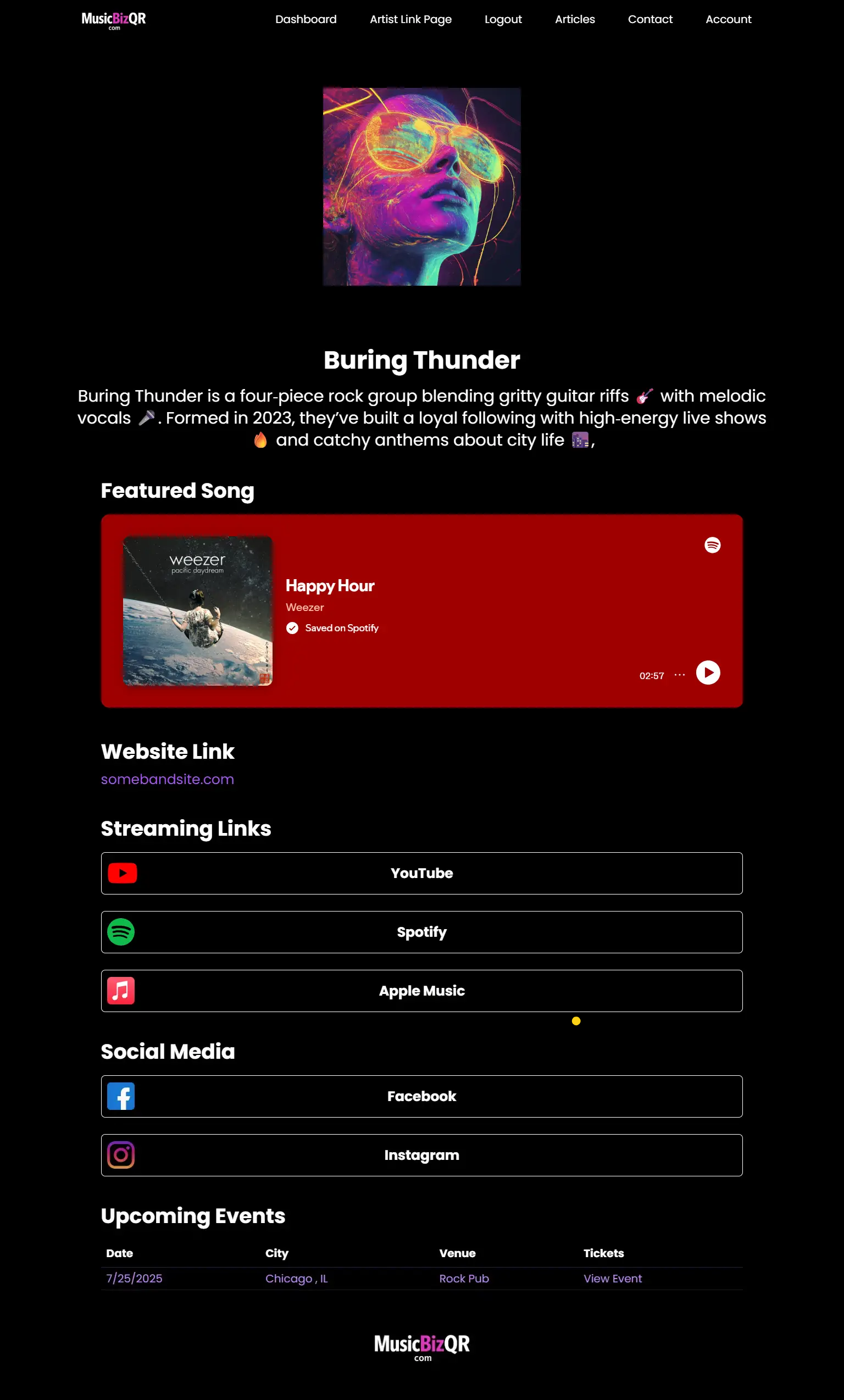
A fan hits your smart link and immediately sees:
- the artwork of the release
- a video that animates the mood
- the track embedded and ready
- a hero section that feels alive
- one clear next action that matches their emotional state
No overwhelm.
No decision fatigue.
No break in immersion.
A smart link respects the psychology of attention and the fragility of fan excitement. It doesn’t ask fans to think — it invites them deeper.
And in a music world where attention is the currency and emotion is the engine, that difference becomes everything.
Because fans don’t fall in love with buttons.
They fall in love with moments.
Smart links create those moments.
Button walls kill them.
The Moment of Truth: Why Real Fans Only Need One Path Forward
Every fan journey reaches a critical point — the moment where emotion turns into action.
It’s fragile, electric, and easy to lose.
And it almost always happens before a fan even realizes they’re making a decision.
Smart links work because they respect that moment.
Traditional link-in-bio tools distract fans with options.
Smart links guide fans with direction.
And in music marketing, direction wins every time.
Think about the last time you discovered an artist you genuinely liked. Maybe it was a TikTok hook that got stuck in your head. Maybe it was someone’s live clip with shaky iPhone audio that still somehow landed directly in your chest. Or maybe you were tagged in a story by a friend whose taste you trust more than algorithms.
In every case, your emotional energy wasn’t spread across twelve options — it was pointed toward one feeling: I want more.
Smart links amplify that impulse.
They deliver a single, powerful next step that matches the fan’s emotional state:
- If they're curious, they see the video playing instantly.
- If they’re hooked, the song is already loaded and ready to stream.
- If they’re ready, the “listen now,” “get tickets,” or “pre-save” call-to-action sits exactly where their attention naturally lands.
There’s no hunting.
No confusion.
No second guessing.
Just an uninterrupted momentum path from interest → engagement → action.
This is where conversions actually happen — not on the tenth button or the fifth option, but on the first spark of “I like this.”
And when that spark is supported instead of interrupted, three things happen:
1. Fans take action immediately
Because the page doesn’t stall their energy — it channels it.
2. Engagement compounds
One action leads to another:
watch the video → listen to the full track → follow → share → dive deeper.
That chain reaction doesn’t fire when you dump someone onto a static menu.
3. You get more real fans, not accidental visitors
Fans who move through a guided emotional journey remember it.
They remember you.
Their connection isn’t transactional — it’s experiential.
This is the real purpose of a smart link:
Not to store your links neatly,
but to carry the fan from the moment they find you to the moment they care.
Every other tool treats that moment like a list of choices.
MusicBizQR treats it like a doorway.
And once a fan steps through that doorway, they don’t just click —
they commit.
The Analytics Edge: Why Artists Who Measure Always Win
If smart links are the engine of modern music promotion, analytics are the steering wheel — the tool that tells you where momentum is building, where it’s slipping, and where it’s exploding without warning. Most artists guess. Successful artists measure. And when you measure, patterns start revealing themselves like constellations in the night sky.
This is where MusicBizQR separates itself from every generic link-in-bio service on the market. While other tools give you surface-level vanity metrics, MBQ shows you the story behind your traffic — and that story is worth more than a hundred thousand random clicks.
Imagine waking up, opening your dashboard, and immediately seeing:
- Which city suddenly started streaming your new single
- Which social platform is sending you the most engaged listeners
- Which link fans click first — no matter how many options you give them
- What time of day your fans are most active
- How your QR codes perform at shows, on posters, or inside merch packaging
Those insights don’t just inform your strategy —
they evolve it.
Analytics That Actually Change Your Behavior
Most analytics tools overwhelm artists with charts they don’t know how to interpret. MBQ was built entirely around the musician’s workflow, which means the data is structured to create action, not confusion.
A quick glance at Muse Analytics can reshape your entire promotional approach:
- If fans are watching your embedded video more than clicking your Spotify link, your next push should lean heavily on visual content.
- If QR codes at your show merch table outperform everything else, your next tour run should double down on physical touchpoints.
- If TikTok is delivering more listeners than Instagram, your posting strategy shifts from aesthetic to story-driven content.
Data stops being numbers.
It becomes a compass.
Real-Time Feedback Means Real-Time Growth
Momentum doesn’t build slowly anymore — it builds in bursts. Most artists don’t notice those bursts until they’re over. But with MBQ, feedback becomes immediate. When something works, you see it that day. When something dips, you catch it before the momentum dies.
This creates a new kind of workflow for musicians:
- Post → Measure → Adjust → Repost
- Release → Watch fan behavior → Optimize your smart link
- Tour → Track QR scans nightly → Improve the fan journey city by city
In a world where attention moves at the speed of a swipe, this kind of agility isn’t a luxury —
it’s survival.
Why This Matters More Than Followers
Followers don’t pay your rent.
Fans do.
Analytics helps you understand the difference.
A follower might like a post.
A fan watches the video, listens to the track, clicks the tour link, buys the ticket, scans the QR code at the merch table, and tells two friends about you.
Smart link analytics show you who these people are and how they move through your world. They reveal not just what’s working, but why. And once you know that, every promotion becomes more effective, more intentional, and more aligned with your actual fanbase.
Smart links convert.
But smart link analytics — the way MBQ does them — transform entire careers.
From Chaos to Clarity: How MusicBizQR Gives You Control in a Noisy World
The truth every modern musician eventually confronts is this: the digital world is chaotic by design. Every platform fights for your fans’ attention. Every algorithm reshapes the rules without warning. Every new feature comes with a learning curve that steals hours you could have spent making music.
Most artists don’t fail because they lack talent.
They fail because they’re overwhelmed.
MusicBizQR was built to counter that chaos — not by adding more tools to your life, but by giving you one place where everything finally aligns.
One Hub, One Flow, One Fan Experience
Instead of scattering your presence across platforms, MBQ creates a single, coherent space where fans actually understand who you are and what to do next.
Your music, your videos, your socials, your tour dates, your merch, your story — all in one experience designed with intention, not clutter.
This isn’t a “link in bio.”
It’s an ecosystem.
An ecosystem where you control the narrative…
not the algorithm, not the platform, not the randomness of the feed.
Consistency Builds Trust
When fans land on your smart link, that moment is your chance to make an impression. With MBQ, that impression is consistent every time:
- The same voice
- The same aesthetic
- The same clear call to action
- The same journey from discovery → engagement → conversion
Consistency is what turns casual listeners into people who feel like they know you.
And once they feel that — they stay.
Control Means Freedom
Artists often think control is restrictive.
But control is what creates creative freedom.
When you know:
- Where your traffic comes from
- Which content resonates
- When fans take action
- How your efforts translate into real results
You stop guessing and start directing.
You decide when to drop.
You decide which platform deserves your energy.
You decide what your audience sees first.
You decide how your story unfolds.
That level of autonomy used to be reserved for major-label marketing departments.
Now it belongs to any artist willing to take control of their own digital presence.
Noise Is the Enemy.
Clarity Is the Weapon.
Most artists drown in the noise because they’re forced to react to constantly shifting digital landscapes. The ones who rise above are the ones who use systems that create stability, momentum, and simplicity.
MusicBizQR isn’t just a tool —
it’s the first step toward building a career that feels intentional, powerful, and truly yours.
Because when the world gets noisy, artists with clarity win.
A Future-Proof Strategy: Why Smart Links Will Outlast Every Algorithm Shift
The digital world doesn’t reward stability — it rewards whatever is loudest in the moment.
One week the algorithm loves long videos; the next week it pushes 7-second clips.
One platform dominates discovery; a few months later, a new one comes out of nowhere and rewrites the rules.
Artists spend so much time trying to adapt that they forget a simple truth:
Platforms are temporary. Fan relationships are not.
Smart links endure because they sit outside the chaos. They aren’t shaped by the recommendation feed or the whims of a tech company. They’re shaped by you — your voice, your intent, your strategy.
Platforms Change. Your Smart Link Doesn’t.
Your TikTok reach might explode today and collapse tomorrow.
Instagram might bury your posts behind a hundred ads.
YouTube might change its recommendation engine without warning.
But your smart link — your central command hub — stays steady.
It’s the permanent home for:
- The song fans didn’t know they needed
- The video that turns curiosity into connection
- The tour dates that transform online listeners into real-world supporters
- The merch that lets fans carry your story with them
- The next step in the fan journey, every time
The feed is unstable.
Your smart link is not.
Stability builds familiarity.
Familiarity builds trust.
And trust is what keeps fans with you long after a platform stops showing your content.
Direct Fan Access Is Becoming the New Gold
Labels, managers, agencies — everyone is chasing direct communication now. Not followers. Not views. Not random spikes of engagement.
They want permission.
Permission to:
- Email fans directly
- Notify them about shows
- Share new music without an algorithm blocking the message
- Build a real relationship instead of a fragile one
Smart links — especially ones powered by QR codes and real fan analytics — give artists the tools big companies have been using for years.
They turn a world of unpredictable algorithms into a world of predictable outcomes.
The Industry Will Keep Evolving — Your System Must Evolve With It
AI is changing discovery.
Short-form might peak; long-form might return.
New social platforms will rise, and old ones will fade.
The only constant is acceleration.
Artists who rely on platforms will always play defense.
Artists who build systems will always play offense.
MusicBizQR is a system.
A system that:
- Adapts as fan behavior changes
- Scales with your catalog, your brand, and your touring schedule
- Gives you analytics that get sharper the more you use it
- Works across every platform, trend, and genre
- Creates a single fan journey no algorithm can interrupt
Smart links aren’t just convenient.
They’re your foundation — the digital spine of a long-term career.
Because the artists who win the next decade won’t be the ones who chase trends the fastest.
They’ll be the ones who build structures strong enough to survive every trend that fades.
FAQ
What exactly makes MusicBizQR different from Linktree or other link-in-bio tools?
MusicBizQR was built specifically for musicians, not generic creators. Instead of offering a simple list of links, MBQ lets you embed videos, music players, event details, merch links, files, and more—all in a design built to guide fans toward meaningful actions. Plus, Muse Analytics shows you real fan behavior across platforms, QR scans, and content types, giving you insights Linktree doesn’t come close to offering.
Do smart links really help grow my fanbase, or is it just another trendy tool?
Smart links work because they remove friction at the exact moment a new fan is deciding whether to go deeper. When someone is curious about you—after seeing a TikTok, a reel, or a live show—your smart link becomes the bridge between that moment of interest and a real connection. It’s not a trend; it’s infrastructure for fan journey design. The bands who use smart links effectively almost always convert more listeners into loyal fans.
How do QR codes actually fit into music promotion today?
QR codes let you bridge the physical and digital world instantly. At shows, on posters, on merch packaging, in venues, or even in content like YouTube videos—fans can scan once and land exactly where you want them. MBQ tracks every scan, so you learn which cities, shows, or promo spots generate real engagement. That kind of offline-to-online insight is a massive advantage for touring artists.
What kind of analytics do I get with MusicBizQR?
Muse Analytics gives you a clear picture of how fans move through your world. You’ll see which links they click first, where your traffic comes from, what time of day fans are most active, which platforms deliver the most engaged listeners, and how your QR codes perform in different contexts. These insights help you promote smarter, not harder, and refine your strategy with real data instead of guesses.
Is a smart link still useful if I already have a website?
Yes—your smart link is the fast, mobile-first version of your digital presence. Most fans come from social platforms or short-form video apps and want an immediate experience, not a full website. Your smart link is the “front door” that captures their attention instantly and directs them to the action that matters most right now—music, video, tour dates, or merch. Your website can house everything else.
Can smart links actually help me make more money from my music?
Absolutely. When your page guides fans instead of overwhelming them, more people take meaningful actions—buying tickets, streaming songs, watching videos, signing up for updates, or grabbing merch. Add QR codes at shows or on physical items and you multiply the number of entry points into your ecosystem. Better fan flow always leads to better revenue flow.
Do I need technical skills to set up a smart link on MBQ?
Not at all. MusicBizQR was designed for ease. You pick a layout, drop in your content—music, video, links, events—and MBQ handles the structure automatically. You’ll have a professional, high-converting smart link page in minutes, no coding or design experience needed.
How will smart links help me stay relevant as the music industry changes?
Social platforms shift constantly, but fan behavior stays predictable: when someone is moved by your music, they want an easy next step. Smart links give you control over that moment—no matter what platform is trending, no matter how algorithm rules change. They future-proof your fan journey by making sure fans always know where to find you, how to support you, and how to stay connected long-term.
Built for Musicians. Powered by Smart Links.
Faneqo gives you a powerful landing page with streaming links, videos, social buttons, and real-time fan analytics — all from a single QR code.
- 🎯 Unlimited link clicks & analytics
- 📈 Track Spotify streams, YouTube plays, and QR scans
- 📱 Mobile-optimized artist pages
- 🚀 Create your first Smart Link in seconds
Related Posts
Most link-in-bio tools weren’t built for musicians. Discover why smart links create better fan journeys, stronger branding, and higher conversions for your music.
Smart links for musicians explained—how they work, why they matter in 2026, and how to build a fan-converting link that drives your music career.
Discover how music links can help artists guide fans across platforms effortlessly. Learn strategies to boost engagement, streams, and merch sales.
Most link-in-bio tools weren’t designed for musicians. Learn why smart links deliver better fan engagement, stronger branding, and real music-driven revenue.
Smart links aren’t just utility tools — they’re the new frontier in artist branding. Learn how visual design, consistency, and fan-centric smart links define a musician’s digital identity.
Discover how smart links can transform fleeting music streams into lasting fan connections. Learn the strategies indie artists use to grow their audience in the streaming era.
Discover how smart links empower indie artists to create deeper, lasting relationships with fans. Turn every click into meaningful engagement.
Discover 2026’s best smart link tools for artists. We compare top platforms, fan engagement features, and why MusicBizQR stands above the rest.
Learn how direct-to-fan video turns your smart link into a conversion machine. Build trust, drive streams, and make real fan connections with MusicBizQR.
Learn how to use music links to drive fan engagement, increase streams, and promote your music like a pro. Built for modern artists and bands. Shall I begin writing the Markdown content for this article now?
In 2026, discovery is chaotic — and smart links are how artists bring it all together. Explore how music smart links guide fans, boost streams, and create real momentum across every platform.
Tired of generic link tools? Discover the smart link platform built for music: video previews, analytics, and full artist control—all in one sleek page.
Every new release deserves more than a link in your bio. Learn how to use smart links to drive streams, collect fans, and turn a single drop into lasting momentum.
The layout of your smart link page can make or break your fan engagement. Learn the design psychology that turns clicks into superfans.
If you're still sending fans to scattered links, you're leaving money on the table. Here's why every indie artist needs a smart link strategy to grow, connect, and convert.",
Most smart links just sit there. This guide shows musicians how to build a smart link page that turns casual clicks into lifelong fans. Real strategies that work.
Discover the psychology behind smart link layout design and how it shapes fan engagement, conversions, and merch sales.
Master the art of launching music with smart links. This guide shows how to create hype, drive streams, and maximize impact every time you drop a new release.
Your smart link is your new homepage. Learn how to design a 2026-ready page that plays your music instantly, tells your story, and converts fans the moment they land.
Learn how musicians can use smart links to connect directly with fans, bypass algorithms, and drive engagement, streams, and merch sales.
Discover how embedded content like music, videos, and social posts can turn your smart link into a fan engagement engine. Boost streams, merch sales, and loyalty.
Discover why smart links are transforming music marketing in 2025. Learn how a centralized hub can grow your audience, boost streams, and drive real fan engagement.
From Spotify embeds to merch and tour links, MusicBizQR makes music promotion easy. Learn how to use smart links to streamline your entire fan funnel.
Learn five powerful ways smart links can revolutionize your band's music promotion, amplify fan engagement, and strengthen fan loyalty.
Discover how smart links are revolutionizing music promotion, increasing fan engagement, boosting streaming numbers, and enhancing concert attendance.