
Music Links for Artists: Build a Better Fan Funnel
Executive Summary
Summary
Most artists already share links — but very few are guiding fans anywhere.
Music links are often treated as static destinations: a place to listen, a place to watch, a place to buy. Each link works in isolation, with no sense of sequence or intention. Fans arrive, engage briefly, and disappear, not because they lost interest, but because there was no clear path forward.
A better fan funnel starts with understanding how listeners actually move. Discovery doesn’t happen once, and loyalty doesn’t form in a single click. Fans progress through stages — curiosity, engagement, trust — and each stage requires a different kind of experience.
When music links are designed as connected steps instead of scattered endpoints, they begin to function as a system. Smart links become the bridge between attention and relationship, guiding fans from first interaction to deeper connection without friction or confusion.
Building a better fan funnel isn’t about adding more links. It’s about designing movement — giving fans clarity at every step so momentum compounds instead of resetting.
Key Takeaways
Links alone don’t create momentum. Without a clear path forward, attention stalls after the first interaction and fans drift away.
Discovery, engagement, and trust each require different experiences, and funnels fail when artists treat all fans the same.
When links act as isolated endpoints instead of connected steps, fans have no reason to continue engaging.
Putting everything in one place doesn’t help unless attention is guided in a deliberate order that reflects fan readiness.
Smart links become effective when they function as connective tissue between stages of the fan journey, not static containers.
Early-stage fans disengage when asked for too much too soon. Movement happens when links match emotional readiness.
When fans understand why they’re clicking and what comes next, engagement feels intuitive instead of forced.
Why Most Artists Have Links but No Fan Funnel
Most artists already share links — streaming links, video links, ticket links, bio links. On the surface, it looks like coverage. In reality, it’s clutter.
Each link works in isolation. A fan clicks, consumes one thing, and the experience ends. There’s no sense of progression, no expectation of what comes next, and no reason to return. Attention is captured briefly, then released back into the feed.
This is why so many artists experience activity without momentum. Plays happen. Views spike. Posts perform. But nothing compounds, because there’s no structure guiding fans forward. Discovery keeps restarting instead of deepening — a pattern that’s become increasingly common in the streaming era (Smart Links in the Streaming Age: Convert Casual Listeners into Lifelong Fans).
The missing piece isn’t effort or exposure. It’s intention.
A fan funnel isn’t about forcing people to convert — it’s about designing movement. Without a clear path, fans don’t choose to disengage; they simply drift. Each click feels complete on its own, rather than part of a larger relationship. Over time, this fragmentation prevents familiarity, trust, and habit from forming.
Artists who recognize this gap begin to think differently about links. Instead of asking, “Where can fans find me?” they ask, “Where do fans go next?” That shift is at the heart of how modern bands are rebuilding their audiences around systems rather than scattered destinations (How Smart Links Are Changing the Way Bands Build Their Fanbase).
Having links isn’t the problem.
Having no path is.
How Fans Actually Move From Discovery to Loyalty
Fans don’t become loyal because they clicked the right link once. Loyalty forms through a series of small, reinforcing experiences that build familiarity and trust over time.
Most artists unknowingly design their promotion as if every listener is ready for the same action. But fans arrive at different moments, with different levels of attention and intent. Treating discovery, engagement, and loyalty as interchangeable is where most funnels break.
In reality, fan movement follows a progression.
Discovery sparks curiosity. Engagement deepens interest. Trust forms when experiences feel consistent and rewarding. Each stage requires something different — not more pressure, but more clarity. Behavioral patterns around this progression are explored in depth in The Psychology of Fan Conversion: Why Smart Links Outperform Link-in-Bio Tools Every Time.
When artists fail to account for these stages, links become dead ends. A new listener is asked to commit too quickly. A returning fan is given nothing new to explore. Movement stalls because the experience doesn’t match where the fan actually is.
Artists who design with stages in mind build something different. Each interaction reinforces the last instead of replacing it. Familiarity grows. Return visits feel natural rather than forced. Over time, this is what turns casual listeners into people who actively seek out the artist — not because they were pushed, but because the journey made sense (Smart Links for Musicians: Build Real Fan Connections That Last).
Understanding how fans move isn’t about manipulating behavior. It’s about respecting it. When links align with human attention instead of fighting it, loyalty stops being an abstract goal and starts becoming a predictable outcome.
The Difference Between a Destination and a Pathway
Most music links are built as destinations. A fan clicks, consumes a piece of content, and the interaction ends. The link has done its job — but the relationship hasn’t moved forward.
A fan funnel requires something different: pathways.
A destination answers the question, “Where can I listen or watch?”
A pathway answers the question, “What should I do next — and why?”
This distinction is subtle, but it changes everything.
When links act as isolated endpoints, each interaction stands alone. There’s no continuity between moments, no reinforcement of familiarity, and no sense that engagement is meant to continue. This is why so many artists accumulate clicks without building momentum, a limitation explored in Smart Links vs. Link-in-Bio Tools: What Musicians Really Need.
Pathways behave differently.
Instead of ending the experience, they extend it by connecting actions in a meaningful sequence. A fan doesn’t just arrive — they progress. The difference shows up in how the experience is designed:
- Destinations isolate content, asking fans to choose what matters on their own
- Pathways suggest direction, making the next step feel natural
- Destinations reset attention, forcing re-orientation every time
- Pathways build continuity, so each interaction reinforces the last
This is why centralization alone isn’t enough. Simply putting links in one place can still produce confusion if everything competes for attention at once. Without intentional flow, fans face the same decision fatigue — just inside a single page.
The shift from destinations to pathways is at the core of the smart link revolution itself. Smart links emerged not just to collect links, but to organize attention around a center that could support movement over time (The Smart Link Revolution: Why Every Artist Needs a Centralized Hub).
Funnels don’t fail because fans aren’t interested.
They fail because nothing connects the moments that interest creates.
Why “One Link” Fails Without Intentional Sequencing
Centralization is often treated as the finish line. Put everything behind one link and the problem is solved.
It isn’t.
When artists centralize without sequencing, they simply compress confusion into a smaller space. Fans arrive at a page filled with equal-weight options — music, videos, merch, tickets, socials — all competing for attention at the same time. The result is hesitation, not engagement.
Sequencing is what turns a single link into a funnel.
Without it, fans are forced to decide what matters before they understand why it matters. That cognitive load is where momentum breaks. Instead of moving forward, fans skim, click randomly, or leave altogether.
Effective sequencing does three quiet but critical things:
- It establishes priority, showing fans what matters most right now
- It reduces decision fatigue, limiting choices at each stage
- It mirrors fan readiness, aligning actions with curiosity instead of pressure
This is why high-performing smart link pages don’t just look organized — they feel guided. Layout, order, and emphasis shape behavior long before copy does. These principles are explored in practice in The Anatomy of a Perfect Smart Link Page for Musicians and reinforced by how visual hierarchy influences attention (Smart Link Design Psychology: How Layout Impacts Fan Behavior).
When sequencing is intentional, a single link stops being a menu and starts becoming a path. Fans don’t need to evaluate everything at once. They simply follow what’s been made obvious.
One link doesn’t fail because it’s too simple.
It fails when nothing inside it knows where the fan should go next.
How Smart Links Turn Clicks Into Connected Steps
Smart links become effective when they stop acting like containers and start functioning as connective tissue.
A click, on its own, doesn’t mean much. It’s a moment of attention — brief, fragile, and easy to lose. What matters is what that click leads to. When smart links are designed intentionally, each interaction nudges the fan forward instead of dropping them at a dead end.
This is the difference between collecting engagement and building continuity.
Rather than treating every action as equal, smart links organize experiences around progression. A listener who arrives through a new song isn’t presented with everything at once. They’re invited into the next logical step — more context, more immersion, more familiarity. Over time, these small steps stack into a relationship.
This is why smart links are best understood as systems, not pages. At their core, they’re designed to connect stages of the fan journey — a foundational idea explored in What Are Smart Links for Musicians? The Complete 2026 Guide.
When smart links work well, a few patterns tend to appear:
- Each click answers a question, rather than presenting a menu
- Embedded content keeps attention in place, reducing drop-off between steps
- The experience feels continuous, even as content changes
Embedded media plays a crucial role here. When fans can listen, watch, and explore without leaving the page, momentum stays intact. This is why embedded experiences consistently outperform outbound-heavy pages, as explored in How Embedded Content Turns Smart Links Into Fan-Converting Machines.
Smart links don’t need to push fans forward aggressively. They simply need to make the next step obvious. When movement feels natural, fans keep going — not because they were told to, but because the experience earned it.
Designing Links for Curiosity, Not Commitment
Most fan funnels fail because they ask for too much, too soon.
A new listener doesn’t arrive ready to subscribe, follow everywhere, or buy into a long-term relationship. They arrive curious — half-attentive, undecided, still feeling things out. When links immediately demand commitment, the safest response is disengagement.
This is where many artists misunderstand funnel design. They treat every click as proof of intent, when it’s really an expression of interest. Curiosity is fragile. It needs space to grow.
Smart links work best when they honor that emotional reality. Instead of pushing fans toward a decision, they invite exploration. Music leads to context. Context leads to familiarity. Familiarity eventually earns commitment — but only if nothing feels rushed.
This is why the most effective fan journeys feel understated. They don’t shout instructions or stack calls to action. They create an atmosphere where staying feels easier than leaving. Fans linger not because they were persuaded, but because nothing pushed them away.
Artists who design for curiosity build trust faster than those who optimize for conversion. They allow fans to move at their own pace, which paradoxically increases depth of engagement. This dynamic is central to how long-term relationships form, especially for independent artists building audiences one connection at a time (How Smart Links Help Indie Artists Build Fan Relationships).
Commitment isn’t something you extract.
It’s something you earn — gradually, quietly, and by respecting where the fan actually is.
Using Context to Keep Fans Moving Forward
Fans don’t stall because they lose interest.
They stall because they lose orientation.
Context is what tells a fan where they are, why they’re here, and what makes sense next. Without it, even well-designed funnels collapse into guesswork. A fan clicks, consumes, and then hesitates — not out of resistance, but uncertainty.
This is why context matters more than volume.
When links are presented without explanation or hierarchy, fans are forced to interpret meaning on their own. Each moment becomes a decision point instead of a continuation. Over time, that friction adds up and momentum quietly fades.
Confusion doesn’t feel dramatic — it feels like nothing.
Fans don’t object. They simply stop moving.
Effective funnels remove that ambiguity. They frame each step so fans understand what they’re engaging with and why it exists in relation to everything else. Context turns clicking into flow.
Practically, context shows up in small but powerful ways:
- Clear framing, so fans know why a piece of content matters right now
- Intentional ordering, so each step feels like a continuation, not a reset
- Narrative continuity, so the experience feels coherent across visits
This is where design psychology and storytelling intersect. Layout, copy, and structure quietly signal meaning long before fans consciously think about it — a principle explored in Built for Musicians: The Fan-Psychology Design Principles Behind MusicBizQR.
Context also shapes identity. When fans consistently experience an artist through a clear, framed environment, perception stabilizes. The artist feels intentional rather than improvised. Branding stops being performative and starts becoming experiential, a shift examined in Beyond the Bio Link: How Smart Links Are Changing Artist Branding Forever.
Momentum doesn’t come from pushing harder.
It comes from making the next step obvious.
When fans understand where they are in the journey, moving forward feels natural. Context doesn’t convince fans to engage — it removes the reasons not to.
How Funnels Reduce Dependence on Algorithms
Algorithms are designed to interrupt, not to remember.
They surface content, test engagement, and then move on. Even when a post performs well, the relationship it creates is temporary. Visibility spikes and fades, forcing artists back into the cycle of re-acquisition with every release.
Funnels change that dynamic by shifting reliance away from feeds and toward familiarity.
When fans learn where to go without being prompted, the algorithm stops being the gatekeeper of the relationship. Discovery can still happen anywhere — social platforms, streaming apps, QR codes — but continuation happens in a place the artist controls.
This is the quiet power of a well-designed funnel.
Instead of chasing attention repeatedly, funnels create habits. Fans begin to associate the artist with a consistent destination. Over time, returning feels natural rather than triggered by a notification.
Algorithms create moments. Funnels create memory.
The contrast becomes clear when you look at what artists gain as dependence decreases:
- Stability, because engagement doesn’t vanish when reach dips
- Predictability, because fans know where to go next
- Leverage, because platforms stop being the sole point of contact
This is why more artists are reevaluating generic link-in-bio tools and moving toward systems built around ownership and continuity (MusicBizQR vs Linktree: Why Artists Are Switching to Smarter Tools). The difference isn’t just aesthetics — it’s whether the relationship survives outside the feed, a distinction further clarified in Smart Link vs Linktree: What Every Musician Should Know in 2026.
Funnels don’t eliminate algorithms. They neutralize their volatility.
When fans return because they remember you — not because a platform reminded them — the balance of power quietly shifts back to the artist.
Why Better Funnels Create Better Data (Without Feeling Creepy)
Good data doesn’t come from watching fans more closely.
It comes from giving them clearer paths.
When funnels are scattered or ambiguous, behavior becomes noisy. Clicks don’t mean much because fans are reacting to confusion rather than intent. Artists are left guessing which songs matter, which links resonate, and why engagement rises or falls.
Clear funnels change the signal.
When fans move through intentional steps, their behavior starts to reflect preference instead of friction. What they click, how long they stay, and where they return tells a story — not because they were tracked aggressively, but because the experience invited choice.
This is the difference between surveillance and structure.
When the path is clear, behavior becomes meaningful.
Better funnels tend to produce better insight in a few quiet ways:
- Patterns emerge naturally, revealing what fans value most
- Drop-off points become obvious, showing where clarity breaks
- Repeat behavior signals trust, not just curiosity
Design plays a crucial role here. When layout and hierarchy reduce cognitive load, engagement reflects genuine interest rather than impulse — a principle reinforced by how visual structure shapes behavior (Smart Link Design Psychology: How Layout Impacts Fan Behavior).
What’s important is what isn’t required. No invasive tracking. No dark patterns. No pressure to extract information. Funnels that respect fans don’t need to spy on them — they simply make sense.
When artists focus on clarity first, data becomes a byproduct of trust instead of a substitute for it. And that kind of insight doesn’t just inform marketing decisions — it shapes better experiences moving forward.
What a Healthy Fan Funnel Looks Like Over Time
A healthy fan funnel doesn’t feel busy.
It feels familiar.
Over time, effective funnels develop a rhythm fans come to recognize. The destination stays the same, even as what’s emphasized changes. New releases surface when they matter. Tours take priority when they’re relevant. Older content quietly supports the story instead of competing with it.
This is what longevity looks like in practice.
Rather than rebuilding attention from scratch, artists refine the same path. Fans don’t need to reorient themselves with every campaign. They return to a place they already understand, and each visit reinforces trust.
Healthy funnels share a few long-term characteristics:
- Consistency without stagnation, where the hub evolves but never resets
- Familiar structure with shifting emphasis, so fans always know where to look
- Compounding engagement, where past attention continues to add value
The key is restraint. Not every update requires a redesign. Not every campaign needs a new destination. Growth happens when artists resist the urge to start over and instead deepen what already works.
This long-view approach is why artists who treat smart links as infrastructure — not tactics — experience steadier momentum over time, a perspective expanded in The Ultimate Guide to Smart Links for Bands.
A healthy funnel doesn’t chase novelty.
It builds familiarity, then lets that familiarity do the work.
Final Takeaway: Build Movement, Not More Links
Most artists don’t need more links.
They need better movement.
The problem has never been access to content — it’s been the absence of direction. When fans are given disconnected destinations instead of intentional paths, attention resets instead of compounding. Funnels fail not because fans aren’t interested, but because nothing guides them forward.
A better fan funnel isn’t built by adding tools or stacking calls to action. It’s built by respecting how people actually engage: slowly, selectively, and through repeated moments of clarity.
When music links are designed as pathways instead of endpoints, everything changes.
A healthy funnel allows artists to:
- Turn curiosity into continuity, so discovery doesn’t end after one interaction
- Replace scattered promotion with a familiar destination, reducing friction over time
- Guide fans without pressure, matching actions to emotional readiness
- Build habits instead of chasing reach, decreasing dependence on algorithms
- Let insight emerge naturally, as a result of clarity rather than surveillance
This is why the most effective artists aren’t obsessed with traffic — they’re focused on flow. They don’t ask how many links they can share. They ask how fans move once they arrive.
Funnels aren’t about control.
They’re about care.
When artists design for movement instead of volume, fans don’t feel pushed — they feel guided. And that’s what turns attention into relationships that actually last.
Frequently Asked Questions
What is a fan funnel for musicians?
A fan funnel is the path listeners follow from first discovery to deeper engagement and loyalty. For musicians, this includes stages like curiosity, exploration, trust, and repeat connection — not just one-time clicks or follows.
Why don’t most music links create real fan funnels?
Most links act as isolated destinations. Fans click, consume one piece of content, and leave with no clear sense of what to do next. Without sequencing or context, attention resets instead of compounding.
Are music links the same as smart links?
Not always. Music links simply point to content. Smart links are designed to guide fans through connected steps, using layout, sequencing, and embedded content to support movement rather than fragmentation.
Do fan funnels work for independent artists with small audiences?
Yes — and often better. Smaller audiences benefit the most from funnels because every interaction matters. Clear paths help early listeners return, explore more deeply, and build familiarity without needing large reach.
How many links should a fan funnel include?
As few as possible at each stage. Effective funnels reduce choice rather than expand it. The goal isn’t to show everything — it’s to show what makes sense next for where the fan is.
Can fan funnels reduce dependence on social media algorithms?
Yes. When fans learn a consistent destination and return on their own, artists rely less on feeds, reach spikes, and algorithmic exposure. Funnels replace interruption with habit.
Do fan funnels require tracking or invasive analytics?
No. Well-designed funnels create insight naturally through behavior. When paths are clear, fan choices reveal what matters without surveillance or aggressive data collection.
How often should artists update their fan funnel?
Funnels evolve in emphasis, not structure. Updates should reflect new releases, tours, or priorities while keeping the destination familiar so fans don’t need to re-learn where to go.
What’s the biggest mistake artists make when building funnels?
Asking for commitment too early. Funnels fail when they pressure fans instead of supporting curiosity. Trust forms gradually when movement feels natural and unforced.
When should an artist start thinking about fan funnels?
Immediately. Funnels aren’t advanced tools — they’re foundational systems. The earlier an artist designs for movement, the easier it becomes to build long-term fan relationships.
Built for Musicians. Powered by Smart Links.
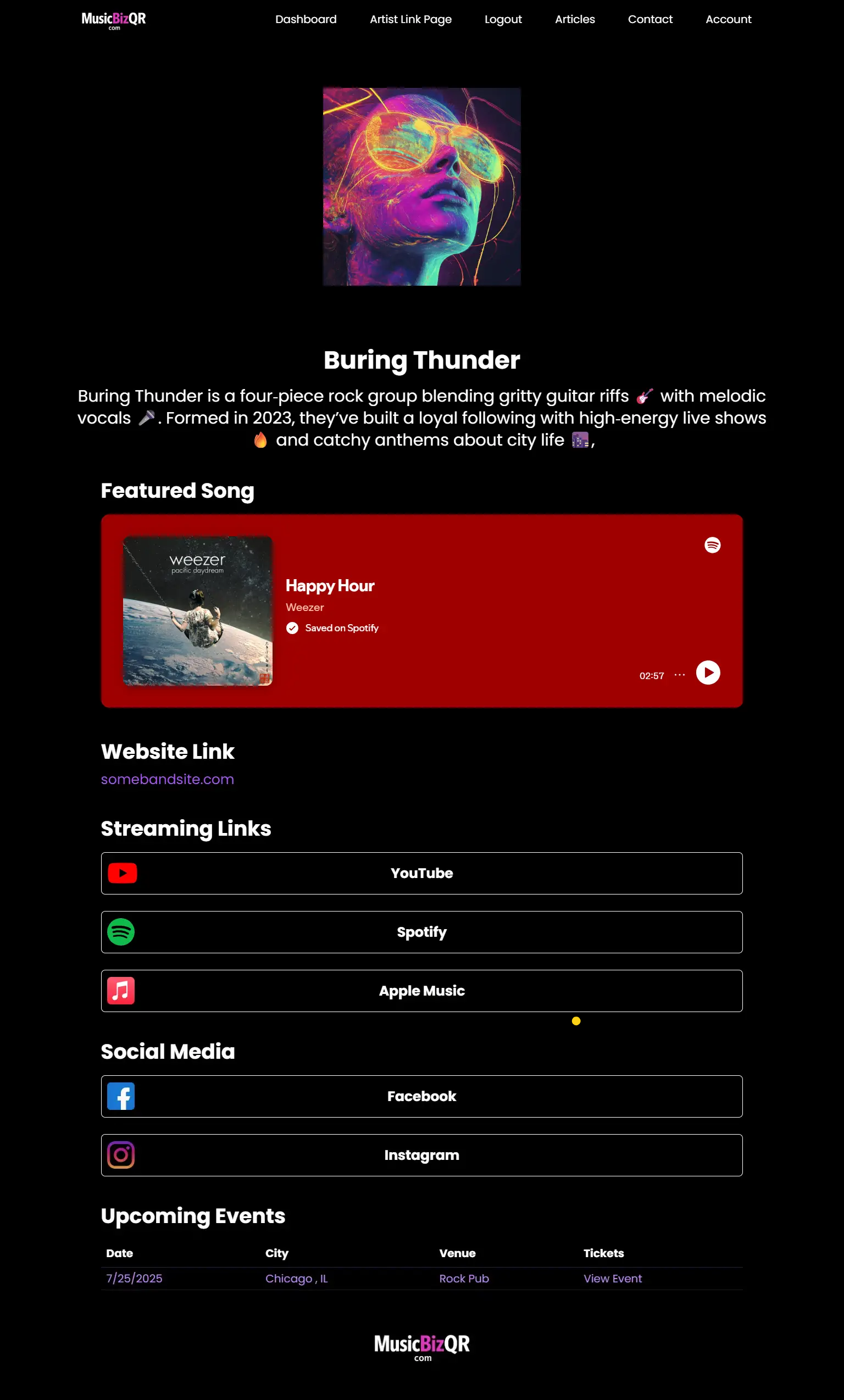
Faneqo gives you a powerful landing page with streaming links, videos, social buttons, and real-time fan analytics — all from a single QR code.
- 🎯 Unlimited link clicks & analytics
- 📈 Track Spotify streams, YouTube plays, and QR scans
- 📱 Mobile-optimized artist pages
- 🚀 Create your first Smart Link in seconds
Related Posts
Most link-in-bio tools weren’t built for musicians. Discover why smart links create better fan journeys, stronger branding, and higher conversions for your music.
Smart links for musicians explained—how they work, why they matter in 2026, and how to build a fan-converting link that drives your music career.
Discover how music links can help artists guide fans across platforms effortlessly. Learn strategies to boost engagement, streams, and merch sales.
Most link-in-bio tools weren’t designed for musicians. Learn why smart links deliver better fan engagement, stronger branding, and real music-driven revenue.
Smart links aren’t just utility tools — they’re the new frontier in artist branding. Learn how visual design, consistency, and fan-centric smart links define a musician’s digital identity.
Discover how smart links can transform fleeting music streams into lasting fan connections. Learn the strategies indie artists use to grow their audience in the streaming era.
Discover how smart links empower indie artists to create deeper, lasting relationships with fans. Turn every click into meaningful engagement.
Discover 2026’s best smart link tools for artists. We compare top platforms, fan engagement features, and why MusicBizQR stands above the rest.
Learn how direct-to-fan video turns your smart link into a conversion machine. Build trust, drive streams, and make real fan connections with MusicBizQR.
Learn how to use music links to drive fan engagement, increase streams, and promote your music like a pro. Built for modern artists and bands. Shall I begin writing the Markdown content for this article now?
In 2026, discovery is chaotic — and smart links are how artists bring it all together. Explore how music smart links guide fans, boost streams, and create real momentum across every platform.
Tired of generic link tools? Discover the smart link platform built for music: video previews, analytics, and full artist control—all in one sleek page.
Every new release deserves more than a link in your bio. Learn how to use smart links to drive streams, collect fans, and turn a single drop into lasting momentum.
The layout of your smart link page can make or break your fan engagement. Learn the design psychology that turns clicks into superfans.
If you're still sending fans to scattered links, you're leaving money on the table. Here's why every indie artist needs a smart link strategy to grow, connect, and convert.",
Most smart links just sit there. This guide shows musicians how to build a smart link page that turns casual clicks into lifelong fans. Real strategies that work.
Discover the psychology behind smart link layout design and how it shapes fan engagement, conversions, and merch sales.
Master the art of launching music with smart links. This guide shows how to create hype, drive streams, and maximize impact every time you drop a new release.
Your smart link is your new homepage. Learn how to design a 2026-ready page that plays your music instantly, tells your story, and converts fans the moment they land.
Learn how musicians can use smart links to connect directly with fans, bypass algorithms, and drive engagement, streams, and merch sales.
Discover how embedded content like music, videos, and social posts can turn your smart link into a fan engagement engine. Boost streams, merch sales, and loyalty.
Discover why smart links are transforming music marketing in 2025. Learn how a centralized hub can grow your audience, boost streams, and drive real fan engagement.
From Spotify embeds to merch and tour links, MusicBizQR makes music promotion easy. Learn how to use smart links to streamline your entire fan funnel.
Learn five powerful ways smart links can revolutionize your band's music promotion, amplify fan engagement, and strengthen fan loyalty.
Discover how smart links are revolutionizing music promotion, increasing fan engagement, boosting streaming numbers, and enhancing concert attendance.