
How Smart Links Help Indie Artists Build Fan Relationships
Executive Summary
Most artists think fan relationships grow through frequency — more posts, more releases, more reminders to follow. In reality, relationships grow through recognition. Fans don’t deepen their connection because they see you everywhere; they deepen it because each encounter feels familiar instead of fragmented.
This is where smart links quietly change everything. Not by adding more buttons, but by giving fans a consistent place to return to. When discovery moments resolve to the same surface over time, recognition replaces reintroduction. Trust forms. Hesitation drops. The artist stops feeling like a stranger and starts feeling known.
For indie artists especially, this matters more than scale. Without massive ad budgets or algorithmic reach, relationship strength becomes the real growth lever. Smart links function as the infrastructure that makes those relationships possible — not through persuasion, but through continuity.
This article explores how smart links reshape the fan relationship itself: why return visits matter more than clicks, how familiarity compounds over time, and why artists who focus on connection outperform those who chase reach.
Key Takeaways
Familiarity across encounters matters more than how often an artist appears.
When discovery resolves to the same surface, trust and comfort build naturally.
Repeat engagement signals commitment, not just curiosity.
Without massive reach, durable fan connections become the primary growth lever.
The system reduces friction instead of increasing pressure on fans.
Recognition, Not Repetition
Most artists assume fans grow closer through exposure. Show up enough times and connection will follow. But repetition without recognition doesn’t build relationships — it builds noise.
Think about how fans actually experience discovery. A song hits on TikTok. A clip floats by on Instagram. A playlist save happens late at night. Each moment feels separate, even if it involves the same artist. Without a connective thread, the brain treats every encounter like a first meeting. Interest resets. Context disappears.
This is why so much promotion feels exhausting without being effective. The artist is present, but never familiar.
Smart links interrupt this pattern by giving fans something stable to recognize. Instead of every discovery resolving to a different platform or dead-end profile, attention lands in the same place again and again. Over time, fans don’t just see the artist — they remember them.
This relationship layer only makes sense once the system itself is understood. If you haven’t already, the infrastructure behind this is explained in
The Ultimate Guide to Smart Links for Bands.
What follows here assumes that foundation and focuses on what happens after the system exists.
Why Seeing an Artist Twice Is Not the Same as Remembering Them
Recognition is not recall. Fans can recognize a song, a logo, or a name without feeling any personal attachment. Remembering, on the other hand, carries emotional residue — a sense of continuity from last time to now.
When every interaction sends fans somewhere new, the brain never completes that loop. The artist is always being reintroduced, never resumed. Even great music struggles to overcome that friction.
Smart links change the pattern by anchoring memory. The layout feels familiar. The content feels oriented. The fan doesn’t have to ask, “Who is this again?” They instinctively know where they are and why they came.
That subtle shift — from recognition of content to recognition of place — is where relationships start to form.
How Familiarity Lowers Resistance
Every decision a fan has to make creates friction. Should I click this? Should I follow? Should I come back later? Unfamiliar environments increase hesitation, even when interest is high.
Familiarity removes that resistance quietly. When fans know what to expect, they move forward without deliberation. They listen longer. They explore more. They return without needing a reminder.
This is why relationship growth isn’t driven by urgency or persuasion. It’s driven by comfort. Smart links don’t push fans harder — they make staying easier.
Once familiarity exists, momentum no longer has to be recreated. It simply continues.
Smart Links and Return Behavior {#smart-links-and-return-behavior}
Return behavior is where relationships reveal themselves.
A click can happen by accident. A scan can be driven by curiosity. But a return visit is a choice. It means the fan remembered where they were, felt oriented enough to come back, and expected the experience to continue rather than restart.
Most artist funnels are not designed for this. Discovery moments scatter fans across platforms, each with its own interface, priorities, and distractions. Even if the artist is present everywhere, the experience never accumulates. Every visit begins at zero.
Smart links solve this by acting as a place, not a detour. When fans encounter the same surface after different moments of discovery, behavior starts to change. The second visit feels easier than the first. The third feels intentional. Over time, returning becomes automatic rather than effortful.
Giving Fans a Place to Come Back To
Fans don’t return to links — they return to environments.
A band website can do this, but it often carries too much weight for casual or early-stage fans. Social platforms feel familiar, but they aren’t owned and don’t prioritize continuity for a single artist. Smart links sit in the middle: lightweight enough for discovery, stable enough for memory.
When a smart link becomes the consistent destination behind QR codes, bios, posts, and descriptions, fans stop reorienting. They know what lives there. They know how to move through it. They know what the “next step” usually feels like.
That predictability isn’t boring — it’s reassuring. It’s what turns a moment of interest into a habit of return.
Why Consistency Matters More Than Novelty
Artists are often told to stay fresh, switch things up, and surprise their audience. Novelty has its place, but novelty without continuity undermines relationship-building.
Smart links allow content to change while the container stays the same. New releases appear. New videos rotate in. Tours come and go. But the surrounding structure remains familiar. Fans don’t have to learn a new interface every time something changes.
This is where embedded content quietly supports return behavior. When fans can listen and watch directly inside the same surface, engagement deepens without requiring a platform jump. The experience feels complete instead of interrupted.
A deeper breakdown of how this works lives in
How Embedded Content Turns Smart Links Into Fan-Converting Machines.
Return behavior isn’t created by reminders or pressure. It’s created by environments that feel easy to revisit. Smart links provide that environment — and once it exists, relationships have somewhere to grow.
Why Return Visits Matter More Than Clicks
Clicks are easy to count, which is why they’re often mistaken for progress. But clicks measure interest, not connection. They tell you someone was curious enough to act once — not that they cared enough to come back.
Return visits are different. They signal continuity. A fan doesn’t just react to a moment; they remember an experience and choose to re-enter it. That choice is the beginning of commitment.
This is where many artist strategies quietly fail. Campaigns are optimized for spikes — launch day traffic, release-week pushes, short bursts of attention. When the spike fades, so does the relationship, because nothing was designed to hold it.
Smart links shift the metric that matters. Instead of asking, “Did they click?” the better question becomes, “Did they return?”
The Difference Between Curiosity and Commitment
Curiosity is fragile. It’s sparked easily and extinguished just as fast. A headline, a hook, a recommendation from a friend — any of these can generate a click. But curiosity doesn’t survive friction.
Commitment does.
When a fan returns, it means friction was low enough and value was clear enough that the experience felt worth repeating. They didn’t have to rediscover you. They didn’t have to relearn where things were. The path forward felt obvious.
Smart links make this possible by collapsing the distance between encounters. Each visit reinforces the last. Over time, the fan stops evaluating whether to engage and simply does.
That shift — from evaluation to habit — is the line between audience and fanbase.
How Return Behavior Signals Relationship Depth
Return behavior carries information clicks never will. It shows which fans are moving closer, not just passing through. It reveals where trust is forming and where it isn’t.
This is why generic link tools struggle to support real growth. They’re optimized for outbound movement, not continuity. Fans leave quickly, platforms change, and the experience dissolves. Nothing accumulates.
Smart links keep the story intact. The same surface absorbs attention from multiple moments — a show flyer, a bio link, a QR code, a shared post. Each return adds context instead of resetting it.
The psychology behind this matters. Familiar environments reduce cognitive load, lower hesitation, and increase follow-through. When fans don’t have to decide what to do next, they move deeper by default.
If you want the behavioral mechanics behind this explained in detail, see
The Psychology of Fan Conversion: Why Smart Links Outperform Link-in-Bio Tools Every Time.
Clicks tell you who noticed you.
Return visits tell you who’s beginning to care.
And for indie artists, that distinction makes all the difference.
Why Relationships Matter More for Indie Artists
Large artists can afford to lose people. Indie artists can’t.
When reach is massive, individual drop-off barely registers. A percentage point lost here or there disappears into the scale of the operation. But for independent artists, every lost connection matters. Growth doesn’t come from sheer volume — it comes from depth.
This is why relationship strength becomes the defining advantage for indie artists. Without the safety net of algorithms, playlists, or paid amplification, trust and familiarity do the heavy lifting. Fans don’t just need to discover you; they need a reason to stay.
Smart links support this reality by prioritizing continuity over spectacle. They aren’t designed to chase the widest audience. They’re designed to give the right audience a place to return.
Scale vs Strength
Scale is seductive. It shows up as follower counts, view numbers, and reach graphs. But scale without connection is brittle. It spikes easily and collapses just as fast.
Strength looks different. It shows up in repeat listens, return visits, and fans who recognize your work before being reminded. It compounds slowly but resists decay.
Indie artists rarely win by trying to out-scale major-label machinery. They win by out-connecting it.
Smart links don’t increase reach by themselves. They increase the value of each discovery moment. When a fan returns once, the odds of a second return rise dramatically. When they return again, familiarity turns into loyalty.
This is how small audiences become durable ones.
Why Indie Growth Depends on Trust, Not Reach
Trust isn’t built through persuasion. It’s built through consistency.
Fans trust what feels stable. They trust environments that don’t surprise them with friction or confusion. They trust artists who feel present without being intrusive.
Smart links quietly reinforce this trust by doing what platforms can’t: staying the same while everything else changes. Algorithms shift. Feeds rotate. Interfaces update. The smart link remains familiar.
For indie artists, this stability replaces the need for constant reintroduction. Fans don’t need to be convinced to engage again — they already know where to go and what to expect.
That reliability becomes the foundation of the relationship. And once trust is in place, growth stops feeling like a chase and starts feeling like momentum.
From Persuasion to Familiarity
Most artist marketing is built around persuasion. Convince the fan to click. Convince them to follow. Convince them to care — now, before the moment passes.
Persuasion works in short bursts, but it doesn’t scale emotionally. Every ask adds pressure. Every reminder risks fatigue. Over time, fans learn to ignore urgency because urgency never resolves into comfort.
Familiarity works differently. It doesn’t ask for attention — it earns it by removing friction. When fans know where they are, what they’ll find, and how the experience usually feels, engagement stops feeling like a decision and starts feeling natural.
Smart links shift growth into this lane. Instead of escalating the ask, they stabilize the environment.
Reducing Pressure Instead of Increasing Volume
Pressure shows up when fans are forced to decide too much, too often. New platform. New layout. New expectation. Each change resets trust, even if the content is strong.
Smart links reduce pressure by keeping the container consistent while letting the content evolve. Fans don’t feel chased because nothing is demanding immediate action. The option to listen, watch, follow, or return is always present — but never forced.
This is especially important between releases. When nothing “new” is happening, persuasion has nothing to grab onto. Familiarity, however, keeps the relationship alive without effort. Fans return because it feels easy, not because they were reminded.
How Smart Links Remove Friction From Connection
Friction hides in small things: slow loads, unexpected redirects, unfamiliar layouts, missing context. Each one is minor on its own, but together they erode willingness to engage.
Smart links remove friction by collapsing the journey. Discovery resolves to a single surface. Actions are visible without scrolling into confusion. The experience feels predictable in the best possible way.
Design plays a quiet but critical role here. When layout, hierarchy, and visual cues remain consistent, fans move with confidence. They don’t have to relearn where things live. They don’t hesitate before taking the next step.
If you want to explore how structure reinforces familiarity at a deeper level, see
Smart Link Design Psychology: How Layout Impacts Fan Behavior.
This is the final shift smart links enable: growth that no longer depends on persuasion. When familiarity is in place, connection maintains itself.
Fans don’t need to be pushed forward.
They already know where to go.
How This Fits Into the Smart Links System
This article does not redefine smart links. It explains what happens because they exist.
The smart links system itself — what it is, why it replaces fragmented promotion, and how it functions as infrastructure — is established in
The Ultimate Guide to Smart Links for Bands.
Everything here assumes that foundation and focuses on a single layer of the system: relationship formation.
Think of the system in layers.
At the base is infrastructure: a stable, artist-controlled surface that centralizes attention. Above that is behavior: how fans move, return, and engage over time. This article lives squarely in that second layer. It explains why continuity matters, why return visits signal depth, and why indie artists benefit disproportionately from familiarity and trust.
Other articles in the smart-links category go deeper into adjacent layers without competing for the same job:
- Design and layout explain how structure reinforces comfort and confidence.
- Embedded content explains how listening and watching without interruption deepens engagement.
- Conversion psychology explains why familiar environments outperform fragmented ones.
- Comparisons explain where generic link tools fall short once relationships become the goal.
None of those articles attempt to replace this one. They extend it.
If this article helped clarify why relationships matter and how smart links change the arc from discovery to familiarity, the rest of the ecosystem exists to help you apply that understanding with precision.
The system works best when each piece does one job well.
This article’s job is simple:
to make clear that growth doesn’t come from asking fans for more — it comes from giving them a place to come back to.
Once that is understood, everything else in the smart links system falls into place.
Frequently Asked Questions
How do smart links actually help artists build fan relationships?
Smart links help by creating continuity. When fans encounter the same destination across different moments — a QR code, a bio link, a shared post — the experience accumulates instead of resetting. Over time, familiarity replaces reintroduction, which is how real relationships form.
Why are return visits more important than clicks?
Clicks measure curiosity. Return visits measure memory and comfort. When a fan comes back on their own, it signals trust, recognition, and a willingness to stay connected beyond a single moment of interest.
Do smart links matter if my audience is still small?
Yes — especially then. Indie artists grow through depth, not scale. A small audience that returns consistently is far more valuable than a large audience that disappears after one interaction.
Can smart links replace constant promotion?
They reduce the need for it. Smart links don’t eliminate promotion, but they make each promotional moment last longer by giving fans a stable place to return to instead of forcing artists to constantly reintroduce themselves.
What makes a smart link feel familiar to fans?
Consistency. Predictable layout, recognizable structure, and a stable destination all lower friction. Fans don’t have to relearn where things are or what to do next, which makes engagement feel natural instead of effortful.
How long does it take for relationship effects to show up?
Relationship signals don’t spike overnight. They show up gradually through repeat visits, longer engagement, and fans who recognize your work without prompting. Smart links support this slow compounding instead of chasing short-term bursts.
Are smart links only useful during releases?
No. They’re often most valuable between releases. When nothing new is happening, familiarity keeps the relationship alive without requiring urgency, reminders, or constant calls to action.
What’s the biggest mistake artists make with smart links?
Treating them like one-off campaign tools instead of long-term infrastructure. When smart links are constantly replaced, redesigned, or abandoned, fans never develop recognition — and the relationship never gets a chance to form.
Built for Musicians. Powered by Smart Links.
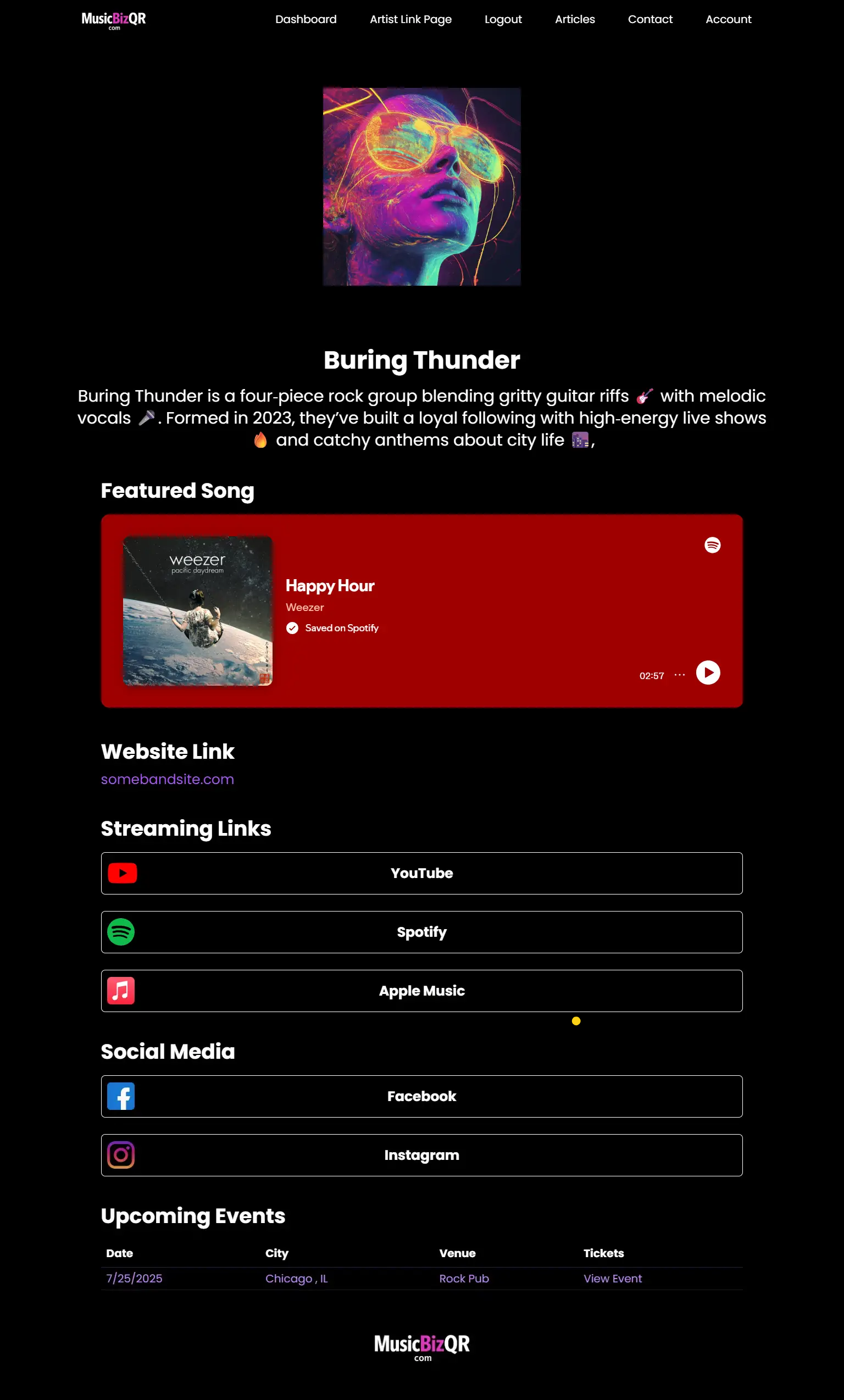
Faneqo gives you a powerful landing page with streaming links, videos, social buttons, and real-time fan analytics — all from a single QR code.
- 🎯 Unlimited link clicks & analytics
- 📈 Track Spotify streams, YouTube plays, and QR scans
- 📱 Mobile-optimized artist pages
- 🚀 Create your first Smart Link in seconds
Related Posts
Most link-in-bio tools weren’t built for musicians. Discover why smart links create better fan journeys, stronger branding, and higher conversions for your music.
Smart links for musicians explained—how they work, why they matter in 2026, and how to build a fan-converting link that drives your music career.
Discover how music links can help artists guide fans across platforms effortlessly. Learn strategies to boost engagement, streams, and merch sales.
Most link-in-bio tools weren’t designed for musicians. Learn why smart links deliver better fan engagement, stronger branding, and real music-driven revenue.
Smart links aren’t just utility tools — they’re the new frontier in artist branding. Learn how visual design, consistency, and fan-centric smart links define a musician’s digital identity.
Discover how smart links can transform fleeting music streams into lasting fan connections. Learn the strategies indie artists use to grow their audience in the streaming era.
Discover how smart links empower indie artists to create deeper, lasting relationships with fans. Turn every click into meaningful engagement.
Discover 2026’s best smart link tools for artists. We compare top platforms, fan engagement features, and why MusicBizQR stands above the rest.
Learn how direct-to-fan video turns your smart link into a conversion machine. Build trust, drive streams, and make real fan connections with MusicBizQR.
Learn how to use music links to drive fan engagement, increase streams, and promote your music like a pro. Built for modern artists and bands. Shall I begin writing the Markdown content for this article now?
In 2026, discovery is chaotic — and smart links are how artists bring it all together. Explore how music smart links guide fans, boost streams, and create real momentum across every platform.
Tired of generic link tools? Discover the smart link platform built for music: video previews, analytics, and full artist control—all in one sleek page.
Every new release deserves more than a link in your bio. Learn how to use smart links to drive streams, collect fans, and turn a single drop into lasting momentum.
The layout of your smart link page can make or break your fan engagement. Learn the design psychology that turns clicks into superfans.
If you're still sending fans to scattered links, you're leaving money on the table. Here's why every indie artist needs a smart link strategy to grow, connect, and convert.",
Most smart links just sit there. This guide shows musicians how to build a smart link page that turns casual clicks into lifelong fans. Real strategies that work.
Discover the psychology behind smart link layout design and how it shapes fan engagement, conversions, and merch sales.
Master the art of launching music with smart links. This guide shows how to create hype, drive streams, and maximize impact every time you drop a new release.
Your smart link is your new homepage. Learn how to design a 2026-ready page that plays your music instantly, tells your story, and converts fans the moment they land.
Learn how musicians can use smart links to connect directly with fans, bypass algorithms, and drive engagement, streams, and merch sales.
Discover how embedded content like music, videos, and social posts can turn your smart link into a fan engagement engine. Boost streams, merch sales, and loyalty.
Discover why smart links are transforming music marketing in 2025. Learn how a centralized hub can grow your audience, boost streams, and drive real fan engagement.
From Spotify embeds to merch and tour links, MusicBizQR makes music promotion easy. Learn how to use smart links to streamline your entire fan funnel.
Learn five powerful ways smart links can revolutionize your band's music promotion, amplify fan engagement, and strengthen fan loyalty.
Discover how smart links are revolutionizing music promotion, increasing fan engagement, boosting streaming numbers, and enhancing concert attendance.