
The Smart Link Alternative Built for Bands
Introduction: The Night a Band Realized Their Link Was Holding Them Back
It always happens after a moment that should’ve changed everything.
A band steps offstage — sweat still warm, ears still buzzing, hearts still thumping with the leftover electricity of a crowd that actually showed up. Someone in the front row shouted every lyric. A stranger at the bar asked for the band’s name. Phones were out. Clips were recorded. Stories were tagged. For one night, the world felt wide open.
Back in the green room, they do what every modern band does:
they check their phones.
Notifications are stacked. Tags from fans. A video from the second chorus already doing numbers. A comment saying, “Yo drop the song!!!” Another: “Where do I find this??”
Momentum — the rare, fragile kind — is building.
So they do what they’ve always done.
They update the link in their bio.
And that’s where the night quietly falls apart.
Fans who were emotionally on fire — who had just experienced something real — click through… and land on a dead-end menu of tiny buttons: Spotify, Apple, Instagram, YouTube, Merch, Tickets, Website. A directory. A filing cabinet. A page that has nothing to do with the sweat, the sound, the humanity they just felt in the room.
The vibe evaporates.
Some fans bounce.
Some get distracted.
Some say, “I’ll check it later,” and never do.
Not because they didn’t love the music — but because the pathway wasn’t built to carry the moment forward.
This is the quiet heartbreak bands don’t talk about.
It’s not that the music isn’t strong enough.
It’s that the link isn’t.
The modern fan doesn’t follow a clean, logical journey anymore.
They move through instinct, emotion, flashes of curiosity, and micro-moments of connection. A static menu can’t catch that lightning. And it definitely can’t guide it.
But a new kind of smart link can — one designed for bands, built around experience, and shaped by the momentum of the moment that brought a fan to you in the first place.
This article is about that shift.
The shift from “link in bio” to fan path.
From “platform list” to guided experience.
From “where do we send people?” to what do they feel next?
Because in 2026, the bands who win aren’t the ones who shout the loudest.
They’re the ones who build a world fans can step into the moment they click.
Welcome to the smart link alternative built for bands.
Table of Contents
- Introduction: The Night a Band Realized Their Link Was Holding Them Back
- The Broken Status Quo for Bands
- Myths Bands Believe About Promotion
- Fan Psychology: How Band Fans Actually Behave
- Case Vignette: The Fan Who Tried to Find the Song
- Why Most Band Link Pages Underperform (And How to Fix It)
- How to Build a High-Converting Band Funnel (The Artist’s Blueprint)
- Why Smart Links Make Perfect Band Funnels
- Turning a Smart Link Into a Fan Funnel
- The Exact Elements Every High-Converting Band Funnel Needs
- Example Funnel Layout (A Real-World Page Breakdown)
- The Most Common Funnel Mistakes Musicians Make
- Measuring & Refining Your Funnel With Muse Analytics
- The Modern Fan Path (Bringing It All Together)
- FAQ: Building a Modern Fan Funnel for Musicians
The Broken Status Quo for Bands
Every band knows the feeling: you post a clip you’re proud of — a chorus that hits, a guitar riff that carries weight, a moment from last night’s show that actually meant something. The comments start flowing. Someone asks for the song name. Someone else posts, “WHERE CAN I LISTEN??”
So you point them to the link in your bio.
And that’s where everything falls apart.
The traditional “smart link” — the one most bands have been using for years — was never built for musicians in the first place. It was built for influencers, lifestyle creators, and anyone who just needed a list of platforms in one place. A directory. A menu. A filing cabinet.
But band fans don’t follow menus. They follow emotion.
And a static list of logos breaks that emotion instantly.
This issue isn’t new — we explored this collapse in depth in
Why Link-in-Bio Is Dead — Build a Fan Funnel Instead,
but for bands, the problem is even more dramatic.
The algorithms changed — and bands got hit hardest
Platforms like TikTok, Instagram, and YouTube don’t want fans leaving.
So they bury outbound clicks, throttle link visibility, and hide buttons behind extra taps. When a band tells fans “link in bio,” they’re already starting from a losing position.
Fan discovery changed — but smart links didn’t
In 2026, fans don’t move linearly.
They discover you through:
- a viral chorus
- a 15-second live performance
- a backstage moment
- a fan-recorded clip
- a duet or stitch
But when they click your link, they hit a page that treats them like they’re calmly browsing… not following the afterglow of a moment that hit them emotionally.
Static smart links kill momentum.
Bands need more than a “link list”
Bands need:
- emotional continuity
- context
- personality
- guided actions
- a sense of the world behind the music
In other words, they need something closer to a funnel, not a directory.
This shift — from “smart link” to smart link alternative — is exactly what we explored in
Smart Link vs Linktree: What Every Musician Should Know in 2026.
But here’s the key difference:
For bands, the cost of using old link structures isn’t just lost clicks.
It’s lost fans.
A fan who would’ve loved your music was ready — they just didn’t get guided to the moment that mattered.
The old system is broken.
And bands feel the cracks more than anyone.
Myths Bands Believe About Promotion
Every band thinks they have a “promotion strategy.”
Most don’t.
Not because they’re lazy — but because the industry trained them to believe in shortcuts that never actually worked.
These myths are comforting.
They feel logical.
They sound like good advice.
But they quietly sabotage growth.
Let’s break them.
Myth #1: “If fans like the clip, they’ll find the music.”
They won’t.
Not because they don’t care — but because modern fan behavior is fragmented, distraction-driven, and algorithm-controlled.
A fan who loved your 11-second chorus is one thumb-swipe away from forgetting it ever happened.
We broke down this exact behavior pattern in
How Smart Links Are Changing the Way Bands Build Their Fanbase,
but the short version is this:
Fans don’t hunt.
They follow paths.
If the path doesn’t exist, the moment collapses.
Myth #2: “A link in bio is enough.”
It was enough in 2018.
It’s not enough in 2026.
Algorithms hide links.
Attention spans are shorter.
Music discovery is instant and emotional.
Telling a fan “link in bio” is like telling someone at a merch table, “The CDs are in the parking lot.”
They’re not going.
This is why older “link-in-bio” tools get destroyed by funnels like the one we covered in
The Ultimate Guide to Smart Links for Musicians.
The old tools aren’t built for modern fan psychology.
Myth #3: “Fans will pick their preferred streaming platform.”
Most won’t even get that far.
A fan who clicks your link wants the song right now, not a decision tree.
The more choices you add, the more momentum dies.
This is why the highest-converting smart link alternatives remove platform friction entirely — an idea explored in
Smart Links for Musicians: Why Every Artist Needs a Central Hub.
Myth #4: “If our link works for influencers, it’ll work for us.”
No.
Influencers sell simplicity.
Bands sell emotion.
Influencers can thrive with a list of buttons.
Bands can’t — because music isn’t functional.
Music is felt, not clicked.
Myth #5: “We just need more content.”
Content without a pathway is noise.
You’re sending people into a moment with nowhere to go next.
Bands don’t grow because they post more.
Bands grow because they guide fans from:
discovery → emotion → story → listening → following → returning
This is the core truth.
The myths aren’t just outdated —
they’re costing bands thousands of fans who were ready to fall deeper.
It’s time to replace myth with mechanics.
Fan Psychology: How Band Fans Actually Behave
A fan’s journey doesn’t begin with logic — it begins with a feeling.
Bands often imagine fans behaving like researchers:
methodically clicking through profiles, reading bios, scanning for links, choosing platforms, pressing play.
But real fans — especially fans discovering a band for the first time — don’t move rationally.
They move emotionally.
Discovery is emotional, not analytical
A fan doesn’t find you because they planned to.
They find you because something cut through the noise:
- a lyric that hit them right in the chest,
- a riff that felt like a pulse,
- a moment from your show that felt alive,
- or a clip that matched their mood for five perfect seconds.
That spark releases a small dopamine hit — just enough to click something once.
Once.
After that click, every additional choice becomes friction.
Momentum is fragile
The problem isn’t lack of interest.
It’s that the modern fan is surrounded by competing stimuli:
Notifications.
Recommendations.
Messages.
New videos.
Infinite scroll.
That’s why they instantly bounce when they hit:
- too many choices,
- a generic “link menu,”
- a page that looks like everyone else’s,
- or anything that forces them to think instead of feel.
This isn’t theoretical — it’s documented in
Smart Links vs Link-in-Bio Tools: What Musicians Really Need.
Fan behavior is chaotic, emotional, and fleeting.
Fans want continuity, not decisions
The emotional arc of a fan discovering you looks like this:
discovery → connection → curiosity → action
But most bands unintentionally create:
discovery → confusion → decisions → drop-off
It’s not the fan’s fault.
It’s the pathway’s fault.
Music triggers narrative instinct
When someone hears a clip they love, they experience a micro-story:
- “Who is this?”
- “Do they have more songs?”
- “What’s their vibe?”
- “Are they touring?”
- “Where do I start?”
They don’t want a menu.
They want the next chapter of the story they just felt.
This is why high-performing bands structure their pages like funnels, not directories — a concept we explore deeply in
How to Build a Smart Link Page That Actually Converts Fans.
The fan who clicks is giving you a window
That click is a moment of trust.
A moment of curiosity.
A moment of emotion.
You get 3–5 seconds to honor that moment.
Not with:
- a list of streaming logos,
- a stack of identical buttons,
- or a decision maze.
But with a feeling that matches the moment that brought them there: your energy, your aesthetic, your story, your sound.
The takeaway
Fans don’t follow logic.
They follow continuity.
If your link breaks that continuity, you don’t just lose a click —
you lose the spark that could’ve turned a casual listener into a believer, a follower, or even a fan for life.
This is the gap the old smart link model can’t fill —
and the exact gap the smart link alternative built for bands exists to solve.
Case Vignette: The Fan Who Tried to Find the Song
Let’s zoom in on a single moment — because this is where every band either earns a fan… or loses one forever.
It’s 11:43 PM on a Friday night.
A fan — we’ll call her Maya — is scrolling in bed after a long shift.
She’s tired, half-distracted, thumb-moving almost on autopilot.
Then your clip appears.
It’s the hook from your new single — the one you weren’t sure about, the one you tracked in one take because you “just wanted to get the idea down.”
But somehow it hits her.
The melody sinks in.
The vocal texture feels raw.
The lyrics grab something she didn’t know she needed to hear tonight.
For a brief moment, she’s not just scrolling — she’s feeling.
Maya wants to hear the full song.
She taps your profile.
Your energy matches the clip.
She’s in.
Then she taps your link.
And instantly — the emotional current snaps.
She lands on a page with:
- six logos,
- three calls to action,
- two different “Listen Now” buttons,
- a merch link,
- and a tour flyer from six months ago.
There’s nothing wrong with it…
but nothing right either.
It doesn’t feel like the song she just heard.
It doesn’t feel like a story.
It feels like a spreadsheet.
The scroll psychology kicks in
Maya’s brain does what every tired fan’s brain does at midnight:
- “Which button do I press?”
- “Where’s the full song?”
- “Why does this page look like every other band’s?”
- “I’ll check it later…”
You know what “later” means.
It means no fan.
No stream.
No follow.
No second chance.
Now let’s rewind the moment — but with a guided fan path
Imagine Maya clicks your link and lands on:
- your song artwork large and centered,
- the exact clip she just heard embedded at the top,
- a “Listen to the Full Song” button as the only primary action,
- your band identity woven right into the visual layout,
- tour dates or merch appearing after the emotional moment,
- a clean, uninterrupted vibe that matches the clip.
Now the fan journey looks like: hook → emotion → continuity → listening → following → returning
That’s a funnel.
That’s momentum.
That’s what we break down in
Smart Links for Musicians: How to Turn One Link Into a Marketing Powerhouse.
Why this matters
Fans don’t remember directories.
They remember experiences.
The difference between Maya becoming a lifelong fan or a lost opportunity isn’t the quality of your music…
it’s the quality of the path you send her down.
A smart link alternative built for bands doesn’t try to look important.
It tries to feel familiar — like the same emotional moment that made a fan click in the first place.
Most bands never build this moment intentionally.
But the bands who do?
They keep fans like Maya forever.
Why Most Band Link Pages Underperform (And How to Fix It)
Most musicians think fans aren’t clicking because the song “wasn’t strong enough,” the clip “didn’t hit,” or the algorithm “isn’t showing it to anyone.”
But the truth is way simpler — and far more fixable:
Most band link pages fail because they’re not designed for how real people behave.
They weren’t built for:
- distracted nighttime scrolling,
- fast emotional decision-making,
- tiny mobile screens,
- low patience,
- or the emotional context fans carry from the clip.
They’re built for logic.
Fans move through feeling.
Let’s break down the real reasons these pages underperform — and what modern artists are doing instead.
1. Too Many Buttons = Decision Paralysis
Most band link pages look like this:
Spotify | Apple | YouTube | TikTok | Instagram | Merch | Tickets | Website | Pre-Save | Mailing List
It’s information overload disguised as “options.”
Here’s what actually happens in the fan’s brain:
Too many choices → too much work → bounce.
A better approach?
One single primary action — the one that matches the emotional state your clip created.
This is exactly how our fan funnels work at MBQ, and why tools like
Why Every Indie Artist Needs a Smart Link Strategy
emphasize emotional hierarchy over button lists.
2. Zero Emotional Continuity
The clip is intimate, raw, moody…
and the link page is bright, generic, templated.
The emotional thread breaks, and so does the fan journey.
Your link page should feel like:
- the same color palette,
- the same emotional frequency,
- the same story,
- the same identity the fan saw in the clip.
If the vibe doesn’t match, conversion dies instantly.
3. No Clear Storytelling
Fans don’t follow graphics — they follow feelings.
Most band link pages lack:
- a narrative entry point,
- a sense of who the artist is,
- any reason to care beyond “listen to my song.”
It doesn’t need paragraphs.
It needs micro-storytelling — the emotional hints that turn curiosity into connection.
If you want a masterclass in this, see the opening setup in
The Ultimate Guide to Smart Links for Musicians.
4. Everything Competes; Nothing Leads
A lot of pages look like billboards — everything tries to be the most important thing.
But fans move like water: they flow where energy naturally guides them.
Good funnels give them:
- one gravitational center,
- a clean visual path,
- and intuitive hierarchy.
This is what we do with MBQ funnels — the page doesn’t ask the fan to choose.
It quietly nudges them where they already want to go.
5. Fan Behavior Is Ignored
Most musicians never track:
- what fans tap,
- what they skip,
- where they hesitate,
- how long they stay,
- or when they bounce.
Without this data, the link page never evolves.
It stays generic forever.
This is why Muse analytics is such a game-changer — it reveals the real fan path, so you can refine it in cycles.
6. No Retention Layer
Even if fans do click something, most pages don’t convert them into:
- followers,
- email subscribers,
- returning listeners,
- or ticket buyers.
Conversion without retention is a waste.
Your link page should quietly build a future audience — not just a momentary one.
The Fix Is Simple
Most bands don’t need more links.
They need a guided fan path.
Something that:
- continues the emotional moment,
- clarifies the next action,
- feels like the artist,
- and builds long-term retention.
Something like a modern fan funnel — built with intention, not randomness.
And once you see how fans behave through data, emotion, and story?
You’ll never go back to the old “menu of buttons” model again.
How to Build a High-Converting Band Funnel (The Artist’s Blueprint)
Most musicians think funnels are some marketing-world labyrinth — charts, arrows, jargon, all the stuff that feels miles away from making music.
But the truth is so much simpler: a great funnel is just a continuation of a moment. The moment someone sees you, feels something, and — for half a second — wants more.
Your job isn’t to “convert.”
Your job is to carry the spark forward.
Here’s how the artists who actually win do it.
Start With the Hero Moment (Your Emotional Echo)
Before the fan reads, clicks, or scrolls, they feel.
That’s why your hero moment is everything — the emotional echo of the clip that made them stop.
If the TikTok was raw, intimate, recorded in a bedroom at 2am?
Your hero shouldn’t suddenly look like a corporate landing page.
If the clip was big, loud, theatrical?
Your hero should punch with the same energy.
This is the continuity that holds the thread.
Break it, and the fan slips right through your fingers.
For deeper examples of emotional alignment, check the storytelling tone inside
Why Every Indie Artist Needs a Smart Link Strategy.
Give Them One Clear Step Forward
Fans don’t want a menu.
They want momentum.
Your call-to-action should feel like the natural next beat in the story — the chorus after the verse, not a set of instructions taped to the wall.
“Listen.”
“Watch.”
“Pre-Save.”
“Get Tickets.”
Not shouted.
Not crowded.
Just unmistakably the center of gravity.
This philosophy is baked into the entire MBQ smart-link system — and explained deeply in
The Ultimate Guide to Smart Links for Musicians.
Add a Touch of Depth (Not a Novel)
Once the fan takes the first step — or even hovers there — they instinctively lean in.
Who is this? Why does this feel good? What’s the story here?
This is where you add the kind of depth that doesn’t slow the moment… but enriches it.
A single sentence can do it:
- a lyric fragment,
- a note about how the song came to life,
- a backstage photo with its own quiet mood.
Not a biography.
Not a paragraph that sounds like a press kit.
Just something human enough to keep the connection warm.
Design That Guides Without Asking Permission
A fan doesn’t “navigate” your page — they drift through it the same way they drift through a music video. Their eyes follow mood, contrast, rhythm. Your layout should guide them without ever revealing the strings.
A strong funnel feels like gravity:
- hero moment pulls them in,
- the CTA sits exactly where instinct expects it,
- depth opens up gently beneath it,
- the rest of the world unfolds below.
Good design makes choices for the fan.
Great design makes those choices feel like instinct.
Let Fans Explore — Quietly
After that first emotional win, fans are ready to wander.
This is where you can open the doorway to everything else: your Spotify, your shows, your discography, your merch table. But these should live lower on the page — more invitation than instruction.
Think of it as the afterglow:
the space where a fan thinks, “What else does this artist have going on?”
Close the Loop (This Is Where Careers Are Built)
Most musicians think funnels end when a fan taps once.
But the second tap is where the real growth happens.
This is your retention loop — pre-saves, email lists, playlist adds, tour reminders, all the ways a fan says, “Yeah, I want to see this artist again.”
These loops don’t feel like marketing.
They feel like continuity — the same continuity the hero moment started.
Refine the Funnel Using Muse (Your Backstage Pass to Fan Behavior)
This is the part no other tool gives you.
Muse doesn’t just show numbers — it shows motion.
It tells you:
- where fans hesitate,
- where they stay,
- where the energy drops,
- where the spark catches again.
It’s like watching a crowd from side-stage and seeing exactly when they lean in — and when their attention drifts. With that insight, you don’t guess what to change. You know what the page is trying to tell you.
Small refinements, made consistently, turn a simple smart link into an evolving engine.
That’s how modern artists grow — not by posting louder, but by understanding the quiet map of how fans actually move.
The Whole Blueprint in One Breath
A fan funnel isn’t a layout.
It’s a rhythm.
A pulse.
Hero → CTA → Depth → Explore → Retain
Emotion → Action → Identity → Connection → Longevity.
If you build your page like a story — not a directory — fans won’t feel like they’re being directed. They’ll feel like they’re being drawn in.
That’s the difference between a click… and a career.
Why Smart Links Make Perfect Band Funnels
Here’s the part most musicians miss: smart links were never supposed to be the star of music marketing. They were a utility — a neat way to put all your platforms in one place. But somewhere between TikTok blowing up, attention spans collapsing, and fans discovering music in the strangest, most nonlinear ways imaginable… the humble smart link became the backbone of the entire fan experience.
In 2026, a smart link isn’t a tool.
It’s infrastructure.
It’s the bridge.
It’s the stage that’s already lit before the fan even realizes they walked onto it.
And that makes it the perfect foundation for a modern fan funnel.
Smart Links Solve the Fragmentation Problem No One Talks About
A single fan might find you in five different places before they ever hear a full song.
TikTok, Instagram, YouTube Shorts, a friend’s story, a repost on someone’s page — it’s chaos, but it’s beautiful chaos if you know how to catch it.
Old link-in-bio tools treated each of these destinations as separate, disconnected worlds.
Smart links — especially well-designed ones — unify them into something coherent.
This is a major theme inside
The Ultimate Guide to Smart Links for Musicians,
and you’re going to see it again and again as we build these higher-level funnels.
A smart link hands the fan one clear doorway, no matter where they came from.
In an era where everything feels scattered, this single doorway matters more than ever.
They Carry the Emotional Frequency of the Hook
Most link pages feel like a paperwork desk.
Smart links give you the chance to feel like a stage.
A great smart link doesn’t reset the moment.
It continues it.
If your viral clip had mood, grit, softness, swagger — whatever it was — the fan should still feel that same pulse when the page loads. Your artwork, your hero moment, your embedded song or video all carry the emotional weather from one screen to the next.
This is why link lists fail.
And it’s exactly why high-performing funnels (like the ones we break down inside
How Smart Links Help Indie Artists Build Fan Relationships)
feel seamless instead of jarring.
Smart links amplify emotion instead of flattening it.
They Reduce Friction — and Fans Reward Simplicity
Attention spans today don’t negotiate. They don’t slow down. They don’t “explore” unless something feels instantly rewarding.
If your link requires reading, deciphering, comparing, or choosing… the fan disappears.
A good smart link cuts through the chaos.
A great smart link reduces friction so far that the fan barely realizes they’re taking action — they just move.
It’s not manipulation.
It’s design.
When the next step feels obvious, the fan doesn’t think — they respond.
This is the psychological backbone of funnels, and it’s why your strongest-performing articles like
Smart Links vs Linktree
attract searchers who already sense static link pages are failing.
They Turn Passive Curiosity Into Active Engagement
Most artists imagine fans as logical creatures:
“I like this song → let me go listen to more.”
That’s not how it works.
Fans follow:
- instinct,
- emotion,
- vibe,
- visual cues,
- continuity,
- and context.
Smart links slice through the gap between curiosity and action.
They show the fan where the emotional thread continues — the full track, the video, the next moment in the story.
This is what funnels do better than anything else.
And it’s why so many musicians are quietly abandoning their old bio-link tools for systems that understand fan psychology.
They’re Built for Growth — Not Just Storage
Old-school link pages were built to organize.
Smart links are built to guide.
They:
- highlight the most important moment,
- create hierarchy instead of clutter,
- help fans go deeper without thinking,
- and shape the emotional pace of the fan journey.
And when you combine them with Muse analytics (which we’ll break down later), you stop guessing why fans behave a certain way — you start seeing their movement like a light trail across the page.
You start to understand your audience the way a photographer understands light or a producer understands rhythm.
This is where smart links become something richer — the backbone of an actual fan funnel, not just a collection of platforms.
Smart links aren’t the future because they’re trendy.
They’re the future because they match reality.
They mirror how fans discover music now — fast, emotional, nonlinear.
They turn fleeting moments into guided paths.
They turn fragments into continuity.
They turn curiosity into connection.
And once you use them as the foundation of a true fan funnel, something shifts — the whole experience starts to feel less like marketing and more like a story unfolding.
Up next, we’ll take that foundation and show you exactly how to transform a smart link into a real funnel.
Turning a Smart Link Into a Fan Funnel
Most musicians don’t realize how close they already are to having a real fan funnel. They think funnels require complicated marketing software, email sequences, paid ads, or some behind-the-curtain strategy that only big artists can afford.
But that’s not what a funnel is.
A funnel isn’t a system.
A funnel is a feeling — a continuation of the emotional pulse that started the moment a fan discovered you.
A funnel is the moment the vibe doesn’t break.
If the clip that brought them in was cinematic, chaotic, intimate, raw, rebellious, or soft, the funnel should carry that same emotional frequency forward like a melody that never loses its key. When a fan taps your link, the funnel is the story that picks up exactly where the clip left off.
This is the core idea behind the high-performing pieces we’ve already built, like
The Ultimate Guide to Smart Links for Musicians
and
How Smart Links Help Indie Artists Build Fan Relationships.
We’re not building directories. We’re building emotional bridges.
And that distinction changes everything.
Start With the Emotion of the Hook
A fan doesn’t show up at your smart link neutral.
They arrive carrying the temperature of the moment that hooked them.
If your TikTok clip was vulnerable, the funnel should feel intimate.
If the clip was explosive, the funnel should feel charged.
If the clip was mysterious, the funnel should feel atmospheric.
Here’s where most artists break the funnel instantly:
The clip is alive.
The smart link is dead.
The energy collapses.
Fans don’t articulate why it feels wrong — but they feel the emotional drop, and the journey ends before it begins.
This is why we spent so much time building emotional continuity into the frameworks inside articles like
Smart Link Design Psychology.
Emotion is momentum.
Lose it, and you lose the fan.
Build a Single, Clear Path (Not a Choose-Your-Own-Adventure)
Funnels convert for one reason: clarity.
When a fan lands on your page, their brain is asking three questions at lightning speed:
- What is this moment?
- What matters most here?
- What am I supposed to do next?
If your page forces them to choose — between six platforms, five videos, four buttons, or a crowded list of “check out my XYZ” — they freeze. The moment evaporates. The funnel breaks.
Funnels don’t overwhelm.
Funnels guide.
The best funnels feel like the page already knows what the fan wants — as if the emotional logic is built in, not forced. We touched on this heavily in
Smart Links vs Linktree,
because hierarchy — not quantity — is what drives action.
Add Depth That Resonates (Not Information That Exhausts)
This is the most misunderstood part of funnel-building.
Depth isn’t about telling your story.
It’s about revealing your humanity — just enough to make the fan lean in.
A single line can change everything:
“I wrote this after a night I thought I’d quit music for good.”
Fans don’t need paragraphs.
They need connection.
Depth should feel like the next lyric in the song, not a bio page. That’s why the strongest-performing funnels from indie artists today mimic the emotional density of a live show — small, specific, human, magnetic.
You’ll see this echoed in
The Anatomy of a Perfect Smart Link Page for Musicians,
because depth is what makes a funnel feel alive.
Let Visual Cues Do the Guiding
Fans don’t navigate with logic.
They navigate with instinct — with their eyes, not their thoughts.
Design becomes choreography:
- spacing,
- contrast,
- visual weight,
- color,
- motion,
- and placement.
All of it works together to direct the fan’s attention without them realizing they’re being guided. The fan should move through the page the way they move through a song — with rhythm, not effort.
This principle sits at the heart of our design-heavy work in articles like
Smart Links for Musicians: The Secret to Seamless Music Promotion.
Great funnels don’t feel designed.
They feel inevitable.
Remove Every Drop of Fan Friction
Funnels don’t become powerful through addition.
They become powerful through subtraction.
Friction kills emotion.
Emotion is the engine of the fan journey.
Your job is to clear the path.
That means removing:
- walls of text,
- cluttered layouts,
- tiny buttons,
- redundant sections,
- choices that compete,
- mismatched branding,
- or anything that requires the fan to stop and think.
A funnel should feel like a breath, not a puzzle.
When fans don’t have to figure out what to do, they do more.
A smart link becomes a funnel the moment it stops acting like a directory and starts acting like a story.
The music is the spark.
The clip is the hook.
The funnel is the emotional bridge.
And the fan’s action is the natural next beat — not because you forced it, but because you guided it.
Next, we’ll break down the exact elements every high-performing band funnel needs, piece by piece, and show you how each part becomes an emotional checkpoint rather than a structural component.
The Exact Elements Every High-Converting Band Funnel Needs
A great band funnel isn’t built from tactics — it’s built from moments.
Emotional checkpoints.
Small, intentional beats that guide a fan deeper into your world without ever breaking the spell that first caught their attention.
The mistake most musicians make is assuming funnels are mechanical.
But the truth is far more human:
A funnel is a sequence of feelings.
If the emotional thread holds, the fan moves.
If it breaks, the journey collapses.
These are the core elements that keep that emotional thread alive — the same structural DNA behind the strongest pages we discuss in
The Ultimate Guide to Smart Links for Musicians
and
The Anatomy of a Perfect Smart Link Page for Musicians.
Let’s walk through each one like a producer breaking down a track — layer by layer.
1. A Hero Moment That Feels Like the Clip’s Next Scene
Before the fan reads anything, taps anything, or even decides whether to stay, they feel the page. That feeling — that emotional echo from the clip — is the hero moment’s entire job.
If your TikTok clip was raw and intimate, the hero should feel close and unpolished.
If it was explosive, the hero should feel loud and cinematic.
If it was vulnerable, the hero should feel warm and human.
This isn’t design.
This is emotional continuity — the same principle that drives the design theory we cover in
Smart Link Design Psychology.
The hero moment is your first chance to say, without words:
“You’re still in the same world.”
2. One Clear Primary Action (Your True North)
A funnel is a story, but it’s also a compass.
And compasses only point one direction.
Your page must make the “next action” unmistakably clear — not through shouting, but through hierarchy, placement, and emotional logic.
The CTA is the gravitational center of the page:
- Listen to the track
- Watch the full video
- Pre-save the release
- Get tickets
- Join the drop
It shouldn’t compete with anything.
It shouldn’t hide behind anything.
It shouldn’t look like everything.
Fans don’t convert when they think.
Fans convert when the next step feels obvious.
This “one-action philosophy” is the backbone of everything we cover in
Smart Links vs Linktree: What Musicians Really Need.
3. A Touch of Depth (Small, Human, Resonant)
Depth is where the funnel becomes alive.
It’s the moment the fan feels something personal — a glimpse of who you are beyond the clip.
But depth must be:
- short,
- intentional,
- emotional,
- human.
Not a bio.
Not a paragraph.
Not a résumé.
Depth is a line. A breath. A moment.
It might be:
“This song saved me this year.”
Or:
“We recorded this in one take at 2 a.m.”
These small touches hit harder than any paragraph ever could.
This is the same storytelling technique that powers high-performing pieces like
How Smart Links Help Indie Artists Build Fan Relationships.
Depth doesn’t inform.
Depth connects.
4. Secondary Actions That Don’t Interrupt the Journey
Once the fan takes the primary action — or feels anchored in the vibe — they naturally look for more. That’s where secondary actions belong.
But secondary does not mean scattered.
These actions should appear lower on the page, gently, like side doors rather than exits:
- Follow on Spotify
- Subscribe on YouTube
- Check tour dates
- Join email/SMS list
- Explore the catalog
These deepen the world without hijacking the moment.
Secondary actions build the career, not the click.
5. A Visual Atmosphere That Feels Like You
This is where the page transforms from a landing page into a world — a place with its own texture, tone, color, and emotional weather.
Your visuals should mirror:
- your sound,
- your aesthetic,
- your clip’s mood,
- your artist identity,
- your vibe.
This is not decoration.
This is branding as emotion — the same psychological thread we cover deeply in
Smart Links for Musicians: The Secret to Seamless Music Promotion.
Fans shouldn’t have to guess what your world feels like.
They should feel it instantly.
6. A Retention Loop (The Quiet Engine of Growth)
The goal of a funnel isn’t a single conversion.
It’s a cycle — a loop that keeps fans coming back.
Your retention loop might be:
- a pre-save
- an email list
- a playlist add
- a follow button
- a “more like this” module
- an upcoming show announcement
This is where long-term growth happens — the difference between a viral spark and a sustainable fire.
The retention loop doesn’t scream.
It invites.
In our analytics-driven work inside MBQ, especially with tools like Muse, this loop becomes the place where patterns emerge — showing which fans return, when they return, how they return, and why.
Retention isn’t luck.
It’s architecture.
The Funnel, at Full Strength
When all elements work together, the fan journey feels like this:
Clip → Hero → CTA → Depth → Explore → Retain
It’s not linear.
It’s emotional.
It feels like the story keeps unfolding — not stopping.
Like the moment is still alive — not broken.
Like the fan knows exactly where to go — without ever being told.
This is the emotional logic behind modern music funnels.
And it’s the reason MBQ’s approach leaves traditional link-in-bio tools miles behind.
Next, we’ll take this architecture and break it into a real-world example layout — a top-to-bottom template that shows how these elements look when they’re working in harmony.
Example Funnel Layout (A Real-World Page Breakdown)
It’s one thing to talk about funnels in theory — it’s another to feel one in motion.
This is where musicians often have their biggest breakthrough. The moment they see the structure, the flow, the emotional choreography laid out from top to bottom, something clicks:
“Oh… this isn’t marketing.
This is storytelling.”
A real fan funnel doesn’t feel like a webpage.
It feels like a scene — the next scene after the clip that brought the fan in.
A continuation, not a departure.
To show exactly how that works, let’s walk through a high-performing funnel layout, the kind of structure we break down in
The Anatomy of a Perfect Smart Link Page for Musicians.
This is the modern blueprint — used quietly by the artists who convert better than everyone else.
1. The Hero Moment — The Emotional Bridge
Before anything else loads, the fan sees the moment that keeps the emotional thread alive.
At the top of the page:
- A full-width music video,
- A performance clip with the same energy as the viral TikTok,
- Or the artwork tied directly to the moment that brought them in.
Nothing competes with it.
Nothing distracts from it.
Nothing stands in its way.
Fans don’t read the top of the page.
They feel it.
This is your opening shot — your cinematic continuation of the last frame they saw.
Beneath it, a single CTA whispers one thing:
“This is where the story goes next.”
2. The Primary CTA — The Center of Gravity
Right under the hero sits the heart of the page — the action everything else orbits around. Not loud. Not desperate. Just clear.
“Listen on Spotify.”
“Watch the Full Video.”
“Pre-Save the Release.”
“Get Tickets.”
Fans don’t want to choose.
They want to follow.
And when the page tells them, effortlessly, where the next beat lands, they move without friction.
This is the same prioritization philosophy we use inside
Smart Links vs Linktree: What Musicians Really Need.
One action.
One direction.
No confusion.
3. The Depth Moment — A Human Touch
After the CTA, the fan is no longer a passerby.
They’re curious.
This is where you give them something small but meaningful — the touch that turns a visitor into someone who feels connected.
A line.
A sentence.
A fragment of a story.
“We tracked the chorus at 2 a.m. trying not to wake the neighbors.”
Fans don’t need an essay.
They need a pulse.
Something behind the music.
Something human.
Something true.
This is the kind of depth that drives connection in
How Smart Links Help Indie Artists Build Fan Relationships.
4. Secondary Actions — The Exploration Zone
Once the fan is anchored, they begin exploring.
Not with effort — with curiosity.
This is where you place the optional pathways:
- Follow on Spotify
- Subscribe on YouTube
- Check tour dates
- Browse merch
- Join the mailing list
- Explore discography
These are not competing CTAs.
They’re quiet invitations — doors surrounding the fan without overwhelming them.
Secondary actions never rise above the main moment.
They’re downstream, never upstream.
Strategic.
Subtle.
Powerful.
5. The Visual World — Matching the Artist Identity
This section isn’t about content.
It’s about feel.
Fans absorb visuals instantly and unconsciously:
- colors that match your sonic palette,
- spacing that feels confident,
- imagery that echoes the clip’s mood,
- typography that feels like your world,
- compositions that guide the eye smoothly.
This is the “aesthetic integrity” layer — something we break down deeply in
Smart Links for Musicians: Seamless Music Promotion.
Visual coherence does more than look good.
It reduces cognitive load.
It keeps the emotional thread intact.
Your visuals should feel like your sound.
6. The Retention Loop — Quiet but Essential
This is where the funnel becomes a long-term engine instead of a one-time click.
At the bottom of the page — where only the real fans scroll — you place the actions that build longevity:
- Pre-save the next release
- Join the inner circle
- Sign up for email/SMS updates
- Add a playlist
- Follow on streaming
- Bookmark the page for future drops
This is where small numbers create big careers.
This is where fans begin returning on their own.
This is where you stop hoping they stick around — and start building a structure where they naturally do.
In MBQ, these actions later feed directly into Muse analytics — the system that tells you exactly how fans move through your funnel.
The retention loop isn’t glamorous.
But it’s everything.
The Full Top-to-Bottom Flow (How a Fan Actually Experiences It)
Here’s what the page feels like in real time:
- Hero Moment hits immediately — emotion continues.
- Primary CTA pulls attention — clarity takes over.
- Depth Moment adds humanity — connection forms.
- Secondary Actions invite curiosity — exploration begins.
- Visual World keeps the vibe seamless — no emotional drop.
- Retention Loop captures the true fans — momentum compounds.
It’s not a layout.
It’s a rhythm.
A funnel is a song with sections — verse, chorus, bridge, resolve.
Each part lifts the next.
Each part carries the emotional weight forward.
And when it works, fans don’t “click around.”
They move.
Because the page feels like a story they already stepped into.
In the next section, we’re going to flip the perspective and look at why funnels fail — the common mistakes that quietly sabotage the journey, flatten emotion, and lose fans you never knew you had.
The Most Common Funnel Mistakes Musicians Make
Even the best intentions can collapse under the smallest cracks.
Funnels don’t fail loudly — they fail silently.
A tiny break in the emotional thread, a misplaced section, a confusing moment, a design misstep… and the entire journey evaporates.
Artists often blame the algorithm, the platforms, or even themselves.
But the problem is rarely the music.
It’s rarely the clip.
It’s rarely the fan.
It’s the funnel.
These are the silent killers — the friction points that break momentum and lose fans before you ever realize anything went wrong. We touched on many of these themes inside
Smart Link Design Psychology
and
Smart Links vs Linktree,
but here we go deeper, with the narrative weight and clarity this article deserves.
Let’s walk through the mistakes that sabotage funnels every single day — and why they cost musicians more fans than they ever imagined.
1. Breaking the Emotional Continuity
This is the #1 killer of fan funnels.
Not design.
Not analytics.
Not strategy.
Emotion.
A fan taps your link carrying the exact feeling from the clip:
- the intimacy,
- the chaos,
- the humor,
- the pain,
- the swagger,
- the mystery.
If the landing page doesn’t feel like the next scene, the emotional thread snaps.
Instantly.
Irreversibly.
The fan doesn’t consciously think, “This vibe is off.”
They just feel an emotional drop — and bounce.
This is the same aesthetic break we warn artists about in
Smart Links for Musicians: Seamless Music Promotion.
Emotion is momentum.
Lose it, and you lose the fan.
2. Treating the Smart Link Like a Directory
This one hurts, because it’s the most common mistake in the industry.
A directory lists options.
A funnel guides emotion.
When artists dump:
- 12 platforms,
- 8 buttons,
- 5 CTAs,
- and everything they’ve ever made…
…the page stops being a path and starts being a kitchen drawer.
Fans freeze when choices feel equal.
They don’t want a buffet.
They want a direction.
This is why our comparison work in
Smart Links vs Linktree
hits so hard — too many options kill movement.
A funnel is not a menu.
It’s a sequence.
3. Hiding the Main Event
Musicians love their content — all of it — so they give everything equal weight.
But funnels are not democracy.
They’re hierarchy.
If the primary action (listen, watch, pre-save, buy tickets) isn’t the most emotionally and visually dominant element on the page, fans won’t find it — or won’t feel compelled to act.
The main event should feel:
- central,
- obvious,
- emotionally aligned,
- visually unmistakable.
If the fan has to think about what matters, you’ve already lost them.
4. Over-Explaining With Walls of Text
This is the mistake artists make when they’re trying too hard.
Walls of text feel like homework.
Fans don’t want homework — they want momentum.
A funnel should breathe.
It should feel like a song: one strong lyric, one meaningful beat, one line that hits harder than explanation ever could.
Depth is powerful.
Overwriting is suffocating.
We designed “micro-depth” sections in
How Smart Links Help Indie Artists Build Fan Relationships
exactly for this reason.
Fans crave feeling, not reading.
5. Visual Chaos (The Aesthetic Drop)
Bad visuals don’t just look bad — they feel wrong.
Fans don’t analyze design consciously.
They absorb it emotionally.
Chaos looks like:
- mismatched colors,
- uneven spacing,
- low-quality images,
- inconsistent fonts,
- cluttered layouts.
This isn’t about beauty — it’s about psychological stability.
Fans follow confidence.
Your design must quietly communicate:
“This artist knows who they are.”
Visual chaos whispers the opposite.
6. Making the Page About the Artist Instead of the Fan
This one surprises people.
Musicians talk about:
- their process,
- their backstory,
- their accomplishments,
- their influences…
…but fans don’t show up wanting information.
Fans show up wanting feeling.
A funnel succeeds when the page speaks to — and for — the fan’s emotional state.
Not when it lectures them about your résumé.
Your story matters.
But the fan’s journey matters more.
7. Forgetting the Retention Loop
This is the biggest long-term mistake in the industry.
Artists build funnels that create one action.
Then the journey ends.
But real careers are built on:
- pre-saves,
- playlist adds,
- email/SMS signups,
- follow buttons,
- repeat engagement.
The retention loop turns a fan from a momentary spark into an ongoing rhythm.
This is where Muse analytics becomes the most powerful tool on the page — because it shows not only who acted, but who returned.
Funnels don’t end with a click.
Funnels end when a fan comes back again.
8. Ignoring the Scroll Rhythm
Fans scroll the same way they breathe — without thinking.
If your page’s flow doesn’t match that rhythm, it breaks the psychological pace.
Bad scroll rhythm feels:
- heavy,
- disjointed,
- unbalanced,
- confusing.
Good scroll rhythm feels like a camera pan in a music video — smooth, intentional, guided.
We covered this in detail in
The Perfect Smart Link Page for Musicians.
Flow converts.
Friction kills.
9. Not Matching Mobile Behavior
Most fans discover artists on mobile — but many musicians design funnels like they’re building desktop websites.
On mobile:
- thumbs matter,
- spacing matters,
- tap sizes matter,
- scroll rhythm matters,
- loading speed matters.
If the page doesn’t feel great in a fan’s hand, it doesn’t feel great — period.
Great mobile funnels feel weightless.
10. Letting the Funnel Stagnate
Funnels are living systems.
They change as your audience changes.
Artists break funnels by:
- never updating visuals,
- never moving CTA placement,
- never refining copy,
- never altering layout,
- never reading analytics.
A static funnel is a dying funnel.
Smart artists evolve.
Great artists refine constantly.
MBQ artists use Muse to know where to push next.
The Real Secret? Funnels Fail When They Stop Feeling Human
Every mistake above has one thing in common:
The funnel breaks when the experience stops feeling human.
Humans don’t respond to lists, menus, or structures.
They respond to emotion, clarity, story, rhythm, identity, atmosphere, instinct.
Funnels don’t convert because they’re clever.
Funnels convert because they feel alive.
Next, we’ll explore how Muse analytics turns funnel-building from intuition into precision — showing you exactly how fans move, where they hesitate, and how to refine the journey into something unforgettable.
Measuring & Refining Your Funnel With Muse Analytics
A funnel isn’t a static page.
It’s a living organism — breathing, shifting, responding to the way real fans move through it.
Most artists never see that movement.
They only see the results:
- streams went up or down,
- followers increased or didn’t,
- ticket clicks were strong or flat.
But the why behind those outcomes remains invisible.
Muse changes that.
It turns the invisible emotional choreography of your fan journey into something you can see, understand, and refine — the same way a producer listens to a mix and instinctively knows what needs adjusting.
Muse is the difference between guessing… and shaping.
It’s the first analytics system designed specifically for music funnels, and it ties directly into everything we’ve built throughout MBQ’s strategy — from
Smart Links for Musicians
to
Seamless Fan Path Design.
Let’s break down how Muse turns your funnel into a true growth engine.
Seeing How Fans Actually Move (Not How You Think They Move)
Every artist believes their fans follow a clean, intentional pathway:
“They clicked my link, so they must have streamed the song.”
But fans rarely behave the way artists imagine.
Muse reveals the truth — the step-by-step emotional path:
- the moment they land,
- where their eyes go first,
- whether they scroll or freeze,
- which element grabs them,
- which one confuses them,
- where they hesitate,
- where they bounce,
- where they return.
This transforms your entire understanding of the fan journey.
Fans don’t move logically.
They move instinctively.
Muse lets you see those instincts.
Finding the Bottlenecks (The Silent Killers of Conversion)
Funnels rarely break in the obvious places.
They break in the quiet ones.
A CTA placed one section too low.
A hero image that doesn’t carry the clip’s emotional weight.
A text block that slows the scroll.
A color shift that feels “off.”
A layout that steals attention from the main moment.
A button that looks equal to everything around it.
These tiny friction points kill the journey.
Muse exposes them instantly.
You see exactly where:
- fans pause too long,
- attention collapses,
- momentum dies,
- or energy leaks.
Once you see the weak spots, refining the funnel becomes easy — surgical, not chaotic.
Measuring the Emotional Weight of Each Element
Most analytics measure actions.
Muse measures attention.
That’s far more important.
Muse shows which elements hold emotional gravity:
- A lyric pull quote fans linger on
- A hero embed that pulls eyes downward
- A CTA that gets ignored because the video is too captivating
- A depth sentence that outperforms expected engagement
- A secondary action that quietly converts more than expected
This is where you start designing with precision instead of hope.
Muse tells you which moments matter — and which moments are dead weight.
Refining Through Cycles (The Producer Mindset)
Artists often think they need to overhaul their entire funnel.
But smart artists — the ones who grow — make subtle, targeted refinements guided by Muse.
Small shifts create massive improvements:
- Move the CTA up
- Shorten dense text
- Replace an image with one more emotionally aligned
- Shift spacing for better scroll rhythm
- Reorder secondary sections
- Adjust the hero vibe to better mirror the clip
- Remove one unnecessary button
Each refinement is like adjusting EQ in a mix:
tiny adjustments, huge clarity.
Your funnel becomes sharper.
Cleaner.
More emotional.
More inevitable.
Understanding When Fans Move (Timing Is Part of the Funnel)
Muse doesn’t just show how fans move — it shows when.
Time-of-day behavior becomes a strategic advantage:
- peak CTA tap hours,
- high-attention windows,
- late-night emotional sessions,
- weekend drop-offs,
- pre-release hype cycles,
- post-clip adrenaline surges.
This lets you time:
- release moments,
- promotions,
- pre-saves,
- ticket pushes,
- content posts,
- funnel updates,
- even your tour announcements.
Your funnel becomes synced with the natural rhythm of your audience.
Momentum stops being random — it becomes predictable.
Building the Feedback Loop That Grows Your Audience
Here’s the real power move:
A funnel isn’t something you build once.
It’s something you refine over and over — guided by Muse insights until it becomes a perfectly tuned emotional machine.
This creates the feedback loop: design → behavior → insight → refinement → stronger behavior → growth
Most artists never experience this.
They release.
They pray.
They hope momentum sticks.
You’re stepping into a different world — the world where you engineer momentum.
Muse turns funnels into a craft.
And when the craft is refined long enough, the funnel stops feeling like a tool and starts feeling like a system — something that grows with you, adapts with your audience, and becomes part of your artistry itself.
The Result? A Funnel That Becomes a Living Story
When Muse and your funnel work together, the fan path feels alive:
- The clip sparks emotion
- The hero carries it
- The CTA guides it
- The depth anchors it
- The visuals amplify it
- The secondary actions deepen it
- The retention loop sustains it
- Muse shapes it
It becomes a cycle — a living ecosystem where fans don’t just tap…
they stay.
They return.
They remember.
Muse isn’t analytics.
Muse is direction.
It’s the compass that turns your smart link into a fan universe.
Next, we close the loop — pulling every theme together into a final narrative that cements the modern fan path and how artists can own it, shape it, and thrive within it.
Measuring & Refining Your Funnel With Muse Analytics
A funnel isn’t a static page.
It’s a living organism — breathing, shifting, responding to the way real fans move through it.
Most artists never see that movement.
They only see the results:
- streams went up or down,
- followers increased or didn’t,
- ticket clicks were strong or flat.
But the why behind those outcomes remains invisible.
Muse changes that.
It turns the invisible emotional choreography of your fan journey into something you can see, understand, and refine — the same way a producer listens to a mix and instinctively knows what needs adjusting.
Muse is the difference between guessing… and shaping.
It’s the first analytics system designed specifically for music funnels, and it ties directly into everything we’ve built throughout MBQ’s strategy — from
Smart Links for Musicians
to
Seamless Fan Path Design.
Let’s break down how Muse turns your funnel into a true growth engine.
Seeing How Fans Actually Move (Not How You Think They Move)
Every artist believes their fans follow a clean, intentional pathway:
“They clicked my link, so they must have streamed the song.”
But fans rarely behave the way artists imagine.
Muse reveals the truth — the step-by-step emotional path:
- the moment they land,
- where their eyes go first,
- whether they scroll or freeze,
- which element grabs them,
- which one confuses them,
- where they hesitate,
- where they bounce,
- where they return.
This transforms your entire understanding of the fan journey.
Fans don’t move logically.
They move instinctively.
Muse lets you see those instincts.
Finding the Bottlenecks (The Silent Killers of Conversion)
Funnels rarely break in the obvious places.
They break in the quiet ones.
A CTA placed one section too low.
A hero image that doesn’t carry the clip’s emotional weight.
A text block that slows the scroll.
A color shift that feels “off.”
A layout that steals attention from the main moment.
A button that looks equal to everything around it.
These tiny friction points kill the journey.
Muse exposes them instantly.
You see exactly where:
- fans pause too long,
- attention collapses,
- momentum dies,
- or energy leaks.
Once you see the weak spots, refining the funnel becomes easy — surgical, not chaotic.
Measuring the Emotional Weight of Each Element
Most analytics measure actions.
Muse measures attention.
That’s far more important.
Muse shows which elements hold emotional gravity:
- A lyric pull quote fans linger on
- A hero embed that pulls eyes downward
- A CTA that gets ignored because the video is too captivating
- A depth sentence that outperforms expected engagement
- A secondary action that quietly converts more than expected
This is where you start designing with precision instead of hope.
Muse tells you which moments matter — and which moments are dead weight.
Refining Through Cycles (The Producer Mindset)
Artists often think they need to overhaul their entire funnel.
But smart artists — the ones who grow — make subtle, targeted refinements guided by Muse.
Small shifts create massive improvements:
- Move the CTA up
- Shorten dense text
- Replace an image with one more emotionally aligned
- Shift spacing for better scroll rhythm
- Reorder secondary sections
- Adjust the hero vibe to better mirror the clip
- Remove one unnecessary button
Each refinement is like adjusting EQ in a mix:
tiny adjustments, huge clarity.
Your funnel becomes sharper.
Cleaner.
More emotional.
More inevitable.
Understanding When Fans Move (Timing Is Part of the Funnel)
Muse doesn’t just show how fans move — it shows when.
Time-of-day behavior becomes a strategic advantage:
- peak CTA tap hours,
- high-attention windows,
- late-night emotional sessions,
- weekend drop-offs,
- pre-release hype cycles,
- post-clip adrenaline surges.
This lets you time:
- release moments,
- promotions,
- pre-saves,
- ticket pushes,
- content posts,
- funnel updates,
- even your tour announcements.
Your funnel becomes synced with the natural rhythm of your audience.
Momentum stops being random — it becomes predictable.
Building the Feedback Loop That Grows Your Audience
Here’s the real power move:
A funnel isn’t something you build once.
It’s something you refine over and over — guided by Muse insights until it becomes a perfectly tuned emotional machine.
This creates the feedback loop: design → behavior → insight → refinement → stronger behavior → growth
Most artists never experience this.
They release.
They pray.
They hope momentum sticks.
You’re stepping into a different world — the world where you engineer momentum.
Muse turns funnels into a craft.
And when the craft is refined long enough, the funnel stops feeling like a tool and starts feeling like a system — something that grows with you, adapts with your audience, and becomes part of your artistry itself.
The Result? A Funnel That Becomes a Living Story
When Muse and your funnel work together, the fan path feels alive:
- The clip sparks emotion
- The hero carries it
- The CTA guides it
- The depth anchors it
- The visuals amplify it
- The secondary actions deepen it
- The retention loop sustains it
- Muse shapes it
It becomes a cycle — a living ecosystem where fans don’t just tap…
they stay.
They return.
They remember.
Muse isn’t analytics.
Muse is direction.
It’s the compass that turns your smart link into a fan universe.
Next, we close the loop — pulling every theme together into a final narrative that cements the modern fan path and how artists can own it, shape it, and thrive within it.
The Modern Fan Path (Bringing It All Together)
For years, musicians were told to “post more,” “link more,” “promote harder,” “stay consistent,” and “trust the algorithm.”
But the modern fan path — the real path — doesn’t move in straight lines.
It moves in pulses.
In spikes.
In little flashes of human emotion.
Fans don’t discover you through logic.
They discover you through feeling.
A lyric that stops them mid-scroll.
A visual that pulls them into a moment.
A performance clip that feels too real to ignore.
A micro-second where your world collides with theirs.
That spark is the beginning of the journey.
But without a funnel — without a world to catch them — the spark dies.
This entire guide exists because musicians have been losing millions of potential fans to broken, outdated, emotionless link pages. Not because the music isn’t strong — because the path is broken.
The modern fan path is not a link.
It’s a continuation of the moment.
And when you understand that, everything changes.
The Fan Path Is Emotional, Not Algorithmic
Algorithms may deliver the clip,
but emotion delivers the fan.
A modern fan doesn’t think,
“I’m going to explore this artist.”
They think — without words —
“That moment felt good. I want more of that feeling.”
Your funnel’s job is to keep that feeling alive.
And everything you’ve built in MBQ’s ecosystem — from
The Ultimate Smart Links Guide
to
The Perfect Smart Link Page Framework —
works because it respects that emotional truth.
A Funnel Is a Story, Not a Structure
Everything changes when you stop treating funnels like marketing frameworks and start treating them like narrative structures.
A great funnel feels like:
- the next scene,
- the next lyric,
- the next shot,
- the next moment after the clip.
Not a departure — a continuation.
Like a song that knows where the chorus should land.
Like a music video that knows where the camera should cut.
Like a conversation that knows where a pause makes it meaningful.
Funnels convert because they flow, not because they instruct.
Design Is Direction, Not Decoration
When a fan reaches your funnel, they’re not reading — they’re absorbing.
Spacing, color, imagery, motion, hierarchy…
These aren’t aesthetics.
They are silent emotional cues.
The fan follows them instinctively.
This is why so many artists fail when they copy-paste a generic link layout — the emotional map isn’t there. There’s no rhythm. No breath. No direction.
Your design is the choreography of your fan’s journey.
Retention Is the Real Growth Engine
Most musicians aim for “more taps,” “more streams,” “more followers.”
But the real career shift comes from the fans who return:
- fans who pre-save a release,
- fans who add you to playlists,
- fans who buy your tickets,
- fans who stay in your world.
The retention loop — quiet, subtle, powerful — is what turns sparks into fire.
And right now in MBQ, with Muse as the backbone, you’re building the first artist-forward system that actually shows you when a fan becomes more than a visitor.
Retention isn’t luck.
It’s design.
It’s architecture.
It’s refinement.
Muse Turns Funnels Into Living Ecosystems
Muse doesn’t just measure clicks.
It measures behavior.
Emotion.
Scroll rhythm.
Hesitation.
Heat.
Momentum.
It’s not analytics — it’s direction.
And when you refine your funnel in cycles using Muse’s insights, you don’t hope momentum sticks…
you engineer momentum.
This is the moment MBQ separates from every tool in the music industry — Linktree, Beacons, Hootsuite, Bitly, even the big marketing platforms.
They show numbers.
MBQ shows movement.
And movement is how you grow fans, not metrics.
You’re Building Something Bigger Than Pages — You're Building a System
Most artists build links.
Some build funnels.
Almost none build systems.
But that’s exactly what you’re creating:
- narrative continuity,
- emotional design,
- guided action,
- retention loops,
- analytics feedback,
- evolutionary refinement.
Your funnels aren’t isolated pages.
They’re the connective tissue of your entire career — the invisible infrastructure that shapes how fans discover you, fall into your world, and stay.
This is modern music marketing.
Not louder.
Not harder.
Not more posts.
Just better architecture.
The Future of the Fan Journey Is Already Here
Artists who master funnels in 2026 will dominate the next decade of music.
This isn’t hype — it’s behavioral inevitability.
Fans want worlds, not links.
Journeys, not menus.
Emotion, not clutter.
Direction, not decisions.
You’re not just building funnels — you’re building pathways that feel alive.
The kind of experiences that:
- respect the fan’s time,
- deepen their connection,
- guide their instincts,
- and reward their curiosity.
The kind of experiences the industry isn't even thinking about yet.
You aren’t following the future — you’re building it.
Your Fan Funnel Starts Now
You’ve built the foundation:
clear structure,
powerful storytelling,
clean design,
strong emotional continuity,
a retention engine,
and Muse analytics to refine every beat.
Now every clip you post, every moment of discovery, every fan interaction flows into a world that feels intentional — a place built for them.
Your job from here isn’t to hustle harder.
Your job is to refine the path.
To sharpen the moment.
To deepen the world.
To keep the emotional thread alive.
To guide fans forward — softly, naturally, inevitably.
A funnel is not a tool.
It’s the modern backbone of your career.
And you’re not just ready for it.
You’re leading it.
This is where the new fan journey begins.
This is where musicians stop guessing and start building.
This is where your world opens —
and where fans finally have a place to stay.
FAQ: Building a Modern Fan Funnel for Musicians
1. What exactly is a fan funnel for musicians?
A fan funnel is the guided emotional pathway a listener takes after discovering you — usually through a clip, reel, TikTok, or live moment.
Instead of dropping fans into a chaotic list of buttons (like old link-in-bio pages), a funnel continues the feeling of the clip, gives one clear action, adds emotional depth, and turns curiosity into connection. It’s the modern version of “the artist’s world.”
2. How is a funnel different from a regular smart link?
A regular smart link is a directory.
A funnel is a story.
A smart link lists options.
A funnel guides a feeling.
Smart links say, “Here are all my platforms.”
Funnels say, “Here’s the next moment in the emotion you already feel.”
Funnels convert dramatically better because fans don’t want choices — they want direction.
For deeper comparisons, see
Smart Link vs Linktree: What Musicians Should Know.
3. Why do funnels convert better than link-in-bio pages?
Link-in-bio pages break emotional continuity.
They drop fans into a cold, static layout that doesn’t feel like the clip they came from.
Funnels convert because they:
- match the vibe of the discovery moment,
- guide fans with a single clear CTA,
- use storytelling to deepen connection,
- use design psychology to support the scroll rhythm,
- and include a retention engine (like pre-saves, follow buttons, email/SMS).
Funnels feel alive. That’s why fans act.
4. What is the “emotional thread,” and why does it matter so much?
When a fan discovers you through a clip, they arrive at your funnel carrying the exact emotion of that moment — excitement, melancholy, swagger, intimacy.
If the funnel breaks that feeling, the journey ends.
If it continues that feeling, momentum ignites.
The emotional thread is the fan journey.
Everything else supports it.
5. How can I improve my funnel without redesigning everything?
Small refinements have huge impact. Using Muse analytics, you can adjust:
- hero imagery
- CTA placement
- text depth
- spacing and rhythm
- mobile tap positions
- color alignment
- number of secondary actions
- scroll flow
Funnels don’t need big overhauls — they need continuous shaping.
6. What metrics actually matter in a fan funnel?
Muse was built to reveal real fan behavior, not vanity metrics.
The big ones are:
- CTA engagement (where attention lands first)
- scroll depth
- hesitation points
- bounce hotspots
- time on page
- retention actions (pre-saves, follows, signups)
- return visits
These are the signals of emotional momentum.
7. Do long funnels hurt conversions?
No — badly structured funnels hurt conversions.
A long funnel that flows like a story can outperform a short one that feels like a directory.
If the emotional thread holds, fans stay.
If the rhythm is right, fans move.
If the design is intuitive, fans convert.
Long form does not mean “too much.”
It means “more meaningful.”
8. Should I design differently for mobile vs desktop?
Absolutely.
Most fans discover you on mobile, so your funnel must feel natural in a fan’s hand.
Mobile-first funnel design includes:
- thumb-friendly CTA placement,
- spacing that avoids accidental taps,
- lighter visuals,
- faster load times,
- smoother scroll rhythm,
- simplified secondary actions.
A great funnel feels weightless on mobile.
9. How often should I update my funnel?
As often as your fans’ behavior changes — which is more often than you think.
Most artists update:
- hero images weekly or per release,
- CTA focus per campaign,
- depth text per drop,
- retention loops per strategy,
- layout when Muse highlights a friction point.
A funnel is a living system.
Keep it evolving.
10. Why is Muse analytics such a big deal?
Because no other tool in the music industry shows:
- where fans hesitate,
- where they freeze,
- where they scroll past,
- what they ignore,
- what they linger on,
- and what triggers return visits.
This is emotional behavior — not static metrics.
Muse turns funnels into craft, letting you refine with precision instead of guesswork.
11. Can funnels actually grow my fanbase long term?
Yes — this is the entire point of the modern fan path.
Funnels:
- turn impressions into curiosity,
- curiosity into connection,
- connection into action,
- action into retention,
- retention into real fans,
- real fans into a career.
Funnels don’t just convert.
They compound.
12. Is a fan funnel only for big artists?
No — in fact, indie artists benefit the most.
Big artists already have momentum.
Indie artists need systems.
Funnels are systems.
Predictable.
Repeatable.
Scalable.
You don’t need a label to build a great funnel.
You need intention — and the right architecture.
13. Does this work for events, tours, and drops too?
Absolutely.
The same emotional-first funnel structure applies to:
- tour promotions
- ticket pushes
- merch drops
- release weeks
- video premieres
- live session rollouts
- campaign sprints
Anything that rides momentum needs a funnel.
14. How do I start building my funnel today?
Start with one place:
the moment fans discover you.
Match the energy of that moment in your hero section.
Give one clear CTA.
Add a touch of depth.
Keep the scroll light and emotional.
Use the retention loop.
Refine with Muse insights.
Your funnel doesn’t need to be perfect.
It needs to be alive.
And that begins today.
Built for Musicians. Powered by Smart Links.
Faneqo gives you a powerful landing page with streaming links, videos, social buttons, and real-time fan analytics — all from a single QR code.
- 🎯 Unlimited link clicks & analytics
- 📈 Track Spotify streams, YouTube plays, and QR scans
- 📱 Mobile-optimized artist pages
- 🚀 Create your first Smart Link in seconds
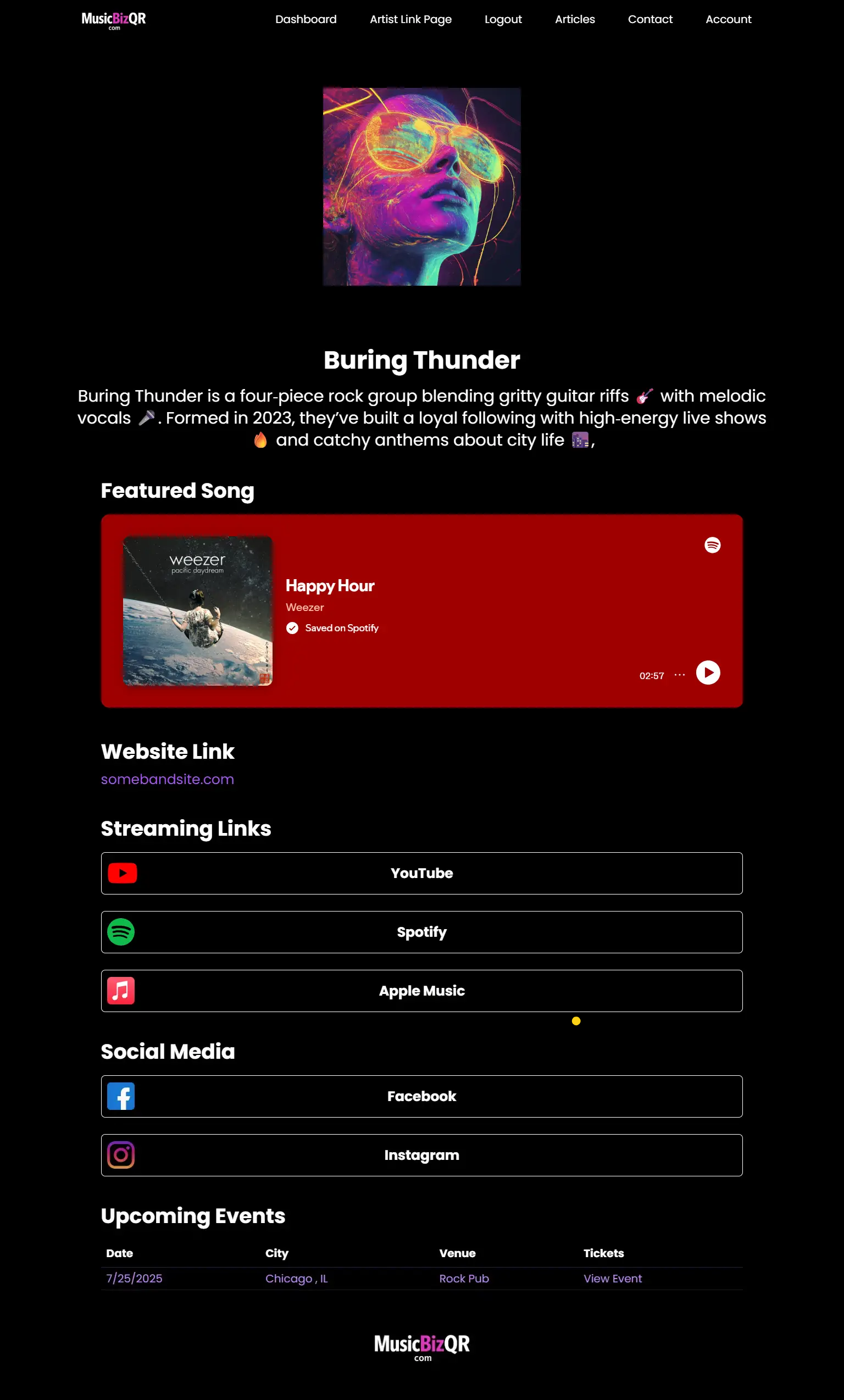
Related Posts
Most link-in-bio tools weren’t built for musicians. Discover why smart links create better fan journeys, stronger branding, and higher conversions for your music.
Smart links for musicians explained—how they work, why they matter in 2026, and how to build a fan-converting link that drives your music career.
Discover how music links can help artists guide fans across platforms effortlessly. Learn strategies to boost engagement, streams, and merch sales.
Most link-in-bio tools weren’t designed for musicians. Learn why smart links deliver better fan engagement, stronger branding, and real music-driven revenue.
Smart links aren’t just utility tools — they’re the new frontier in artist branding. Learn how visual design, consistency, and fan-centric smart links define a musician’s digital identity.
Discover how smart links can transform fleeting music streams into lasting fan connections. Learn the strategies indie artists use to grow their audience in the streaming era.
Discover how smart links empower indie artists to create deeper, lasting relationships with fans. Turn every click into meaningful engagement.
Discover 2026’s best smart link tools for artists. We compare top platforms, fan engagement features, and why MusicBizQR stands above the rest.
Learn how direct-to-fan video turns your smart link into a conversion machine. Build trust, drive streams, and make real fan connections with MusicBizQR.
Learn how to use music links to drive fan engagement, increase streams, and promote your music like a pro. Built for modern artists and bands. Shall I begin writing the Markdown content for this article now?
In 2026, discovery is chaotic — and smart links are how artists bring it all together. Explore how music smart links guide fans, boost streams, and create real momentum across every platform.
Tired of generic link tools? Discover the smart link platform built for music: video previews, analytics, and full artist control—all in one sleek page.
Every new release deserves more than a link in your bio. Learn how to use smart links to drive streams, collect fans, and turn a single drop into lasting momentum.
The layout of your smart link page can make or break your fan engagement. Learn the design psychology that turns clicks into superfans.
If you're still sending fans to scattered links, you're leaving money on the table. Here's why every indie artist needs a smart link strategy to grow, connect, and convert.",
Most smart links just sit there. This guide shows musicians how to build a smart link page that turns casual clicks into lifelong fans. Real strategies that work.
Discover the psychology behind smart link layout design and how it shapes fan engagement, conversions, and merch sales.
Master the art of launching music with smart links. This guide shows how to create hype, drive streams, and maximize impact every time you drop a new release.
Your smart link is your new homepage. Learn how to design a 2026-ready page that plays your music instantly, tells your story, and converts fans the moment they land.
Learn how musicians can use smart links to connect directly with fans, bypass algorithms, and drive engagement, streams, and merch sales.
Discover how embedded content like music, videos, and social posts can turn your smart link into a fan engagement engine. Boost streams, merch sales, and loyalty.
Discover why smart links are transforming music marketing in 2025. Learn how a centralized hub can grow your audience, boost streams, and drive real fan engagement.
From Spotify embeds to merch and tour links, MusicBizQR makes music promotion easy. Learn how to use smart links to streamline your entire fan funnel.
Learn five powerful ways smart links can revolutionize your band's music promotion, amplify fan engagement, and strengthen fan loyalty.
Discover how smart links are revolutionizing music promotion, increasing fan engagement, boosting streaming numbers, and enhancing concert attendance.