
The Best Link in Bio Alternative for Musicians: Build a Fan Funnel | MusicBizQR
Introduction: The Night the “Link in Bio” Finally Died
It always starts the same way.
A musician posts a clip — the moment where the hook lands, the energy hits, and some stranger halfway across the world suddenly feels connected to you. Notifications begin stacking, filling the screen like the glow from a stage light warming up backstage. For a few hours, there’s momentum. Real momentum. The kind that reminds you why you’re doing all of this in the first place.
And then it happens.
The same friction point every modern artist knows too well.
Fans tap your profile, hesitate, then meet the blandest sentence in the entire music industry: “Link in bio.” It’s a dead end disguised as a call to action. A funnel made of sand.
They click through anyway — maybe — only to land on a static wall of buttons. No context. No emotion. No sense of who you are or why that clip made them stop their scroll. It’s a menu, not a moment. And the spark they felt fifteen seconds ago quietly evaporates.
Your content worked.
Your music worked.
Your moment worked.
Your link didn’t.
This is the truth musicians are waking up to in 2026: the link-in-bio era isn’t just outdated — it’s fundamentally broken. Social platforms throttle outbound clicks. Fans don’t follow linear journeys anymore. Attention spans have collapsed into flashes of instinct. The old “menu of buttons” simply can’t keep up with the way people discover and fall in love with music today.
Musicians don’t lose potential fans because their songs aren’t strong enough. They lose them because the bridge between interest and action is built from weak material.
Fans don’t want a list of places to go. They want a world to step into — a space that continues the emotional energy of the moment that hooked them in the first place. Something guided. Something intentional. Something that feels alive.
This is where smart links stop acting like links and begin functioning as fan funnels — living, dynamic experiences that turn curiosity into real engagement. If you’ve read the Smart Links pillar guide, you already know how powerful a well-built smart link can be when it’s treated like part of a journey, not just a list.
And understanding this shift is the difference between an artist who gets lost in the algorithm and an artist who builds an audience that actually stays.
This guide is about that shift.
Not how to save the old link-in-bio strategy.
But how to replace it entirely with something built for the way fans behave now — and for the way music will be promoted over the next decade.
Why Link-in-Bio Is Broken in 2026
The decline didn’t happen overnight. It happened slowly, one update at a time, buried under algorithm tweaks and user-experience shifts most artists never saw coming. But the result is impossible to ignore: the traditional link-in-bio no longer moves fans the way it did even a few years ago.
Musicians feel it in the metrics.
Fans feel it in their behavior.
The industry feels it in the sharp drop in outbound traffic across every platform.
To understand why the link-in-bio era has quietly collapsed, you have to look at what’s changed in the modern digital landscape — and how these changes have rewired the way people discover and engage with music today.
If you’ve ever compared your old “link in bio” setup to a modern smart link vs Linktree breakdown, you’ve probably already felt this shift firsthand.
Social Platforms Suppress Outbound Clicks
TikTok, Instagram, and YouTube all share one agenda: keep users on the platform. Their business models depend on it. So over the last few years, every major platform has systematically tightened the flow of outbound traffic.
External links are:
- deprioritized,
- hidden behind multiple taps,
- scanned for “friction risk,” and
- quietly pushed lower in feed visibility.
Even creators with strong engagement feel the shift. You can post your best clip of the year and watch the likes pour in, only to see a fraction of those people make it to your link page. Not because the content wasn’t strong — but because the platforms are designed to keep fans inside their walls, not send them to yours.
For musicians, this means relying on a “link in bio” is like trying to build a bridge on a foundation that’s slowly sinking — exactly why so many artists are hunting for a link in bio alternative built for music instead of generic creator tools.
Static Link Pages Don’t Match Modern Discovery
Music discovery in 2026 is fluid, unpredictable, and emotionally driven. A fan might hear your song on TikTok, see the visualizer on YouTube, and end up on your Instagram story all within the same hour.
But when they reach your link page, they’re often met with a static, linear menu from a different era of the internet — a layout that assumes fans are patient, intentional, and willing to browse.
They aren’t.
Static link lists don’t reflect the way fans actually move through content today. They don’t continue the vibe or energy of the moment that brought someone to your page. And they certainly don’t amplify the emotional connection that sparked in the clip that caught their attention.
In a world where fans expect immediacy, momentum, and context, a static menu feels like a disconnect — especially when tools exist to turn that page into a real smart link for music instead of a dead-end list.
Fans Need Context, Not Menus
This is the part artists rarely think about: fans don’t tap because they’re confused, overwhelmed, or unsure what the next move should be.
A list of:
- platforms,
- streaming services,
- videos,
- merch stores,
- tour dates,
doesn’t tell a story. It doesn’t guide the fan. It doesn’t help them understand what you want them to do or why they should care.
Modern fans respond to:
- micro-stories,
- emotional cues,
- familiarity,
- visual context,
- and frictionless experiences.
The old list-style link page doesn’t deliver any of that. It asks the fan to do too much work. And when fans have to think, they hesitate — and when they hesitate, they bounce.
The Click Gap That Kills Momentum
The biggest reason the link-in-bio era is over comes down to a simple truth: every additional step costs you attention.
A typical fan journey in 2026 looks like this:
Feed → Profile → Link in Bio → Link Page → Streaming App
That’s four or five separate micro-decisions, each one a chance for the fan to lose interest, get distracted, or choose something else.
Most artists don’t lose fans because their music isn’t strong enough.
They lose fans because the pathway between interest and action is full of friction.
This is the “click gap,” and it’s deadly for musicians trying to turn viral moments into lasting audiences. If your link can’t carry the emotional energy of the moment that hooked the fan, the journey collapses before it ever reaches your music.
The solution isn’t to push harder on the old strategy — it’s to build something new. Something aligned with how fans behave now. Something that turns that first spark into forward movement.
It’s time to replace the link-in-bio with a fan funnel.
What Fans Actually Do (Not What Musicians Think They Do)
Musicians often imagine their fans moving through the digital world with purpose — clicking through profiles, reading bios, exploring links with the same curiosity and intent the artist had when posting the clip. But that’s not how people behave anymore, especially in 2026.
Modern fans drift through content the same way they flip through radio stations on a late-night drive: following instinct, chasing emotion, and abandoning anything that requires more than a second of effort. They don’t follow clean, linear conversion paths. They follow sparks.
And those sparks fade fast.
Most artists overestimate how committed a fan is in the few seconds after discovery. They assume interest — when the truth is far more fragile. A fan isn’t “interested.” They’re momentarily open. And that openness disappears the moment friction appears.
Understanding that difference is the key to building a fan funnel that actually converts — and it’s why so many modern smart link strategies (like the ones in the Smart Links for Musicians hub) focus on emotion first, structure second.
They skim, not study
Picture a fan lying in bed, scrolling half-awake through TikTok. Your clip hits, they pause, maybe rewatch it — but they’re not suddenly dedicating ten minutes to exploring who you are. They’re glancing, feeling, moving. The entire interaction is powered by momentum, not analysis.
If your link page doesn’t match the emotional energy of that moment, the journey ends there.
They bounce at the first sign of effort
The modern attention span doesn’t negotiate. If something feels slow, confusing, or like “work,” the fan vanishes. Not because they didn’t like the music, but because something else stole their attention. The scroll is always waiting.
You’re not competing with other artists — you’re competing with distraction itself.
They follow emotional cues, not logical ones
Musicians think fans say, “I like this clip, I’ll go stream the song.”
But fans are guided by rhythm, tone, personality, and micro-connections — not rational pathways.
They follow:
- emotional resonance,
- curiosity,
- familiarity,
- personality cues,
- and the afterglow of the moment that hooked them.
If your link page feels clinical or disconnected from the vibe of your content, the emotional thread snaps instantly.
They want context that continues the feeling
Fans click because they want the feeling to continue. If the clip had energy, humor, attitude, pain, swagger, or vulnerability, your link page needs to carry that same emotional signal.
Static menus don’t do that.
They reset the fan’s brain instead of pulling them deeper.
The moment becomes a dead end instead of a doorway.
A Realistic Fan Journey (The One Artists Ignore)
Here’s the journey most artists think happens:
Clip → Profile → Link → Stream → New fan.
Here’s the one that actually happens:
Clip → Pause → Maybe check profile → Light curiosity → Moment of hesitation → Distraction → Scroll → Gone.
And if your link page loads slowly, looks generic, or interrupts the vibe with a wall of buttons, that hesitation turns into a bounce.
The artist thinks, “No one streamed my song.”
But the truth is simpler and far more common:
They never made it that far.
Fans aren’t rejecting the music.
They’re overwhelmed by the path to get to it.
This is why the old link-in-bio model is collapsing.
It wasn’t built for the behavior patterns of 2026.
But fan funnels are — and they’re becoming the new foundation of modern music promotion.
What Is a Fan Funnel?
Ask most musicians to define a “fan funnel,” and you’ll get a guess — something vague about clicks, streams, or “getting people to your music.” But the real meaning is deeper, older, and far more human.
A fan funnel is simply the journey a listener takes from that first spark of discovery to the moment they decide, “I want to stick around.”
It’s the path between curiosity and loyalty — the invisible architecture behind every long-term audience.
And unlike the old link-in-bio model, which treated fans like traffic to be redirected, a fan funnel treats them like people moving through a story.
At its core, a fan funnel is built on one idea:
Fans don’t become fans because you tell them to. They become fans because the experience pulls them in.
The funnel is that experience.
If you’ve already explored the Ultimate Guide to Smart Links for Musicians, think of this article as the next layer — not just what a smart link is, but how it becomes a narrative path.
The Simple Fan Funnel Model
While marketers love complicated diagrams with arrows and boxes, musicians don’t need any of that. The modern fan funnel is actually very simple:
Hook → Story → Experience → Action → Retention
Here’s what each piece really means in the life of an artist:
- Hook: the moment that stops someone mid-scroll
- Story: the feeling or identity they associate with you
- Experience: the world they enter when they click
- Action: the thing you want them to do (stream, follow, buy, watch)
- Retention: the loop that brings them back again
This is not a marketing trick. It’s psychology.
It’s how humans naturally move when something catches their attention.
And right now in 2026, fans expect that journey to feel seamless — not broken up by menus, redirects, or dead-end pages.
Why Funnels Outperform Links
The traditional “link in bio” assumes something dangerous: that fans will do the emotional work of figuring out what to do next.
Funnels remove that work.
They create a guided, intentional journey that:
- continues the emotion of the clip,
- focuses attention,
- reduces friction,
- and makes the next step obvious.
When a fan lands on a funnel instead of a static link list, they’re not choosing between ten platforms — they’re entering your world. They see your music, your video, your story, your brand, all arranged in a way that keeps the emotional thread alive.
This is why funnels convert better:
- fewer clicks,
- fewer decisions,
- more context,
- more emotional continuity.
A static link page asks the fan to decide.
A funnel shows them where to go.
And that single shift — from “menu” to “experience” — is the difference between losing momentum and building real fans.
Next, we’ll break down what a high-converting funnel actually looks like, and how musicians can build one that reflects who they are and what they stand for.
The Anatomy of a High-Converting Fan Funnel
A high-converting fan funnel isn’t built from buttons or tactics — it’s built from psychology. It reflects the way people truly behave when something catches their attention: quickly, emotionally, and with almost no patience for friction.
A funnel doesn’t feel like marketing.
It feels like a continuation of the moment that made a stranger pause and think, “Who is this?”
When a funnel works, it’s almost invisible.
When it fails, everything collapses.
Here’s what a great one is made of — and how it connects back to the kind of layout we explore in The Anatomy of a Perfect Smart Link Page for Musicians.
The Hook
Every funnel starts before the click — in the wild, messy world of the feed.
A fan is scrolling in bed at midnight. They swipe past a dozen forgettable clips, and then yours appears: a melody that hits right in the ribs, a lyric that feels personal, a moment that doesn’t need explaining. That emotional spark is the beginning of the funnel.
The hook sets the entire tone.
It defines the expectation, the energy, the emotional temperature.
Hooks can come from:
- TikTok clips that stop the scroll,
- Instagram reels that feel intimate,
- YouTube Shorts with a perfect lyric moment,
- a fan-recorded live performance that feels electric,
- or a behind-the-scenes moment that feels human.
The hook is the first chapter of the fan’s story with you.
A high-converting funnel continues that story, uninterrupted.
If your link page breaks the vibe, the funnel dies in seconds.
The Experience
This is where most musicians lose people — the moment the fan lands.
A traditional link page shows a list of destinations.
But fans don’t connect with destinations.
They connect with experiences.
A great funnel creates the feeling of stepping into your world. It doesn’t just list your platforms — it extends the emotional energy of the clip that hooked the fan.
A powerful experience might include:
- an embedded song that plays with one tap,
- a video that continues the mood of the clip,
- a short personal note that deepens the connection,
- a tour schedule that signals momentum,
- or merch that visually expresses your identity.
The goal isn’t to give fans “options.”
It’s to craft an atmosphere — one that makes the next action obvious.
Fans move when something feels right, not when something is simply available.
The Action
Musicians obsess over this part — the conversion.
But actions aren’t forced; they’re earned.
A fan is most likely to act when:
- the action matches the emotional state they’re in,
- the interface feels frictionless,
- and the path requires no thought.
Actions can include:
- streaming the new release,
- watching the full music video,
- following on Spotify or Instagram,
- joining your email list,
- buying a ticket,
- or grabbing a piece of merch.
But the key to high conversion is focus.
If you emphasize everything, you emphasize nothing.
Funnels convert because they guide, not overwhelm.
The Retention Loop
This is the part almost every artist forgets — and it’s where long-term growth actually happens.
The funnel doesn’t end when the fan acts.
It loops them back into your world.
Retention can come from:
- email and SMS for future releases,
- playlists that become part of the fan’s routine,
- pre-save and notification buttons,
- communities and fan clubs,
- or simply watching how fans behave in Muse and refining your funnel.
A high-converting funnel doesn’t create one-time listeners.
It creates returning fans — the foundation of real audience growth.
A static link page asks fans to choose a destination.
A real fan funnel guides them into a story.
And it’s this shift — from “menu” to “narrative,” from “links” to “experience” — that has turned funnels into the new core of modern music promotion.
Why Smart Links Make Perfect Fan Funnels
Smart links were never supposed to be the star of modern music marketing. They began as a utility — a simple way to put multiple platforms in one place. But somewhere along the way, the industry changed, fan behavior changed, and the humble smart link quietly became the backbone of the modern fan journey.
In 2026, a smart link isn’t a tool.
It’s infrastructure.
It’s the bridge between the moment a fan discovers you and the moment they decide they want more.
And that’s exactly what a funnel needs.
If you’ve read pieces like 5 Ways Smart Links Transform Music Promotion and Boost Fan Loyalty, you’ve already seen how smart links can move from utility to strategy. Here, we’re taking that further — into full funnel territory.
Smart Links Solve the Biggest Problem in Music Marketing: Fragmentation
Fans don’t live on one platform anymore.
They don’t follow linear steps.
They don’t move predictably.
A single fan might:
- discover you on TikTok,
- check your Instagram,
- hop to YouTube for the full video,
- stream on Spotify,
- then buy a ticket on your website…
…all in the same week.
Old link-in-bio tools treated each platform as separate destinations.
Smart links treat them as connected paths inside a single ecosystem.
This eliminates the #1 cause of fan drop-off: context switching.
Every time you force a fan to jump to a new world, they lose a little more momentum.
A smart link keeps the world consistent.
Smart Links Carry the Emotional Energy of the Hook
Static link lists feel like admin pages.
Fans don’t come for admin — they come for experience.
Smart links can be:
- visual
- musical
- dynamic
- emotional
- immersive
They carry the vibe of the discovery moment into the next screen.
This matters more than most musicians realize.
When someone clicks your link, they’re still inside the emotional afterglow of your clip.
A good smart link keeps that feeling alive.
A great one amplifies it.
This continuity is the oxygen of a high-performing funnel.
Smart Links Reduce Fan Effort (And Fans Reward Low-Friction Journeys)
The modern fan is overwhelmed, overstimulated, and overloaded.
If a smart link requires:
- reading,
- thinking,
- guessing,
- or choosing between ten tiny buttons…
…they bounce.
A smart link designed for funnels simplifies the journey:
- One place to listen
- One place to watch
- One place to buy
- One place to connect
- One place to explore more
Fewer decisions = more conversions.
It’s not hype — it’s cognitive psychology.
When you reduce friction, you increase action.
Smart Links Turn Passive Interest into Active Engagement
Most musicians assume fans need pressure.
They don’t.
Fans need clarity.
A well-designed smart link acts like a guide — a quiet, subtle hand that makes the next step feel natural.
This is what funnels are built on:
- Not selling,
- Not forcing,
- But guiding.
Smart links convert because they show the fan what to do next without overwhelming them.
When a fan lands and sees:
- the song that hooked them,
- the full video,
- your tour callout,
- your story,
- your visuals,
- your world…
…it doesn’t feel like a menu.
It feels like discovering an artist with real depth.
And that experience is what turns curiosity into loyalty.
Smart Links Are the Perfect Foundation for Funnels
At their best, smart links do exactly what funnels are supposed to do:
- capture momentum,
- guide emotion,
- clarify the next step,
- reduce friction,
- and build retention.
A funnel is the story.
A smart link is the chapter fans land on.
In the next section, we’ll break down how musicians can turn a simple smart link into a fully optimized funnel — one that reflects their identity and turns strangers into fans who stick around.
If you want to see what this looks like on the page, you can cross-reference this with The Anatomy of a Perfect Smart Link Page for Musicians as you read.
Turning a Smart Link Into a Funnel
Most musicians don’t realize how close they already are to having a real fan funnel. They think funnels require complex marketing tactics, email sequences, or some behind-the-scenes tech wizardry.
But a funnel isn’t a system.
A funnel is a feeling.
It’s the emotional bridge that carries a fan from the moment they discover you to the moment they decide, “I want to go deeper.”
A smart link becomes a funnel when it stops acting like a directory and starts acting like a continuation of your story — the next beat in the rhythm the fan is already following.
This is the same shift we talk about when we explore how smart links transform music promotion: once the page becomes narrative, everything changes.
Start with the Emotion of the Hook
A fan doesn’t arrive at your smart link neutral.
They arrive carrying the emotional temperature of the clip that grabbed them.
If your clip was:
- tender,
- chaotic,
- explosive,
- cinematic,
- vulnerable,
- or rebellious…
…your smart link has to echo that same emotional frequency.
Here’s where artists break funnels every day:
The clip is a moment.
The smart link is a spreadsheet.
That emotional disconnect is fatal.
Fans don’t click to find information — they click to stay in the feeling.
A great funnel makes the fan think:
“This is the same world I just stepped into.”
Build a Single, Unmistakable Path
Funnels don’t convert because of complexity — they convert because of clarity.
When a fan lands on your page, their brain is scanning for:
- What matters here?
- What is this page trying to show me?
- What should I tap next?
If your page asks a fan to “choose an adventure,” you’ve already lost them.
Pick one primary action:
- stream the single,
- watch the full video,
- pre-save the release,
- buy a ticket,
- join the mailing list,
- follow you on Spotify.
Whatever the action is, it needs to be obvious — not loud, not desperate, just unmistakably the center of gravity.
Funnels convert because they align intention with attention.
Add Resonant Depth (Not More Buttons)
A funnel gains power when it becomes dimensional — when it gives fans not information, but a sense of who you are.
Depth comes from:
- an embedded song or video,
- a short artist note that feels personal,
- a behind-the-scenes clip,
- a tour callout that signals momentum,
- or a simple introduction that feels human instead of promotional.
Depth doesn’t mean more content.
It means content that connects.
A funnel doesn’t impress a fan — it invites them.
Let Visual Cues Guide the Fan Instinctively
Fans don’t navigate funnels with logic.
They navigate with the same instincts that guide them through a music video.
Your layout:
- what appears above the fold,
- what has visual weight,
- what feels centered,
- what uses color or motion…
…these elements create an invisible path for the fan to follow.
Great design doesn’t ask for attention.
It directs it.
Small choices shift conversion:
- placing the video first,
- matching the colors to the clip’s vibe,
- spacing elements so the eye moves smoothly,
- removing distractions,
- keeping the CTA unmistakable.
Fans don’t follow instructions.
They follow design.
Remove Every Drop of Fan Friction
A smart link becomes a funnel by subtraction, not addition.
Every slowdown kills momentum:
- long descriptions,
- cluttered layouts,
- too many choices,
- heavy text blocks,
- broken embeds,
- mismatched branding,
- unclear CTAs.
The fan should understand the page in one glance.
Funnels feel inevitable — like the page wants the fan to tap the next thing, not because it's shouting, but because it’s aligned with the moment they’re already in.
A smart link becomes a funnel when it carries a fan from one emotional moment to the next with zero resistance.
When it feels like the story they’re already invested in is still unfolding.
When it makes the next step feel natural, not forced.
This is the foundation of modern music marketing — not overwhelm, but orchestration.
Page Design Frameworks That Drive Fan Action
Most musicians believe design is about making things “pretty.” But in funnel-building, design is persuasion. It’s the quiet force that guides a fan’s eyes, emotions, and instincts without them ever realizing they’re being guided.
A well-designed funnel feels effortless.
A poorly designed one forces fans to think — and thinking kills momentum.
Here’s how design becomes direction.
For a deeper dive on this, you can also explore how layout impacts behavior in our design-focused article, Smart Link Design Psychology, once this foundation is clear.
The Gravity of Above-the-Fold
When a fan lands on your page, the first screen decides everything. Before they scroll, before they read, before they interpret anything consciously, their brain is already sorting meaning.
Above-the-fold isn’t where you place your content.
It’s where you place your identity.
This is where the moment needs to be clearest:
- the song or video that continues the vibe of the clip they came from,
- the CTA that feels inevitable rather than forced,
- the artwork or image that anchors the aesthetic.
If fans need to scroll to understand you, half of them won’t.
The top of your page is where emotion becomes direction.
Single Focus, Many Doors
Funnels fail when everything screams for attention. The fan’s brain isn’t built for parsing options — it’s built for following signals.
Your funnel should have one gravitational center:
the main action you want fans to take.
Everything else — the platforms, the videos, the merch, the tour dates — becomes supporting cast, not competing leads. This hierarchy doesn’t limit the fan; it guides them, the way a great chorus guides the ear through a song.
When design clarifies what matters most, fans move without hesitation.
Emotional Continuity
The most overlooked part of funnel design isn’t layout — it’s emotional tone.
If the TikTok clip was soft and intimate, but your funnel page feels bright and chaotic, the emotional thread snaps. If your clip was loud and explosive, but the page opens with muted colors and tiny text, the energy dies before the fan even knows why.
Great funnels don’t just mirror the clip’s aesthetic — they extend it.
Colors, spacing, imagery, fonts — all of it should match the emotional weather of the moment the fan arrived with. Design is emotional consistency. When it’s aligned, the funnel feels like the next scene of the same story.
Guiding the Eye
Fans don’t “navigate” pages; they drift through them. Their eyes follow contrast, spacing, movement, and visual weight — the same way they follow a camera through a music video.
Your layout should guide them:
- from the header,
- to the media embed,
- to the dominant CTA,
- to the deeper content below.
This shouldn’t feel like a step-by-step process.
It should feel like gravity — subtle but undeniable.
Good design organizes information.
Great design choreographs attention.
The Frictionless Principle
Funnel design isn’t defined by what you add — it’s defined by what you remove.
Every extra button, every block of text, every mismatched color, every confusing choice creates friction. And friction kills action.
A fan should understand your entire page in a single breath:
“Oh — this is the new single. That’s the video. This is where I tap.”
Remove the clutter.
Remove the noise.
Remove anything that asks the fan to think.
Funnels work when nothing stands in the way of emotion turning into action.
Story Over Structure
A funnel may be built from sections and layout, but it lives through story. Fans connect to humanity, not architecture.
A short artist note, a behind-the-scenes clip, a candid image — these small touches turn a clean layout into a living experience. Even one line of personal context can deepen the fan’s connection more than ten buttons ever could.
Structure organizes.
Story resonates.
Funnels need both, but story is what makes people care.
Fan action isn’t driven by tricks or tactics. It’s driven by design that honors emotion, respects attention, and guides instinct. When your page feels like the next chapter in a moment the fan already cares about, conversion stops feeling like marketing and starts feeling like momentum.
The Exact Elements Every Funnel Page Needs
A great funnel page — the fan path that guides someone from curiosity into connection — isn’t built from guesswork. It’s built from a sequence of emotional moments that feel effortless, intentional, and true to who you are as an artist.
Think of it like this:
A fan lands on your page carrying the last few seconds of feeling they got from your clip. Your funnel’s job is to catch that feeling and carry it forward without dropping the thread.
When the right elements are in place, the page feels alive.
When one is missing, something feels off, even if the fan can’t explain why.
Here’s what every high-converting funnel page needs — and why. As you read this, you can mentally map it against the layouts we break down in The Anatomy of a Perfect Smart Link Page for Musicians.
1. A Hero Moment That Continues the Vibe
Before a fan reads anything or taps anything, they feel the page. The hero moment is where that feeling comes into focus.
Imagine someone hears a lyric in your TikTok clip that hits them. They tap your link. The page opens — and right there at the top is the same song, the same visual energy, the same world they just stepped into. The emotional bridge stays intact.
Your hero moment can be:
- the new single,
- the music video,
- the artwork from the clip,
- or a powerful image that captures the vibe.
This isn’t just “the top of the page.”
It’s the emotional anchor.
2. A Clear, Singular Primary Action
Fans don’t convert because they have choices.
They convert because one path feels unmistakably right.
Your primary action should feel like the natural next beat, not a decision the fan has to think about. Whether it’s:
- Listen to the Song
- Watch the Video
- Pre-Save
- Get Tickets
…it should be the page’s gravitational center — visually, emotionally, and structurally.
When design and intention agree on what matters most, fans follow without hesitation.
3. Depth That Adds Meaning (Not Noise)
After the primary action, the fan instinctively asks a subtle question:
“Who is this artist?”
This is where a little depth goes a long way. Not a biography. Not a data dump. Just a small, meaningful touch that humanizes you:
- a one-line note about the song,
- a behind-the-scenes moment,
- a lyric fragment,
- a photo or clip that adds context.
Depth isn’t about giving more.
It’s about giving something that resonates.
4. Secondary Actions That Strengthen Connection
Once the fan feels the moment and understands the vibe, they may naturally explore more. That’s where secondary actions belong — lower on the page, quiet but essential.
These actions create longevity:
- following on Spotify,
- subscribing on YouTube,
- joining the email list,
- discovering tour dates,
- exploring your catalog.
These elements don’t push.
They give fans the option to stay in the world you’ve built.
5. A Visual Story That Matches the Artist Identity
Fans don’t consciously interpret design — they absorb it.
The page should:
- sound like your music,
- feel like your aesthetic,
- reflect your emotional palette.
Color, spacing, typography, imagery — all of it should echo the clip’s tone. A fan should recognize your world before they even process a word.
This is emotional continuity — the secret thread that keeps the funnel together.
6. A Retention Loop That Brings Fans Back
Most musicians think funnels end when a fan acts once. In reality, funnels start when a fan returns.
Retention is how careers grow:
- a mailing list that announces drops,
- a pre-save that places you in their future queue,
- a playlist that becomes part of their routine,
- a tour reminder that brings them to a show.
This is where Muse analytics becomes a weapon — it tells you how fans travel through your world so you can refine the path again and again.
A page that brings fans back is worth more than a page that converts once.
Return behavior is the foundation of long-term growth.
A funnel page isn’t a layout.
It’s a sequence of emotional checkpoints.
Each one carries a fan a little deeper.
Each one keeps the moment alive.
This is how a stranger becomes a listener — and eventually, a supporter who sticks around.
Next, we’ll put all these pieces together into a real example layout, so you can see how a true fan path unfolds from top to bottom.
Example Funnel Layout (A Real-World Page Breakdown)
It’s one thing to describe what a great funnel should include — it’s another to feel it. So let’s walk through a real example. Imagine this as the page a fan sees after tapping your link from a viral TikTok clip: a world built with intention, rhythm, and emotional continuity.
This is the layout top-performing artists are quietly using in 2026.
A layout designed for instinct, not instruction.
Let’s walk through it from top to bottom — the way a fan experiences it in the first 5–8 seconds.
1. The Hero Moment (Top of the Page)
Before anything else loads, the fan sees the thing that pulled them in.
Hero Video or Song Embed — Centered, Full Width
The clip they came from flows directly into:
- the official music video,
- or the full song,
- or a live performance moment that carries the same emotional tone.
The colors, the artwork, the imagery — everything feels like the same world as the TikTok they tapped.
Beneath it:
- a single, high-contrast CTA (e.g., “Listen Now” or “Watch Full Video”).
Within the first second, the page tells the fan:
Stay in this feeling.
This emotional continuity is the engine of the funnel.
2. The Primary Action Block (The Main Event)
Right under the hero, the fan sees exactly what they’re supposed to do next — without reading, thinking, or scrolling aimlessly.
Primary CTA Module
This block includes:
- one bold button,
- one line of context,
- and nothing to distract from it.
Examples:
- “Listen on Spotify”
- “Pre-Save the Release”
- “Get Tickets”
- “Watch the Full Music Video”
No clutter. No options parade.
Just clarity — the heart of conversion.
3. The Resonant Depth Section (Emotion, Not Info)
Once the fan engages with the main action or hovers near it, they look for something deeper — something that tells them why this moment matters.
This section should feel like a soft spotlight, not a pitch.
Depth Content Options:
- a 1–2 sentence artist note,
- a behind-the-scenes clip or image,
- a line of lyric text that fans already reacted to,
- a quick personal message (written or video).
This is where the page breathes.
This is where the connection forms.
A single sentence here can convert better than ten features:
“I wrote this during the hardest season of my life. Thank you for listening.”
Meaning drives retention.
Emotion drives action.
4. Secondary Actions (The Explore Zone)
Now that the fan feels connected, they’re ready for optional next steps. This is where you give them pathways without asking them to choose prematurely.
Secondary Actions — Clean, Spaced, Intentional
- Follow on Spotify
- Subscribe on YouTube
- Check Tour Dates
- Explore Discography
- Join the Mailing List
These sit below the main emotional beats — quiet but powerful.
They don’t compete.
They enhance the fan path.
5. Visual Identity & Continuity (The Atmosphere Section)
The deeper the fan scrolls, the more important it becomes that the page still feels like you.
This section includes:
- consistent color palette,
- cohesive imagery,
- your artist photo or cover art,
- spacing and layout that match the clip’s vibe,
- typography that reflects your aesthetic.
This is the “art direction” layer — seen but not consciously noticed.
A funnel is as much about what the fan feels as what they tap.
6. The Retention Loop (The Quiet Power Move)
At the bottom of the page — after emotion, action, and depth — lives the piece that determines whether this fan will return.
Retention Options:
- A newsletter or SMS sign-up (“Get release updates”)
- A pre-save button
- A playlist add
- An email capture tied to unreleased content
- A subtle “More Like This” section featuring music or videos
This part is small but mighty.
The first action builds momentum.
The second action builds careers.
Putting It All Together (Top-to-Bottom Flow)
Here’s the shape of the page when everything is aligned:
- Hero Moment — the emotional continuation of the clip
- Primary CTA — the main action, immediately clear
- Depth Section — a touch of story, intimacy, or identity
- Secondary Actions — optional pathways for deeper connection
- Artist Identity Visuals — atmosphere, tone, cohesion
- Retention Loop — where long-term fans are created
This isn’t just a layout.
It’s a sequence — a fan path shaped around the way real people move through emotion, curiosity, and instinct.
In the next section, we’ll talk about common mistakes musicians make when building funnel pages, and how to avoid sabotaging conversion with small but costly choices.
The Most Common Funnel Mistakes Musicians Make
Great funnels don’t fail because artists lack talent — they fail because of small decisions that quietly break the emotional thread. Most musicians never realize these moments are happening. They blame the algorithm, the platforms, or even their own music… when the real problem is that the fan path is cracking under friction.
Here are the most common mistakes that sabotage fan funnels — and why they cost artists thousands of missed listeners every year.
If you’ve ever read our breakdown of Linktree alternatives for musicians, a lot of these mistakes will feel familiar — they’re baked into most generic link-in-bio tools by default.
1. Breaking the Emotional Continuity
A fan taps your link carrying the exact vibe of the clip they just watched.
If the landing page doesn’t match that emotion, the funnel collapses instantly.
This mistake looks like:
- beautiful video → cold, sterile link list
- emotional performance → generic buttons
- cinematic clip → neon, mismatched colors
- intimate moment → chaotic design
The fan doesn’t consciously say, “This page feels wrong.”
They just feel a drop — and bounce.
Emotion is momentum.
Breaking it is fatal.
2. Treating the Smart Link Like a Directory
A directory lists things.
A funnel guides people.
When musicians put:
- 10 streaming links,
- 6 social platforms,
- 4 merch CTAs,
- 3 random extras…
…the page stops guiding and starts overwhelming.
Fans don’t want options.
They want direction.
When everything is important, nothing is important.
3. Hiding the Main Event
The primary action — the thing that matters most — should be impossible to miss.
Mistakes include:
- placing the CTA too low,
- burying it under text,
- surrounding it with competing buttons,
- making it visually identical to everything else.
If a fan lands and doesn’t instantly sense the purpose of the page, the page is already failing.
Your main event shouldn’t be found.
It should be felt.
4. Over-Explaining (Walls of Text)
Musicians sometimes try to build connection by explaining themselves:
“I wrote this during a tough time…”
“This song means everything to me…”
“Here’s my story…”
But long paragraphs rarely deepen connection. They slow the fan down, kill momentum, and disrupt the emotional pace.
A funnel is not the place for essays.
A funnel is the place for moments.
One powerful sentence beats three paragraphs every time.
5. Visual Chaos (AKA: The Aesthetic Drop)
Fans don’t consciously analyze design — they absorb it emotionally. Visual chaos creates subconscious resistance.
Chaos looks like:
- mismatched colors,
- inconsistent fonts,
- low-quality images,
- unbalanced spacing,
- overly crowded layouts.
This doesn’t just “look bad.”
It makes the page feel unstable.
Fans follow confidence.
Your design must communicate confidence instantly.
6. Making the Page About the Artist, Not the Fan
This is one of the biggest silent killers.
When the page is:
- too self-focused,
- too promotional,
- too braggy,
- too cluttered with “about me” content…
…the fan feels distance, not connection.
Funnels work when the fan feels invited into your world — not when they’re lectured about it.
Connection is emotional, not informational.
7. Forgetting the Retention Loop
Most artists’ funnels end the moment a fan clicks something.
The “one action” mindset kills long-term growth.
The retention loop — a pre-save, a playlist add, a mailing list sign-up, a follow button — is the second path that creates loyal fans.
This loop is small but vital.
It’s the difference between a page that converts once…
and a page that converts forever.
Most musicians don’t suffer from lack of talent.
They suffer from invisible friction.
The fix is rarely complicated.
It’s almost always emotional.
And with the right layout, clarity, and design, the entire fan path becomes smooth again.
Next, we’ll explore the final piece of the funnel system — how to measure performance, interpret fan behavior, and refine your funnel using Muse analytics.
Measuring and Refining Your Fan Funnel with Muse Analytics
A fan funnel isn’t a static page — it’s a living ecosystem. It grows, adjusts, and reshapes itself as your audience interacts with it. Every tap, every scroll, every hesitation is part of a pattern. Most artists never see these patterns. They guess, hope, and assume.
Muse removes that blindness.
Muse doesn’t just give you data.
It gives you movement — the invisible choreography of how real fans travel through your world.
And once you see that movement, you’ll never design blindly again.
Seeing How Fans Actually Move
Imagine a fan named Jess. She’s sitting in her car outside work, killing time. She opens TikTok. Your clip hits her just right — a lyric that feels like it was written for her. She taps your link.
You assume she listens to the song.
You assume she scrolls the page.
You assume she checks your other platforms.
But fans rarely move the way musicians imagine.
Muse shows exactly what Jess actually does:
- whether she tapped the hero embed,
- whether she hesitated at the CTA,
- whether she scrolled for more,
- whether she bounced,
- and what captured her attention the longest.
Instead of a static landing page, you see a fan path unfolding in real time — where emotion rises, where curiosity breaks, where friction sneaks in.
This is where the fan journey becomes visible.
Finding the Bottlenecks (The Silent Killers of Conversion)
Every funnel has weak points — tiny spots where a fan pauses, gets confused, or loses the emotional thread.
You usually can’t feel these weak points.
Muse shows them instantly.
A hero moment that doesn’t hold attention.
A CTA hidden too low.
A wall of text that slows the scroll.
A section that looks important but leads nowhere.
A design element that steals focus from the main event.
These aren’t random issues — they’re emotional breaks.
And once you see where fans hesitate, you see exactly where the page is betraying the moment.
Muse takes guesswork off the table.
Measuring the Emotional Weight of Each Element
Funnels are built from emotional checkpoints, not features. Every part of the page either amplifies momentum or flattens it.
Muse shows you which elements actually matter.
Maybe fans aren’t tapping the CTA because the main video is so captivating that they never look down. Maybe a single sentence in your artist note keeps fans engaged longer than expected. Maybe your secondary actions outperform your primary action — a sign that your hierarchy needs tightening.
Everything has emotional weight.
Muse shows you where it’s supporting the story…
and where it’s interrupting it.
Refining Your Funnel Through Cycles (Not Overhauls)
Here’s the secret top artists understand:
Great funnels aren’t rebuilt.
Great funnels are refined.
Small shifts make massive differences:
- moving the CTA above the fold,
- simplifying a cluttered section,
- swapping a mismatched image,
- replacing dense text with a single meaningful sentence,
- adding a behind-the-scenes clip that deepens connection.
You don’t need to redesign the whole page.
You improve the moments that matter.
And those micro-adjustments compound into a drastically better experience.
Your funnel evolves the same way your sound evolves — through subtle, intentional refinements.
Understanding When Your Fans Move (Timing Is Part of the Funnel)
Muse doesn’t only show you how fans move — it shows you when they move.
It reveals:
- the hours your audience is most active,
- the nights when emotional engagement is highest,
- the days when CTA taps spike,
- and the windows where attention lags.
This lets you time:
- your posts,
- your pre-saves,
- your drops,
- your ticket announcements,
- your promotional pushes.
Your funnel becomes synced with the natural rhythm of your audience.
Momentum stops being random — it becomes predictable.
The Feedback Loop That Builds Careers
A funnel is a story, and Muse is the reader.
You see which chapters fans linger on, which ones they skim, which ones they skip, and which ones they come back to. This creates a feedback loop that transforms your fan path into a living, evolving system:
design → behavior → insight → refinement → stronger behavior → growth
This is where real careers shift.
You’re no longer hoping your page works.
You’re knowing why it works — and improving it with purpose.
This is how artists stop feeling invisible.
This is how a link becomes an engine.
This is how a moment becomes momentum.
In the final section, we’ll bring everything together — the psychology, the design, the emotional flow, the structure, and the Muse insights — into a closing narrative that reinforces your new understanding of the modern fan path.
The Modern Fan Path (Bringing It All Together)
For years, musicians have been told that the internet is chaotic — unpredictable, algorithmic, impossible to understand. But once you look closely at how fans actually behave, the chaos starts to look a lot more like a pattern. A rhythm. A pulse.
And at the center of that rhythm is something simple:
Fans follow feeling.
They follow the spark they felt in a clip.
They follow the energy that carried them to your smart link.
They follow the emotion your funnel keeps alive.
They follow the story your page begins to tell.
They follow the design that intuitively guides them.
They follow the moments Muse shows you how to shape.
This is the modern fan path — not a trick, not a hack, not a viral shortcut.
A path built from psychology, design, emotional continuity, and small refinements that add up to something powerful.
When you combine:
- the narrative structure of a funnel,
- the emotional resonance of your hero moment,
- the clarity of a single primary action,
- the depth that makes fans feel connected,
- the design that guides instinct,
- the retention loop that brings them back,
- and the behavioral insights from Muse…
…you no longer have a link.
You have a system.
A system that turns attention into action.
Action into connection.
Connection into loyalty.
Loyalty into long-term momentum.
Most artists treat smart links as storage.
You’re treating them as storytelling.
Most artists guess what fans want.
You’re watching what fans actually do.
Most artists hope momentum sticks.
You’re building a path where momentum becomes a cycle.
This is the future of music marketing — not louder posts or more content, but a smoother, more human journey built around the way fans naturally move through emotion.
A fan path designed with intention.
A funnel shaped by resonance.
A system refined by Muse.
Your smart link becomes a world.
Your fan path becomes a story.
Your analytics become a compass.
Your audience becomes a community.
And your music becomes something fans don’t just stumble into…
but stay for.
If you’re ready to go deeper into building that world, the Smart Links pillar page and your broader QR strategy guide are the natural next chapters in this story.
This is the power of modern funnels.
This is the power of understanding fan behavior.
This is the power of MusicBizQR.
Frequently Asked Questions
1. What exactly is a fan funnel?
A fan funnel is the guided path a listener takes after discovering your content — from curiosity to connection to action. Instead of dropping fans onto a generic link list, a funnel continues the emotion of the clip, focuses their attention, and shows them the most meaningful next step. It's storytelling, not menu-building.
2. How is a fan funnel different from a smart link?
A smart link is the tool.
A fan funnel is the strategy.
Most smart links are just lists of buttons. A funnel uses design psychology, prioritization, emotional continuity, embedded content, and analytics to guide fans through a structured journey. The best funnels use smart links — but not all smart links become funnels.
3. Do musicians really need a funnel?
If you want long-term fans, yes.
Short-term attention doesn’t build careers — guided experiences do. A funnel captures the momentum of a clip and channels it into streams, follows, ticket sales, and repeat engagement.
4. What makes a high-converting funnel for musicians?
A great funnel has:
- an emotionally aligned hero moment,
- one clear primary action,
- a simple depth section,
- a clean set of secondary options,
- strong visual identity,
- and a retention loop.
It should feel like the natural extension of your content — not a separate world.
5. How does Muse analytics help improve my funnel?
Muse shows you how fans actually move through your page:
where they tap, where they hesitate, what they ignore, how long they stay, and where the emotional thread breaks. Instead of guessing what’s wrong, you see behavior clearly — then refine with intention.
6. Is this too complicated for indie artists?
No — it’s simpler than it looks.
If you can film a TikTok, upload a song, or add a link to your bio, you can use a funnel. MBQ handles the structure, the embeds, the analytics, and the visuals. You focus on the moments that matter.
7. How many CTAs should a funnel have?
One primary CTA.
Everything else is secondary — optional pathways that come after the main moment. When the page tries to do everything at once, fans freeze and bounce.
8. What’s the biggest mistake artists make with funnels?
Breaking the emotional continuity.
If the vibe of the landing page doesn’t match the TikTok, Instagram Reel, YouTube Short, or live clip that brought the fan in, the funnel collapses instantly. Emotion must carry from clip to page without interruption.
9. Should I rebuild my entire funnel or improve it gradually?
Improve it gradually.
The best funnels evolve in cycles — small refinements guided by Muse insights. Tiny changes to layout, spacing, CTAs, imagery, or copy can dramatically increase conversion.
10. How often should I update my funnel?
Every time you:
- release new music,
- post a viral clip,
- start a tour,
- shift your visuals,
- or see a new pattern in Muse.
Think of your funnel like a setlist — it should change as the moment changes.
11. Can a funnel really grow my streams or ticket sales?
Yes — not by magic, but by removing friction.
When fans know exactly what to do, they act. Artists using funnels regularly see higher stream completion, more playlist adds, better retention, and stronger conversions because the page removes confusion and amplifies emotion.
12. How does this approach compare to Linktree or other link-in-bio tools?
Tools like Linktree provide links.
MBQ builds journeys.
Static lists can’t compete with:
- embedded content,
- emotional continuity,
- CTA hierarchy,
- depth storytelling,
- visual cohesion,
- Muse analytics,
- or retention loops.
Funnels convert because they feel designed for humans, not for convenience.
13. What’s the first step to building a great funnel?
Start with your hero moment.
Find the clip, image, or musical moment fans connected with — and make it the heart of your funnel. If you get the hero right, everything else becomes easier.
14. Do I have to be a big artist for this to work?
No.
Funnels help small artists even more, because every fan interaction matters. When you only get 30–100 daily link taps, your funnel has to work. A few extra conversions per day turns into real momentum over time.
15. Does MBQ automatically help with SEO for my funnels?
Direct funnels don’t index the same way articles do — but the system does improve your brand cohesion, content structure, and fan behavior signals, all of which indirectly support your overall visibility. For SEO dominance, explore our long-form strategy hubs like the Smart Links Pillar Page.
16. How long does it take to see results from using a funnel?
Some artists see results the same day — especially if you're coming from a viral clip. Others see steady improvement over weeks as Muse insights guide refinements. Funnels compound. The more data you get, the stronger they become.
Built for Musicians. Powered by Smart Links.
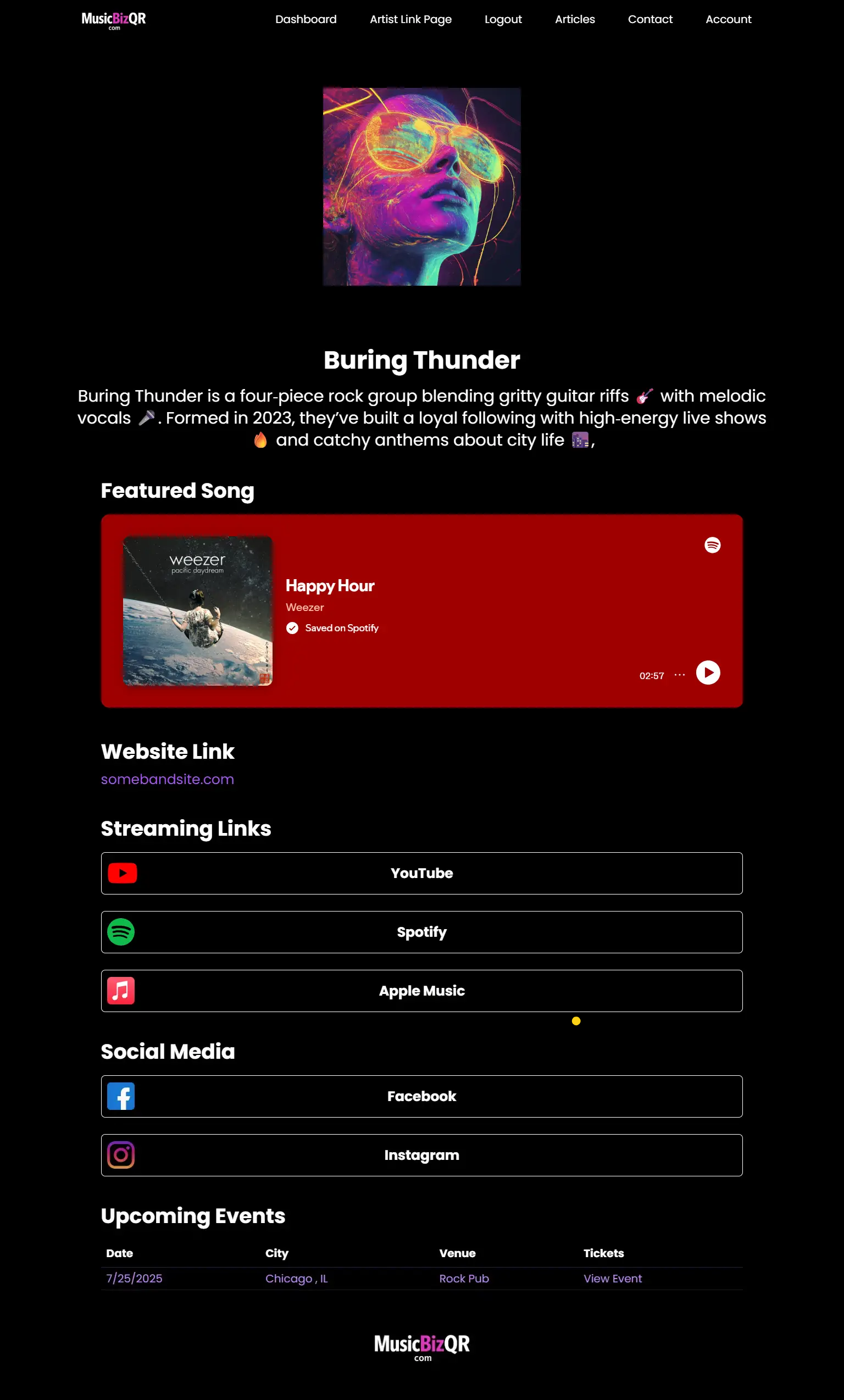
Faneqo gives you a powerful landing page with streaming links, videos, social buttons, and real-time fan analytics — all from a single QR code.
- 🎯 Unlimited link clicks & analytics
- 📈 Track Spotify streams, YouTube plays, and QR scans
- 📱 Mobile-optimized artist pages
- 🚀 Create your first Smart Link in seconds
Related Posts
Most link-in-bio tools weren’t built for musicians. Discover why smart links create better fan journeys, stronger branding, and higher conversions for your music.
Smart links for musicians explained—how they work, why they matter in 2026, and how to build a fan-converting link that drives your music career.
Discover how music links can help artists guide fans across platforms effortlessly. Learn strategies to boost engagement, streams, and merch sales.
Most link-in-bio tools weren’t designed for musicians. Learn why smart links deliver better fan engagement, stronger branding, and real music-driven revenue.
Smart links aren’t just utility tools — they’re the new frontier in artist branding. Learn how visual design, consistency, and fan-centric smart links define a musician’s digital identity.
Discover how smart links can transform fleeting music streams into lasting fan connections. Learn the strategies indie artists use to grow their audience in the streaming era.
Discover how smart links empower indie artists to create deeper, lasting relationships with fans. Turn every click into meaningful engagement.
Discover 2026’s best smart link tools for artists. We compare top platforms, fan engagement features, and why MusicBizQR stands above the rest.
Learn how direct-to-fan video turns your smart link into a conversion machine. Build trust, drive streams, and make real fan connections with MusicBizQR.
Learn how to use music links to drive fan engagement, increase streams, and promote your music like a pro. Built for modern artists and bands. Shall I begin writing the Markdown content for this article now?
In 2026, discovery is chaotic — and smart links are how artists bring it all together. Explore how music smart links guide fans, boost streams, and create real momentum across every platform.
Tired of generic link tools? Discover the smart link platform built for music: video previews, analytics, and full artist control—all in one sleek page.
Every new release deserves more than a link in your bio. Learn how to use smart links to drive streams, collect fans, and turn a single drop into lasting momentum.
The layout of your smart link page can make or break your fan engagement. Learn the design psychology that turns clicks into superfans.
If you're still sending fans to scattered links, you're leaving money on the table. Here's why every indie artist needs a smart link strategy to grow, connect, and convert.",
Most smart links just sit there. This guide shows musicians how to build a smart link page that turns casual clicks into lifelong fans. Real strategies that work.
Discover the psychology behind smart link layout design and how it shapes fan engagement, conversions, and merch sales.
Master the art of launching music with smart links. This guide shows how to create hype, drive streams, and maximize impact every time you drop a new release.
Your smart link is your new homepage. Learn how to design a 2026-ready page that plays your music instantly, tells your story, and converts fans the moment they land.
Learn how musicians can use smart links to connect directly with fans, bypass algorithms, and drive engagement, streams, and merch sales.
Discover how embedded content like music, videos, and social posts can turn your smart link into a fan engagement engine. Boost streams, merch sales, and loyalty.
Discover why smart links are transforming music marketing in 2025. Learn how a centralized hub can grow your audience, boost streams, and drive real fan engagement.
From Spotify embeds to merch and tour links, MusicBizQR makes music promotion easy. Learn how to use smart links to streamline your entire fan funnel.
Learn five powerful ways smart links can revolutionize your band's music promotion, amplify fan engagement, and strengthen fan loyalty.
Discover how smart links are revolutionizing music promotion, increasing fan engagement, boosting streaming numbers, and enhancing concert attendance.