
How to Design Scan‑Friendly QR Codes for Musicians

How to Design Scan‑Friendly QR Codes for Musicians
It was a dimly lit merch table at a sold‑out indie rock show, and the sticker sat patiently next to the band’s vinyl: a simple QR code stamped in glossy black ink on smooth white paper. When the first fan held her phone up, the camera recognized the code instantly—no awkward aiming, no “couldn’t read code” message, just an instant jump to the exclusive tour‑diary video waiting behind it. That moment, of seamless connection, is the culmination of thoughtful QR‑code design.
For musicians, scan‑friendly QR codes are more than tech novelties. They’re the portal to every pre‑save, every mailing‑list signup, every merch purchase—often at the exact moment a fan’s excitement peaks. But a QR code that refuses to scan is not only a missed opportunity; it can feel like a broken promise to an eager supporter.
In this guide, you’ll learn how to craft QR codes that work every time—whether printed on posters, embedded in album art, or overlaid on social videos. We’ll weave in real‑world examples, show you the subtle design trade‑offs, and build toward a playbook that makes “scan failure” a thing of the past.
1. Why Design Matters More Than Ever
A QR code is essentially a 2D barcode that stores a URL. But good design transforms it from a cold string of modules into an intuitive invitation. Consider two scenarios:
- No‑go code: A tiny, gray‑on‑black code printed on a glossy photo. The phone camera hunts for contrast, pauses, then times out. Frustration sets in and the fan moves on.
- Good‑to‑go code: A bold, high‑contrast code nestled in a frame that reads “Scan for backstage pass.” Three dots appear on screen, the fan taps the notification, and suddenly they’re watching an unreleased track.
Over 75% of QR scans happen on mobile devices under real‑world conditions: low light, shaky hands, or on busy backgrounds. Every design choice you make—size, color, whitespace—shifts the balance between success and failure.
2. Getting the Size Right
2.1 Print vs. Digital
- Printed materials: Posters, flyers, merch tags
- Digital displays: Social posts, email headers, video overlays
Each medium demands a minimum pixel or inch size to ensure reliable scanning:
- Print: Aim for at least 2 inches × 2 inches (≈ 50 × 50 mm). Anything smaller and your modules (the tiny squares) risk blurring when printed or trimmed.
- Screens: Provide a code at 200 × 200 pixels or larger. On phones with high‑density displays, this ensures the camera can isolate the modules quickly.
2.2 Distance and Viewing Angle
The farther a fan stands from your code, the larger it needs to be. A poster on a wall in a venue lobby might be scanned from 3–5 feet away; a wristband code must read from 6–8 inches. A quick rule of thumb:
Scan distance (inches) ÷ 10 ≈ minimum code size (in inches).
So if you expect a scan from roughly 30 inches away, size your code at least 3 × 3 inches.
3. Contrast and Quiet Zone
3.1 High Contrast for Clear Scanning
Every camera lens relies on distinguishing dark modules from light background. If you choose colored codes, test them rigorously:
- Ideal palette: Black modules on white background.
- Alternative palettes: Dark navy on pale gray, deep purple on off‑white—but always test with real phones.
Avoid gradients that muddy edge detection unless you’re using a service that specifically supports gradient‑friendly QR generation.
3.2 The Quiet Zone: Breathing Room for Readability
Surround your code with a margin—called the “quiet zone”—equal to four times one module’s width. If your code’s smallest square (module) is 4 pt wide, leave at least 16 pt of blank space on all sides. Without this padding, your camera can misinterpret edges and misread the code.
4. Embedding Brand Without Sacrificing Scanability
4.1 Center Logos & Error‑Correction
QR codes include built‑in error‑correction, allowing you to cover up to 30% of the code area and still scan. This means you can:
- Choose a high error‑correction level (typically “Quartile” or “High”) when generating your code.
- Overlay your logo or icon in the center—keeping it under 15% of total module coverage.
Real‑world tip: Dream‑pop duo Starshade placed their crescent‑moon logo in the middle of their code on album sleeves. Fans reported zero scan failures, even under dim bedroom lighting.
4.2 Brand Colors & Frames
- Frames & CTA text: Surround your code with a simple frame labeled “Scan Me” or “Tap Here.” It acts like a signpost, drawing the eye.
- Color accents: Use your brand’s primary hue for the frame or code border—never inside the data modules. For example, electro‑funk band Neon Veil used hot‑pink frames around black‑and‑white codes on tour posters; it felt on‑brand without harming readability.
5. Placement Tactics: Think Like a Fan
5.1 Offline Placement
- Merch tables: Position codes on table edges, tag ends, or even on the back of wristbands.
- Posters & flyers: Eye level or slightly below; avoid twisting or curving the code along angled surfaces.
- Venue swag: Bar coasters, ticket stubs, and stage‑left setlists can all carry codes that fans notice when they least expect it.
5.2 Online Placement
- Social media posts: Embed a high‑resolution code in a corner of your Instagram Story—fans can pause the video and scan from another device.
- Email headers: Place a static code at the top of your newsletter; curious readers will scan from their desktop or tablet.
- Video end screens: For YouTube, include a 5‑second static shot of your code at the end, clearly labeled “Scan for an exclusive track.”
6. Testing Under Real‑World Conditions
Never trust a PDF preview. Always:
- Print a sample of your code at intended size—use the same printer and paper as your final run.
- Scan with multiple devices: Older Android, latest iPhone, budget phone.
- Test in various lighting: Dusk, midday sun, low‑light bar setting.
- Try at angles and heights: Tilt your phone 30° off‑axis, scan from waist height and shoulder height.
If any device struggles, tweak your design—up the size, increase contrast, or simplify the code’s border.
7. Case Study: Synthwave at Sunset
When synthwave quartet Neon Horizon prepared for their sunset beach concert series, they knew their audience would be juggling cameras, neon glow sticks, and sunset selfies. They needed a code that scanned at a glance.
- Design choice: Pure black modules on a glowing cyan background (their signature brand color), generated at High error correction.
- Size decision: Printed on neon vinyl posters at 4″×4″, ensuring readability from lines of strollers and beach chairs.
- Placement: Codes sat on the front edge of each VIP wristband, angled toward the sunset so scanning happened in golden hour light.
Outcome: Over 90% scan success rate on first try, 1,200 scans in two nights, and a 45% conversion to mailing‑list signup that evening.
8. Common Pitfalls to Avoid
- Tiny codes on busy backgrounds: The modules get lost. Always include a solid white or light‑gray panel behind the code.
- Over‑branded modules: Covering more than 15% of the code area can break it. Resist the urge to place big logos.
- Neglecting the quiet zone: No margin equals no scan.
- Skipping mobile testing: A desktop preview won’t reveal real‑world failures.
Remember the story of a folk singer who splattered her code across a watercolor poster— it looked beautiful in Photoshop but failed in every live setting. That lesson cost her hundreds of potential mailing‑list signups.
9. Beyond the Basics: Advanced Tips
- Micro‑flows: Use multi‑stage scans—first code leads to a teaser, second to a CTA—keeping fans engaged in a mini “choose your own adventure.”
- Color‑coded campaigns: Generate variants in different hues for A/B testing design impact.
- Integrate AR markers: Combine QR with AR so scanning a code in a printed zine triggers an animated overlay of your logo.
These advanced tactics require cohesive design and rigorous testing, but they can set you apart in a crowded scene.
10. Your Next Design Sprint
- Choose your campaign type: Tour promo, pre‑save push, or merch upsell.
- Generate a dynamic QR code at High error correction.
- Design with brand accents: Frame it in your signature color, add a minimal “Scan me” label.
- Test on three devices in at least two lighting conditions.
- Refine based on scan feedback, then roll out across both offline and online channels.
With each iteration, you’ll learn new subtleties about how your fans interact with your art—and refine your codes into precision instruments of growth.
By mastering these design principles, you’ll ensure every QR code you release feels like an invitation rather than an obstacle—giving fans a seamless path from first notice to lasting loyalty.
Built for Musicians. Powered by Smart Links.
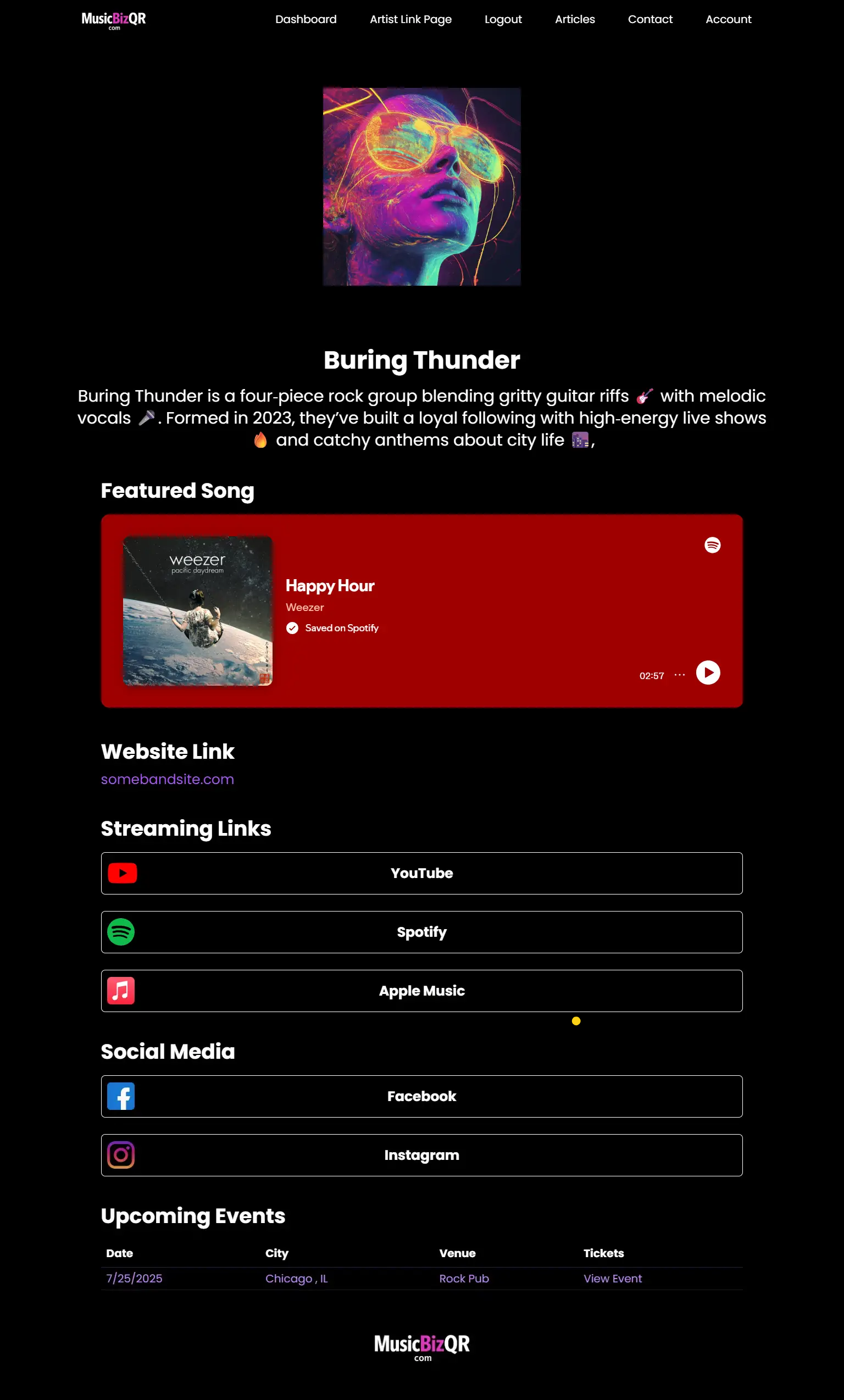
Faneqo gives you a powerful landing page with streaming links, videos, social buttons, and real-time fan analytics — all from a single QR code.
- 🎯 Unlimited link clicks & analytics
- 📈 Track Spotify streams, YouTube plays, and QR scans
- 📱 Mobile-optimized artist pages
- 🚀 Create your first Smart Link in seconds

Related Posts
Discover the art and science of crafting QR codes that scan flawlessly every time—from sizing and contrast to placement and branding. This in‑depth guide walks musicians through each step with real‑world stories and expert tips.
Discover how bands can use QR code marketing to grow their fanbase, boost engagement, and increase revenue with real-world strategies and examples.
Get more scans at shows. Exact sizes, contrast, distances, and placements for QR codes on posters, stage screens, and merch—battle-tested.
Dynamic QR codes let artists edit links, track scans, and grow fan funnels—without reprinting. Here’s why every musician should use them (and how).
Learn how indie bands can boost merch sales at live shows using QR codes. Engage fans, simplify purchases, and track what works—all with MusicBizQR.
Discover how QR codes are helping musicians grow their audience, boost engagement, and drive merch and ticket sales in 2025.
Learn how musicians are using QR codes to collect email addresses from fans during concerts and tours. Build your fanbase with smarter tech.
Discover how artists are using QR codes at live shows to turn fleeting moments into lasting fan relationships and revenue.
Learn how musicians use QR codes to grow fans, sell merch, promote tours, and build owned audiences in 2026. A complete, modern QR code strategy guide.
Discover how musicians are using QR codes to grow their fanbase, sell more merch, and promote shows. Learn why QR is the most underrated tool in music marketing.
Discover how to craft landing pages that turn every QR code scan into streams, signups, or sales. Learn narrative‑driven best practices, real‑world examples, and pro tips for mobile‑first experiences that engage and convert.
Discover how a thoughtful QR strategy can transform fan engagement, drive traffic to your music, and unlock new revenue streams for independent artists. Learn best practices and real‐world examples to build your own QR roadmap.
Discover how musicians are using QR codes to turn festival sets and tour stops into major fan growth engines. Real-world tactics that convert.
Learn how musicians can use QR codes at live shows to drive fan engagement, stream growth, and merch sales. Step-by-step tactics that actually work.
Discover the story of how an unknown indie band used QR codes and smart fan engagement to grow their audience and turn local shows into viral momentum.
Discover how QR codes are helping artists grow their fanbase, boost streams, and drive merch and ticket sales. Learn how to use QR codes to build your music career.
Discover how QR codes are revolutionizing music marketing, empowering bands and artists to engage fans, drive streams, and increase revenue.
Learn how QR codes are revolutionizing music discovery, making it easier for fans to connect instantly with new bands, content, and experiences.
How QR Codes Are Redefining Music Promotion for Indie Artists
Explore how QR codes are transforming the music industry's gig economy by empowering independent artists to connect, monetize, and grow without middlemen.
Discover how musicians are using QR codes at live shows to build long-term fan relationships. Learn proven strategies that turn casual listeners into superfans.
Learn how to design and deploy a high-converting QR code campaign for your next album drop. Includes tips on branding, analytics, and maximizing engagement.
Learn how indie musicians can use QR codes strategically to generate income, boost merch sales, and create lasting connections with fans.
Discover how bands can turn every live show into a powerful fan engagement moment using QR codes. Learn tactics that convert concertgoers into lifelong fans.
Discover how bands and solo artists can use QR codes to supercharge tour promotion, grow their fanbase, and drive ticket sales with ease.